← SAGE Museum OPEN EXHIBITION
SAGE MUSEUM · ANCIENT WORLDS

Ancient Egypt

Death, Life & Eternity

Enter a world in which death was not treated as disappearance, but as a transformation that demanded preparation. This exhibition follows tombs, mummification, sacred animals, gods, amulets, science and the objects Egyptians created for an existence they believed could continue beyond the grave.
9 Exhibition Rooms
126 Verified Exhibit Records
50 Local Supporting Images
ROOM I

Inside the Tomb

A tomb was not imagined as an ending. It was a prepared home for continued existence. Food vessels, jewelry, furniture, offerings, reliefs and personal possessions surrounded the dead with the things believed necessary for life beyond death.
23 verified collection records · Curatorial source: In the Mummy's Tomb
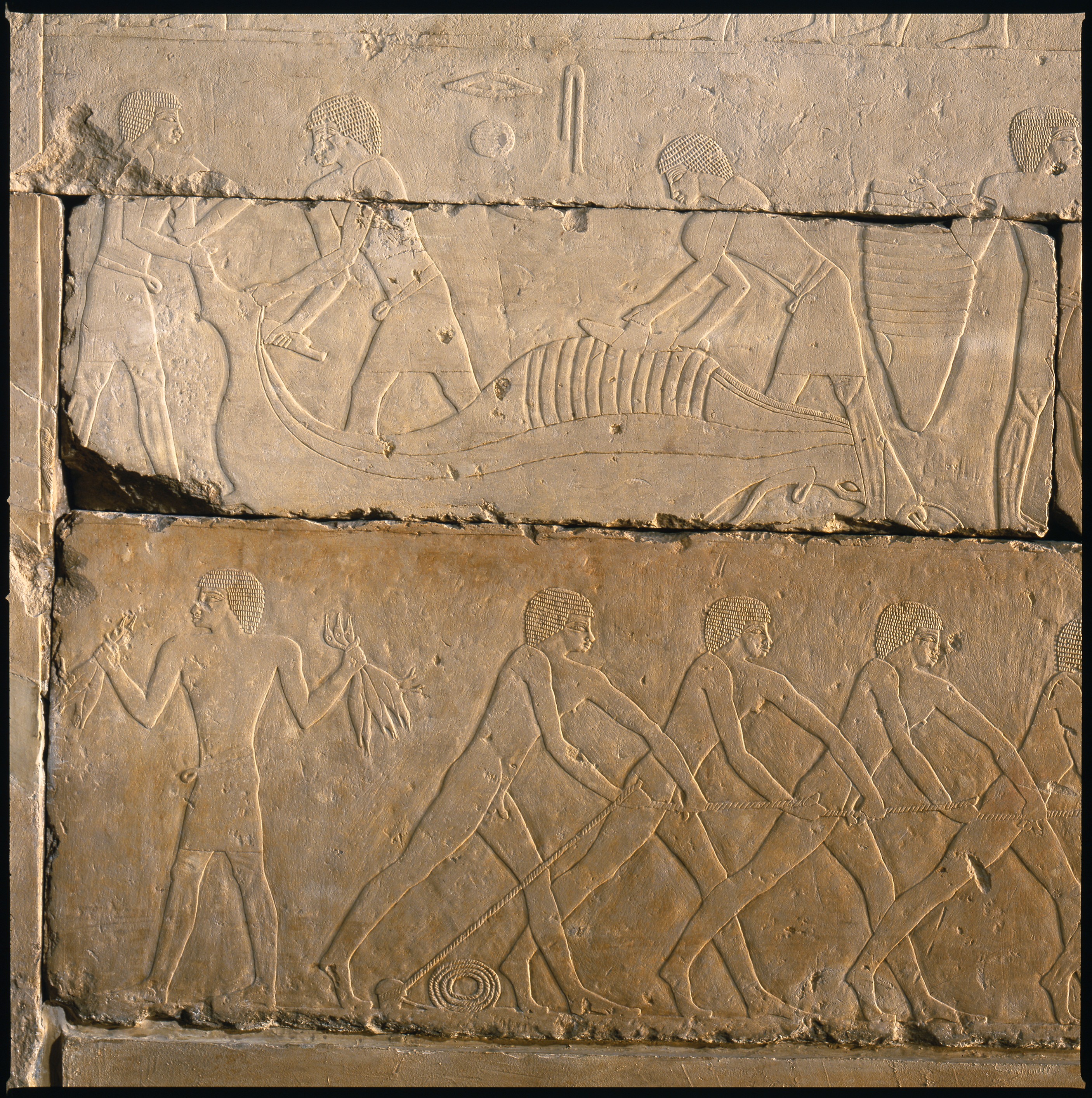
Tomb Chapel of Raemkai: West Wall
Tomb Chapel of Raemkai: West Wall The Metropolitan Museum of Art · Public Domain / The Met Open Access
ca. 2446–2389 BCE

This supporting object helps reconstruct the material world of an Egyptian burial. Tombs could preserve food, furnishings, offerings, images and personal possessions intended to sustain the deceased beyond death.
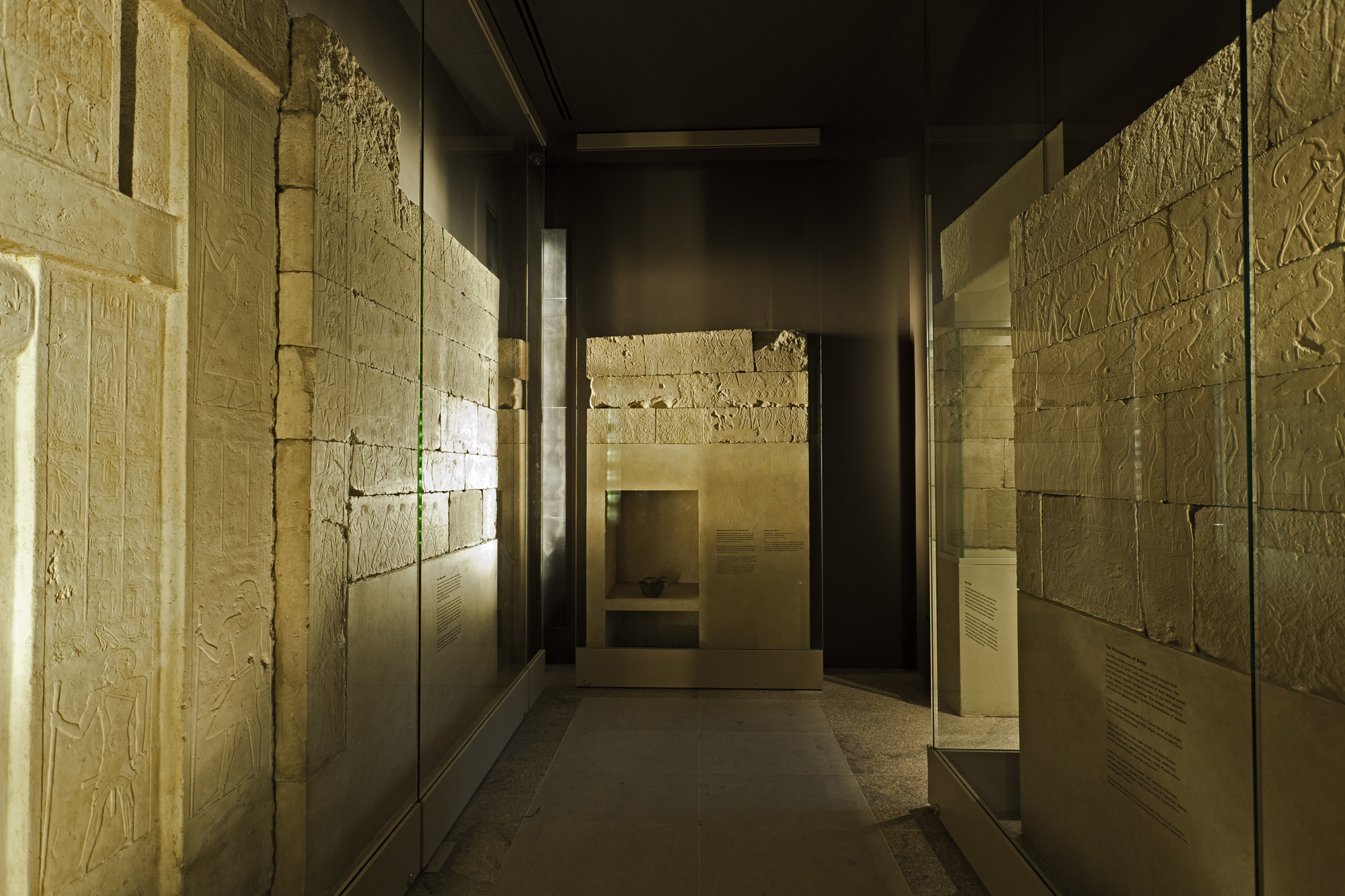
Tomb Chapel of Raemkai
Tomb Chapel of Raemkai The Metropolitan Museum of Art · Public Domain / The Met Open Access
ca. 2446–2389 BCE

This supporting object helps reconstruct the material world of an Egyptian burial. Tombs could preserve food, furnishings, offerings, images and personal possessions intended to sustain the deceased beyond death.
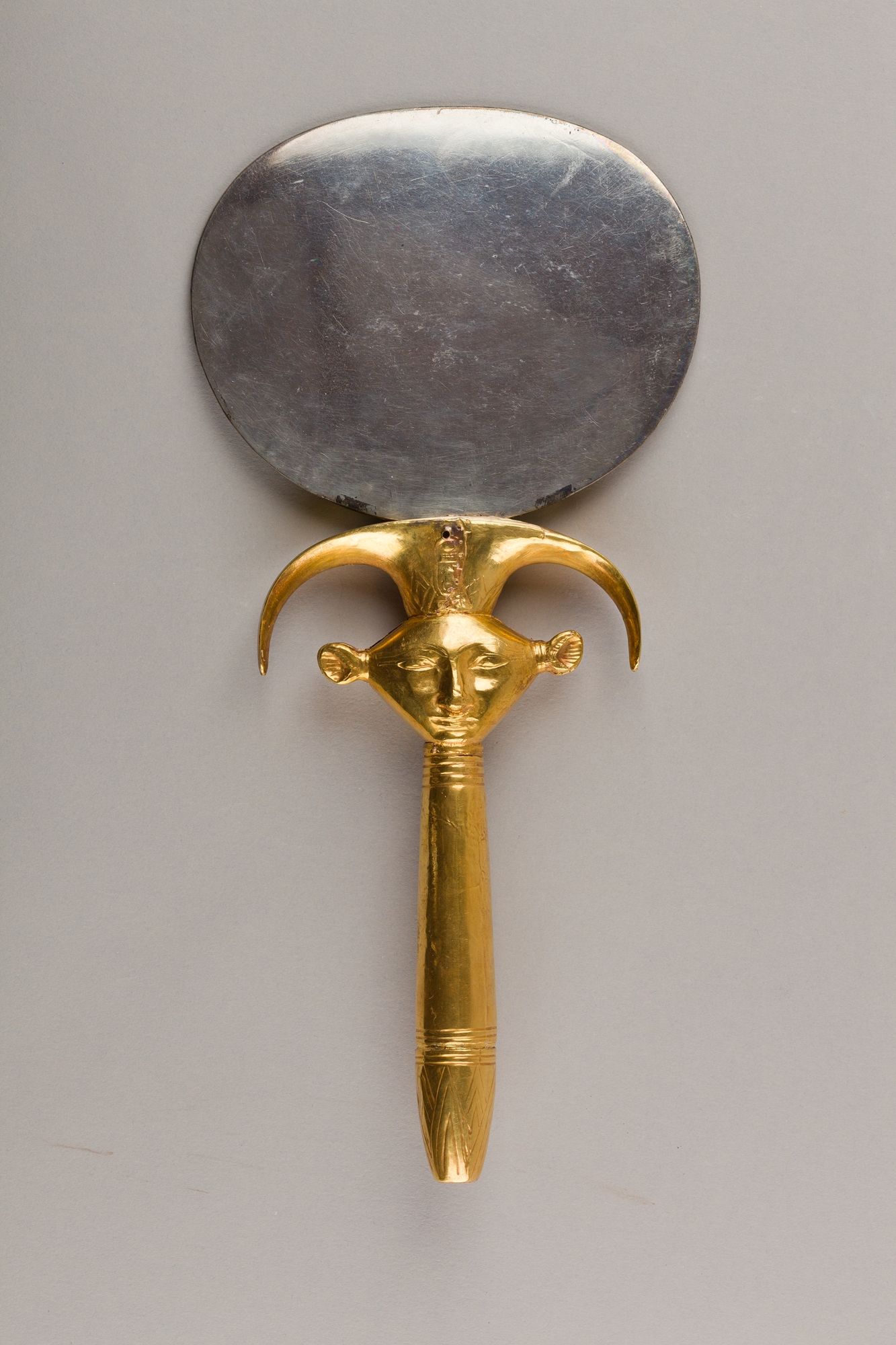
Mirror with Handle in the Form of a Hathor Emblem
Mirror with Handle in the Form of a Hathor Emblem The Metropolitan Museum of Art · Public Domain / The Met Open Access
ca. 1479–1425 BCE

This supporting object helps reconstruct the material world of an Egyptian burial. Tombs could preserve food, furnishings, offerings, images and personal possessions intended to sustain the deceased beyond death.
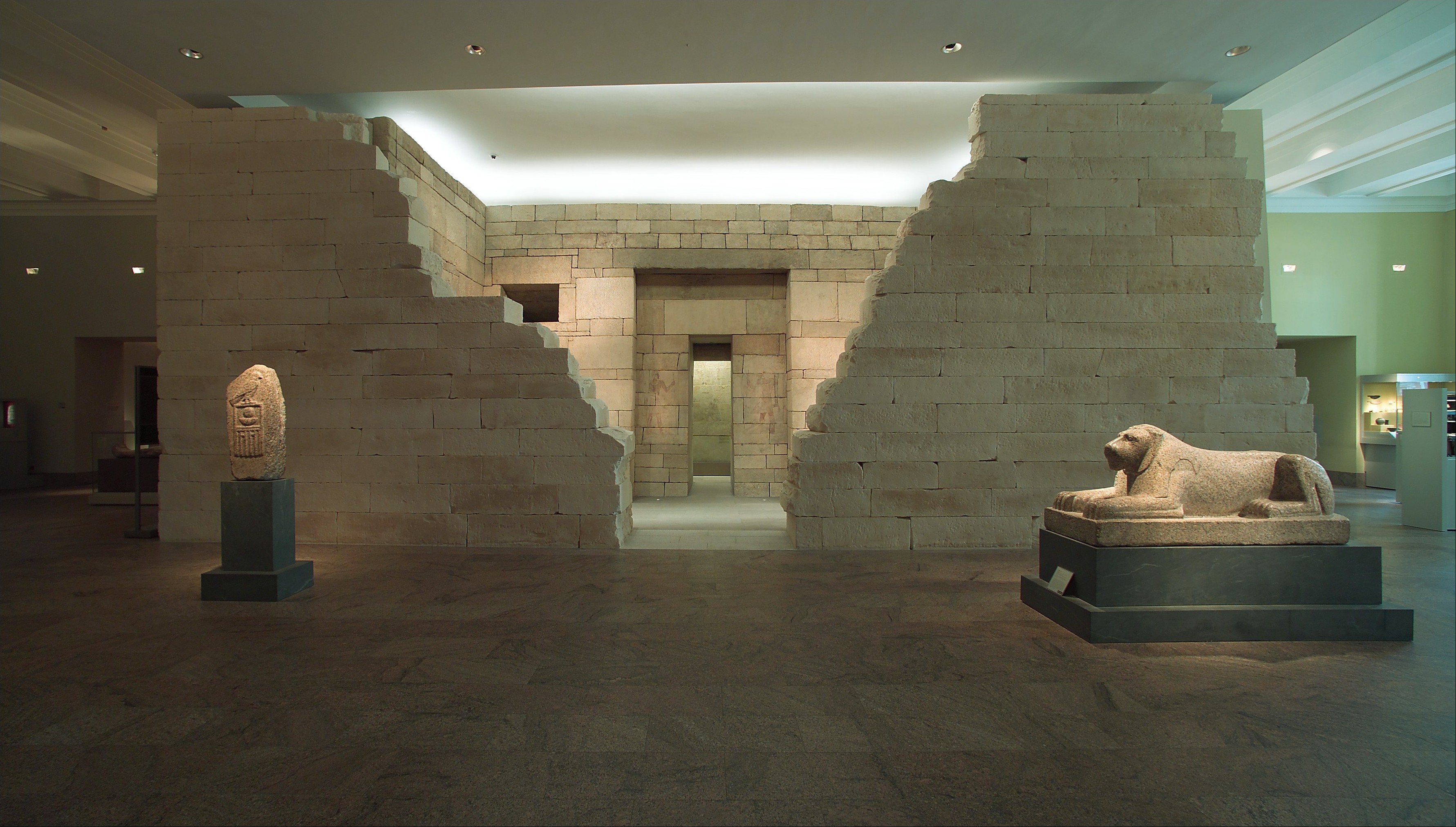
Mastaba Tomb of Perneb
Mastaba Tomb of Perneb The Metropolitan Museum of Art · Public Domain / The Met Open Access
ca. 2381–2323 BCE

This supporting object helps reconstruct the material world of an Egyptian burial. Tombs could preserve food, furnishings, offerings, images and personal possessions intended to sustain the deceased beyond death.
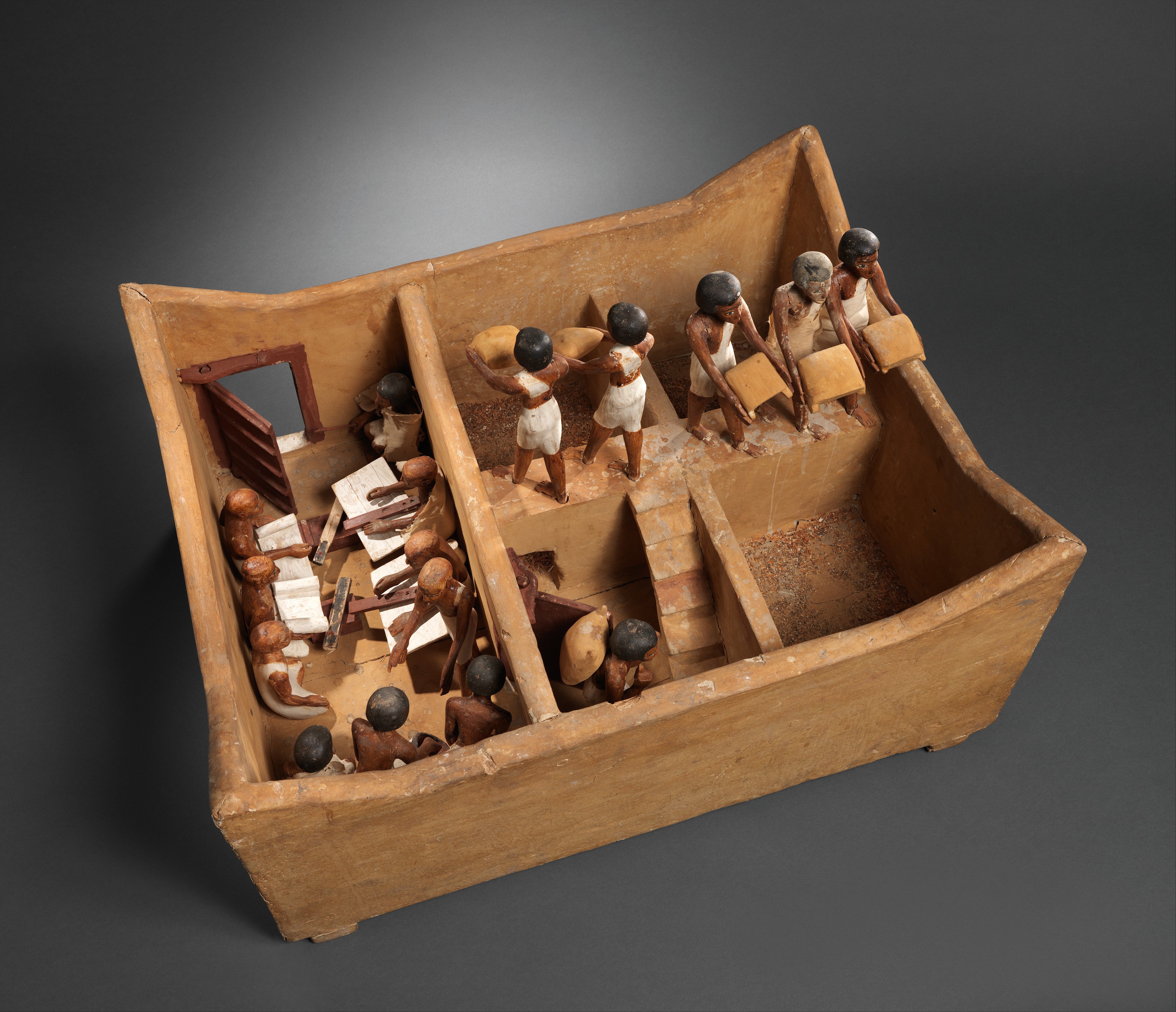
Model of a Granary with Scribes
Model of a Granary with Scribes The Metropolitan Museum of Art · Public Domain / The Met Open Access
ca. 1981–1975 B.C.

This supporting object helps reconstruct the material world of an Egyptian burial. Tombs could preserve food, furnishings, offerings, images and personal possessions intended to sustain the deceased beyond death.
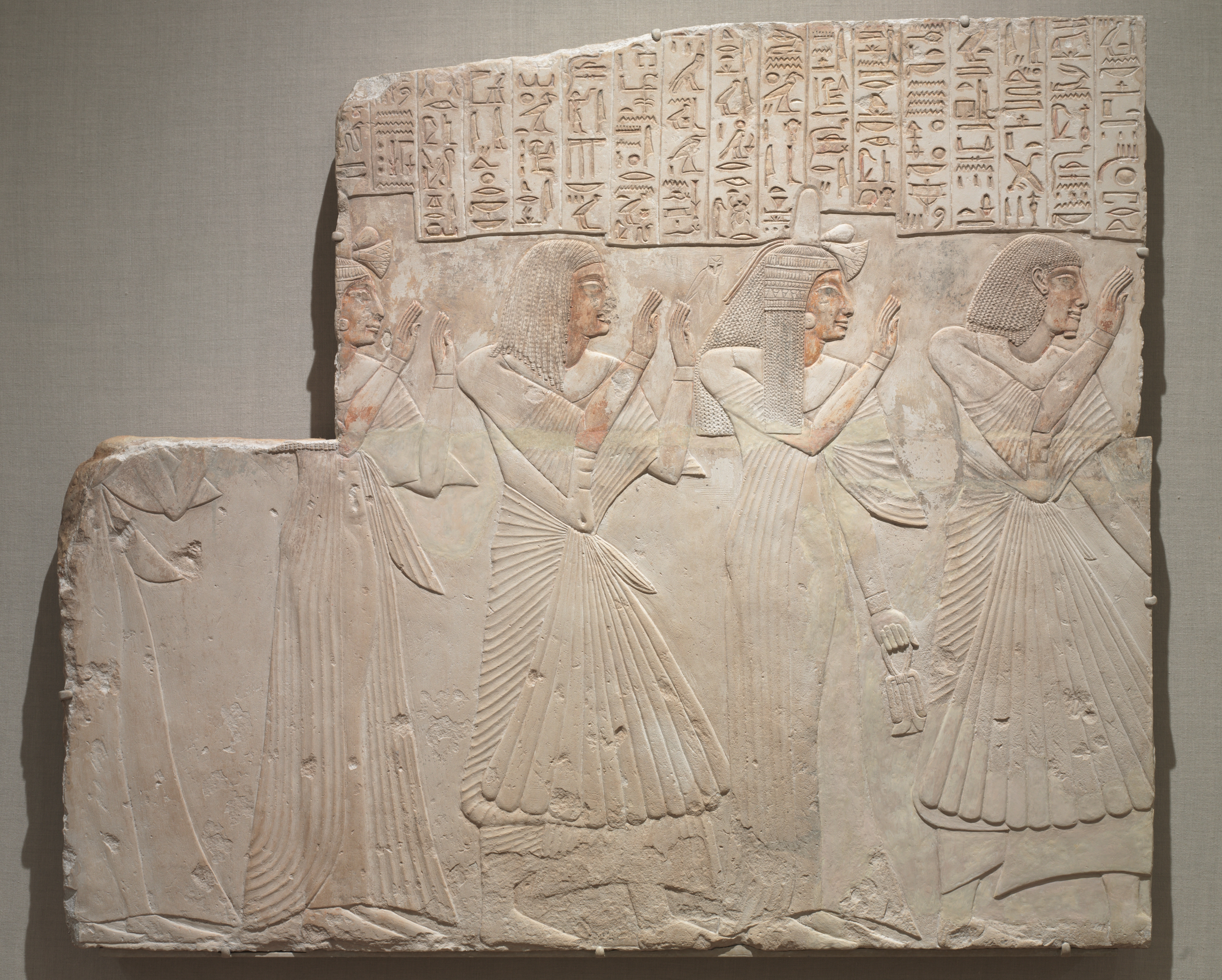
Tomb Relief of the Chief Physician Amenhotep and Family
Tomb Relief of the Chief Physician Amenhotep and Family Cleveland Museum of Art · CC0
c. 1279–1257 BCE

This supporting object helps reconstruct the material world of an Egyptian burial. Tombs could preserve food, furnishings, offerings, images and personal possessions intended to sustain the deceased beyond death.
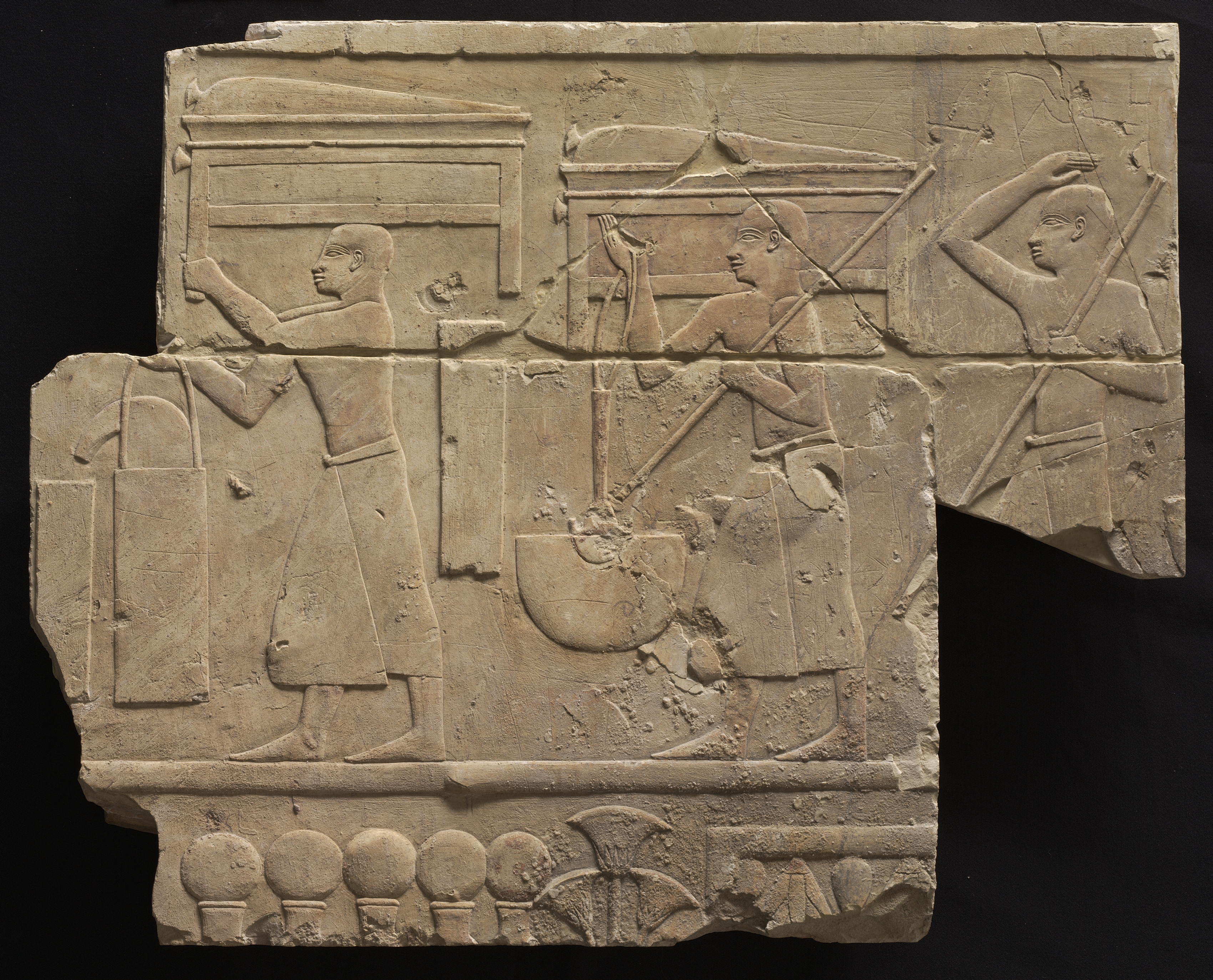
Men Bearing Tomb Equipment
Men Bearing Tomb Equipment Cleveland Museum of Art · CC0
c. 667–647 BCE

This supporting object helps reconstruct the material world of an Egyptian burial. Tombs could preserve food, furnishings, offerings, images and personal possessions intended to sustain the deceased beyond death.
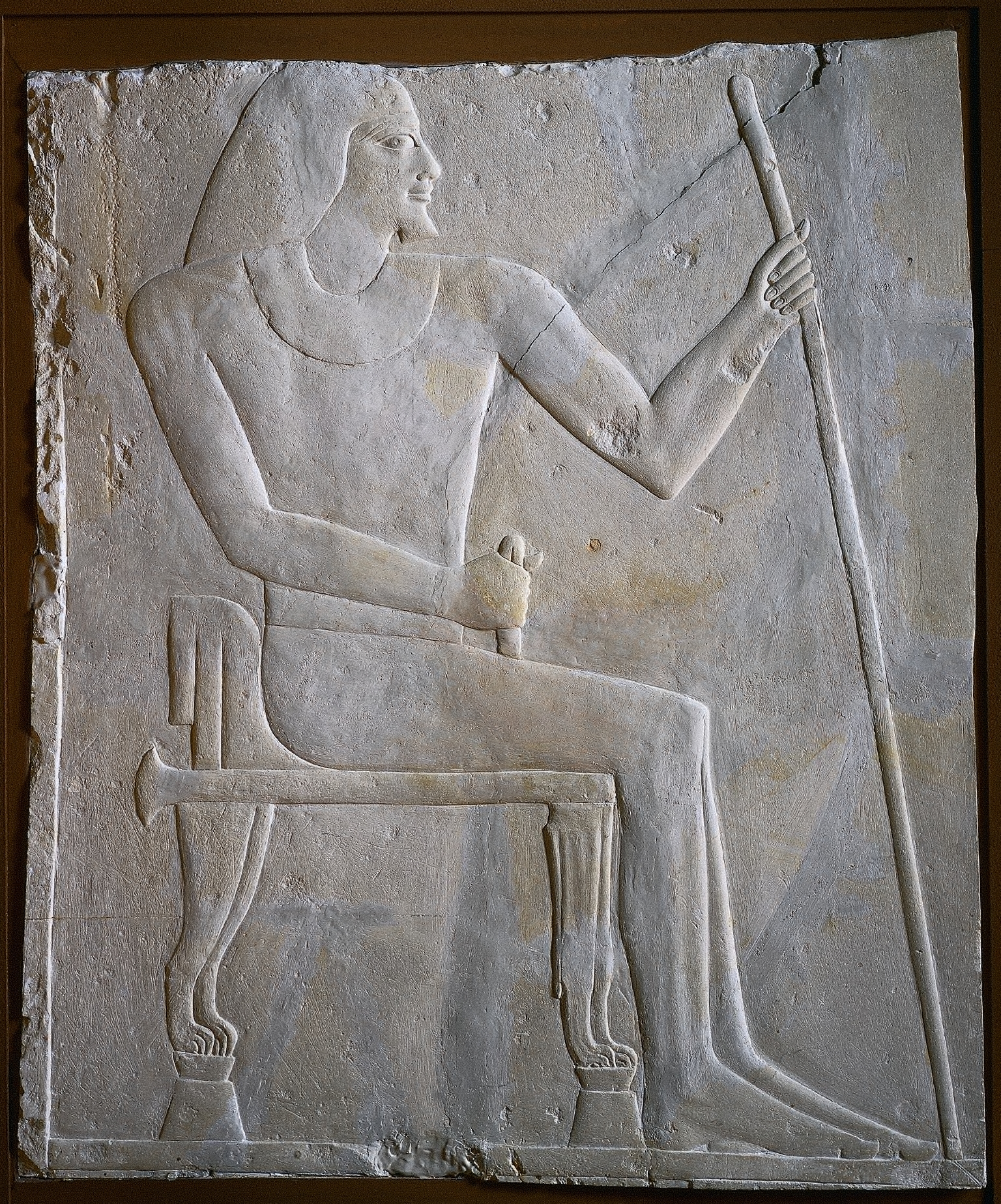
Relief of Nyankhnesut Seated
Relief of Nyankhnesut Seated Cleveland Museum of Art · CC0
c. 2311–2281 BCE

This supporting object helps reconstruct the material world of an Egyptian burial. Tombs could preserve food, furnishings, offerings, images and personal possessions intended to sustain the deceased beyond death.
Collection Highlights

SAGE COLLECTION VAULT
View full room collection · 23 records
Red Earthenware Dish nmnhanthropology_8071692
Oil Jar nmnhanthropology_8314175
Clay Vase nmnhanthropology_8314172
Palette nmnhanthropology_8071744
Braided Human Hair nmnhanthropology_8193672
Small Alabaster Jar/1 nmnhanthropology_8168476
Clay Funerary Cone nmnhanthropology_8291678
Unguent Jar, Alabaster nmnhanthropology_8126277
Fgt. Of Carved Limestone Tomb Relief nmnhanthropology_8020952
Faience Flail Parts nmnhanthropology_8193667
Tomb Relief Fragment (Painted) nmnhanthropology_8193659
Memorial Stela nmnhanthropology_8238845
Marble Jar, Pale Blue nmnhanthropology_8126274
Clay Cone Seal nmnhanthropology_8314295
Kohl Jar nmnhanthropology_8314181
Alabaster Sculptured Vase nmnhanthropology_8503979
Tomb Ceiling Fragment (Stars) nmnhanthropology_8175530
Unguent Flask - Lenticular nmnhanthropology_8121921
Oil Jar nmnhanthropology_8168655
Mummy In Coffin nmnhanthropology_8009751
Limestone Tablet, Stela nmnhanthropology_8072814
Necklace nmnhanthropology_8072575
String Of Beads nmnhanthropology_8078724
ROOM II

Making a Mummy

Preserving the body was both a technical process and a religious act. Embalmers dried the body, treated and wrapped it, protected vulnerable parts with amulets, and placed organs within a funerary system that connected physical preservation with the hope of rebirth.
11 verified collection records · Curatorial source: Making a Mummy
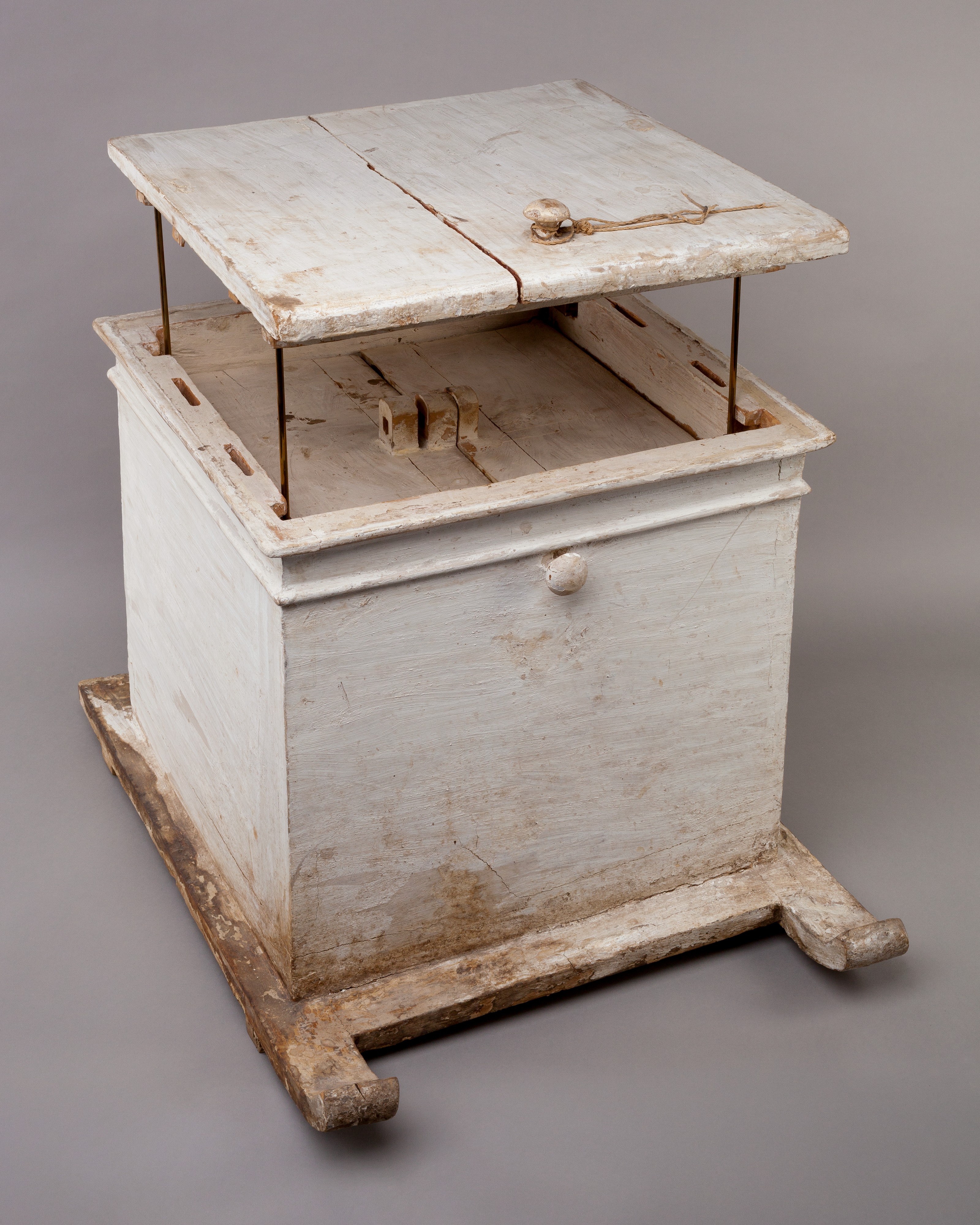
Canopic box of Hatnefer
Canopic box of Hatnefer The Metropolitan Museum of Art · Public Domain / The Met Open Access
ca. 1491–1473 BCE

Canopic equipment belonged to the funerary system surrounding preservation of the dead. Vessels and containers were associated with the treatment and ritual protection of the internal organs.
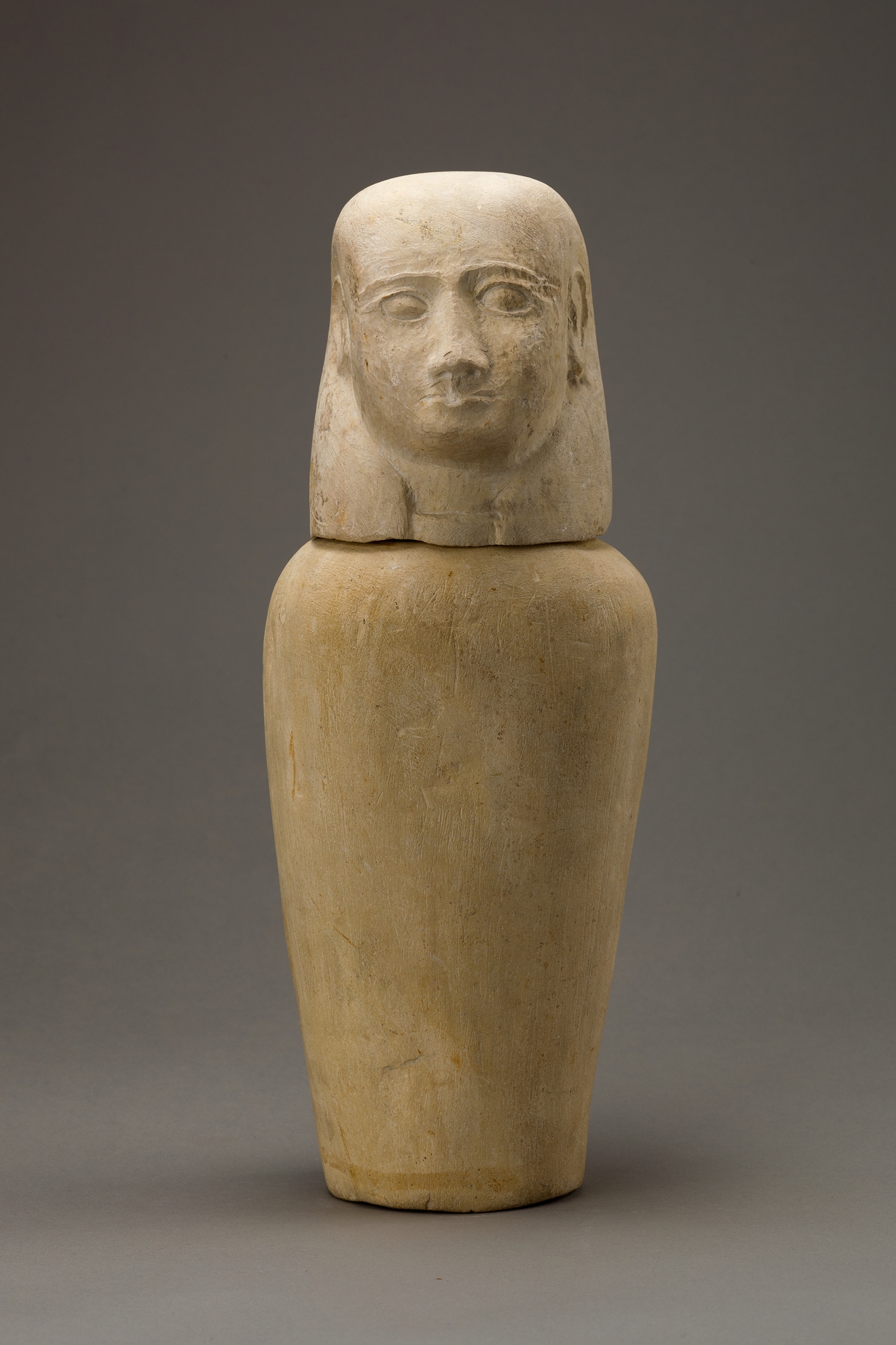
Canopic jar with human head
Canopic jar with human head The Metropolitan Museum of Art · Public Domain / The Met Open Access
ca. 721–664 BCE

Canopic equipment belonged to the funerary system surrounding preservation of the dead. Vessels and containers were associated with the treatment and ritual protection of the internal organs.
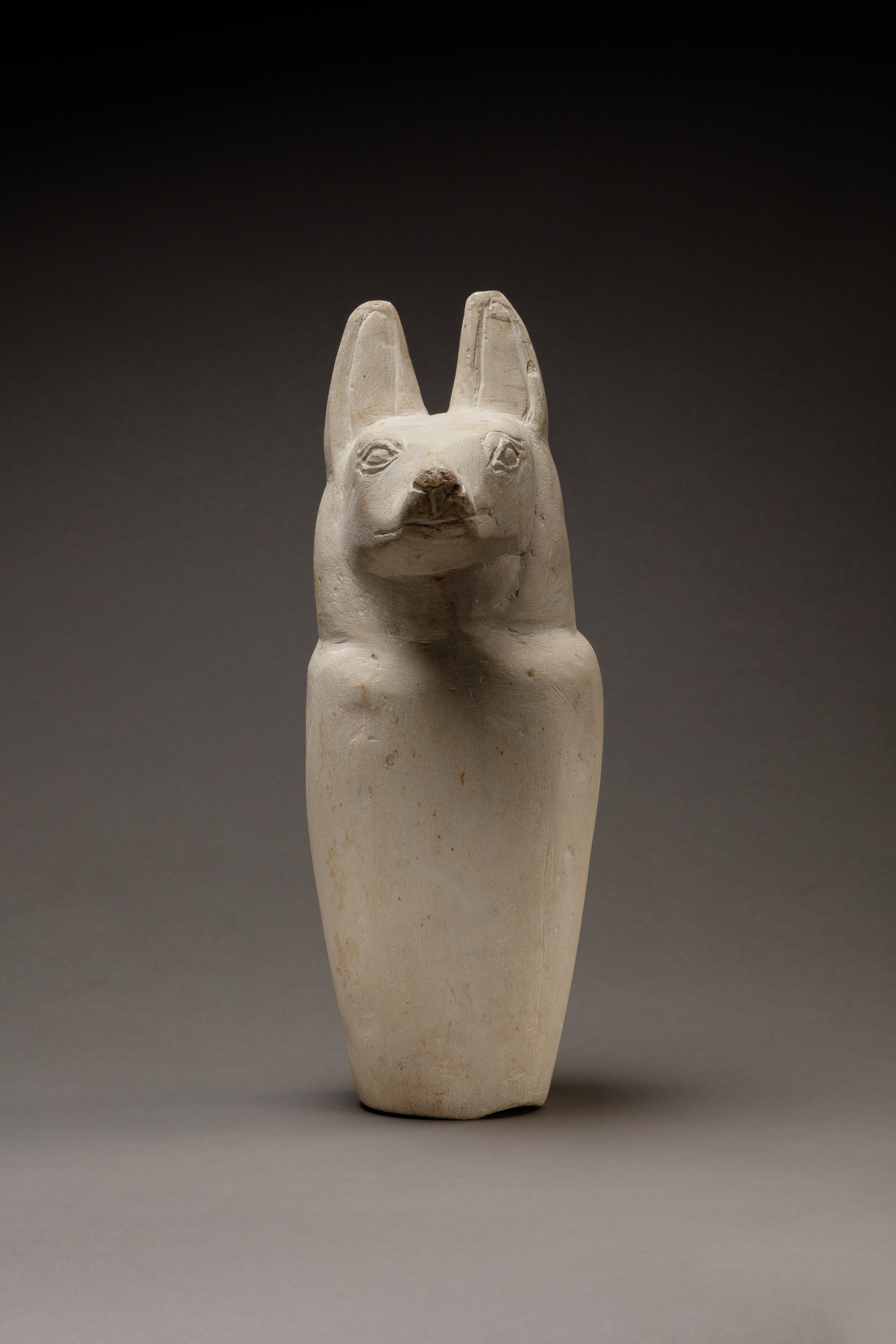
Dummy canopic jar with jackal head
Dummy canopic jar with jackal head The Metropolitan Museum of Art · Public Domain / The Met Open Access
ca. 1080–664 BCE

Canopic equipment belonged to the funerary system surrounding preservation of the dead. Vessels and containers were associated with the treatment and ritual protection of the internal organs.
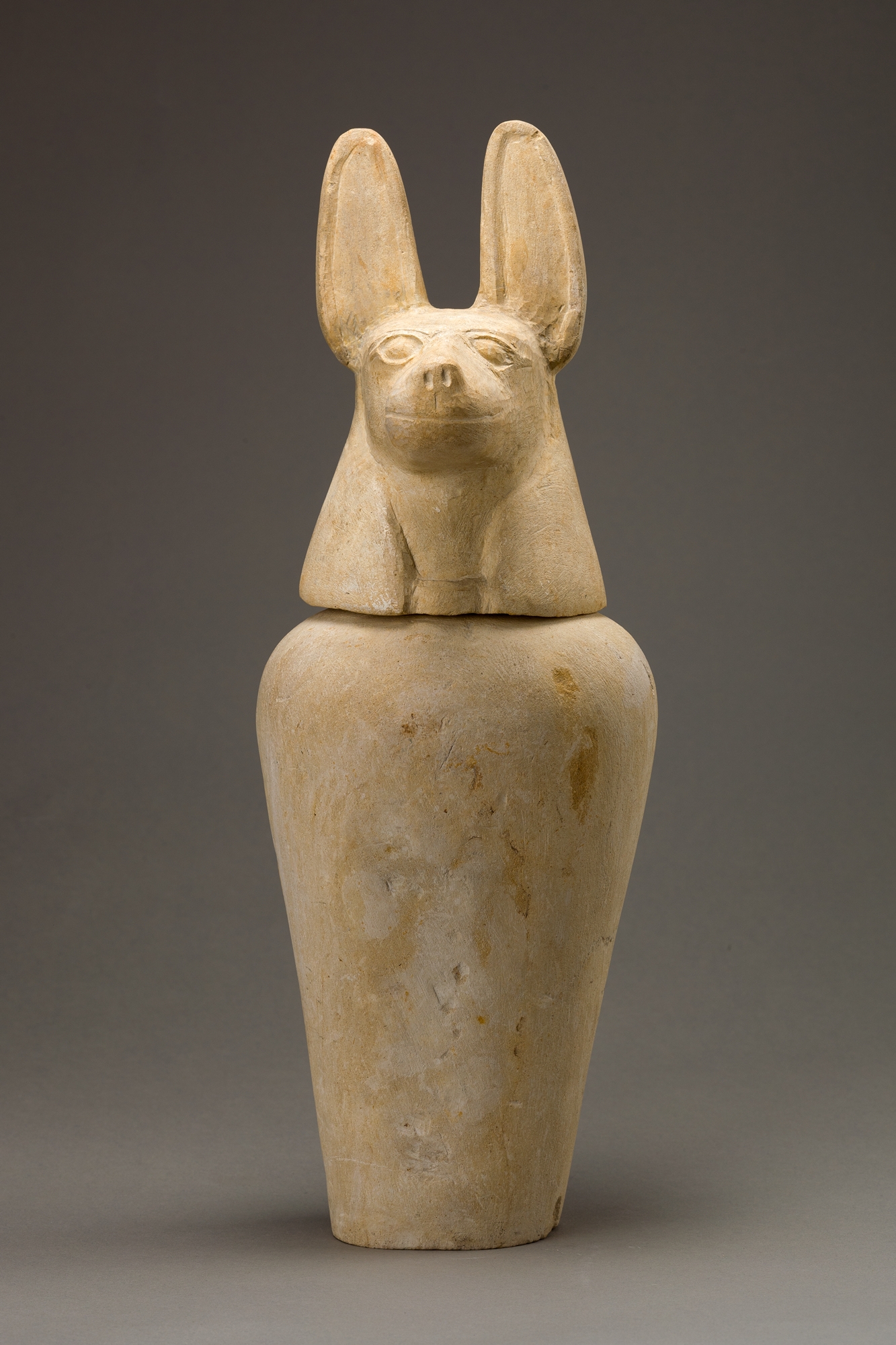
Canopic jar with jackal head
Canopic jar with jackal head The Metropolitan Museum of Art · Public Domain / The Met Open Access
ca. 721–664 BCE

Canopic equipment belonged to the funerary system surrounding preservation of the dead. Vessels and containers were associated with the treatment and ritual protection of the internal organs.
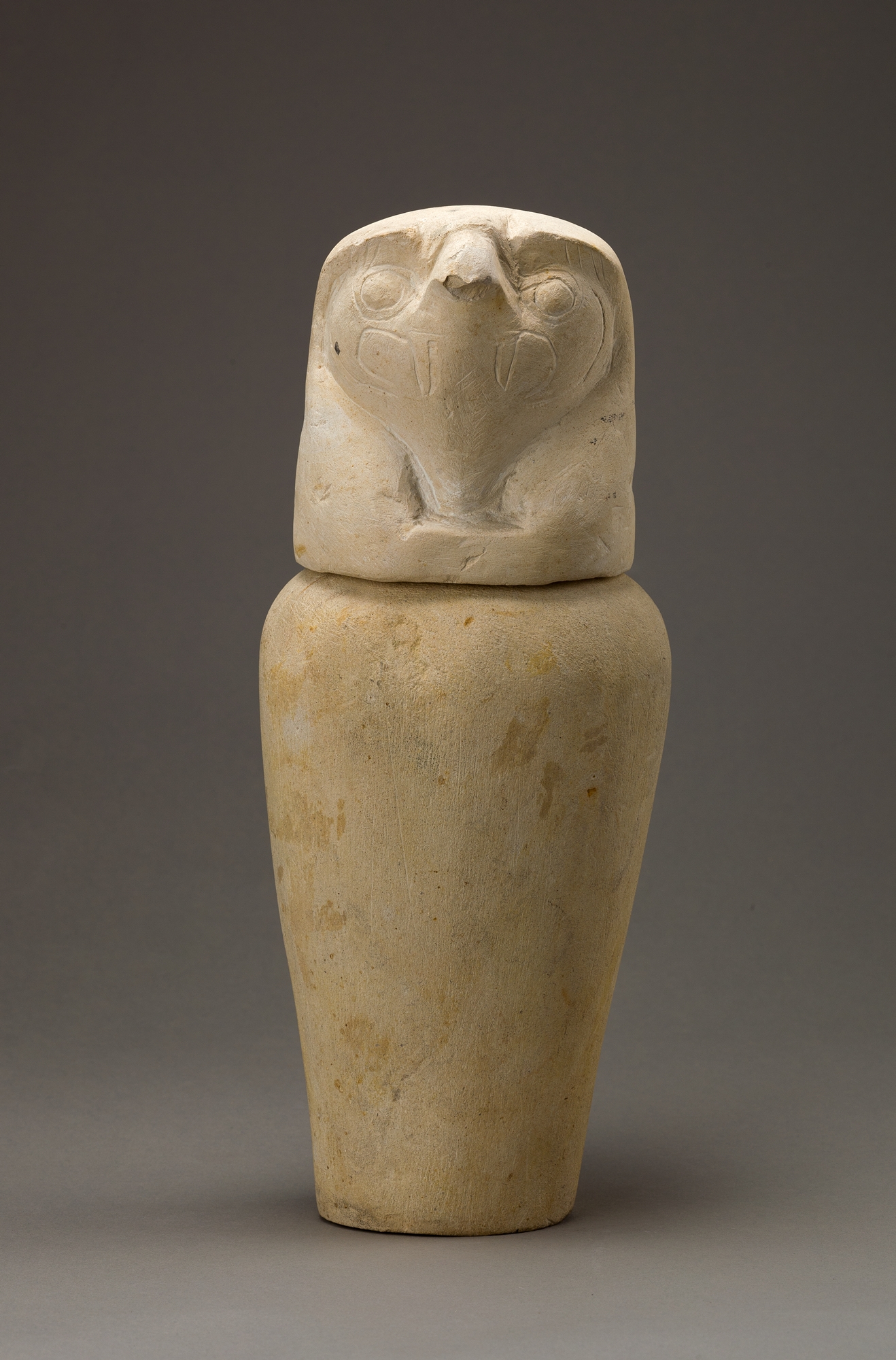
Canopic jar with falcon head
Canopic jar with falcon head The Metropolitan Museum of Art · Public Domain / The Met Open Access
ca. 721–664 BCE

Canopic equipment belonged to the funerary system surrounding preservation of the dead. Vessels and containers were associated with the treatment and ritual protection of the internal organs.
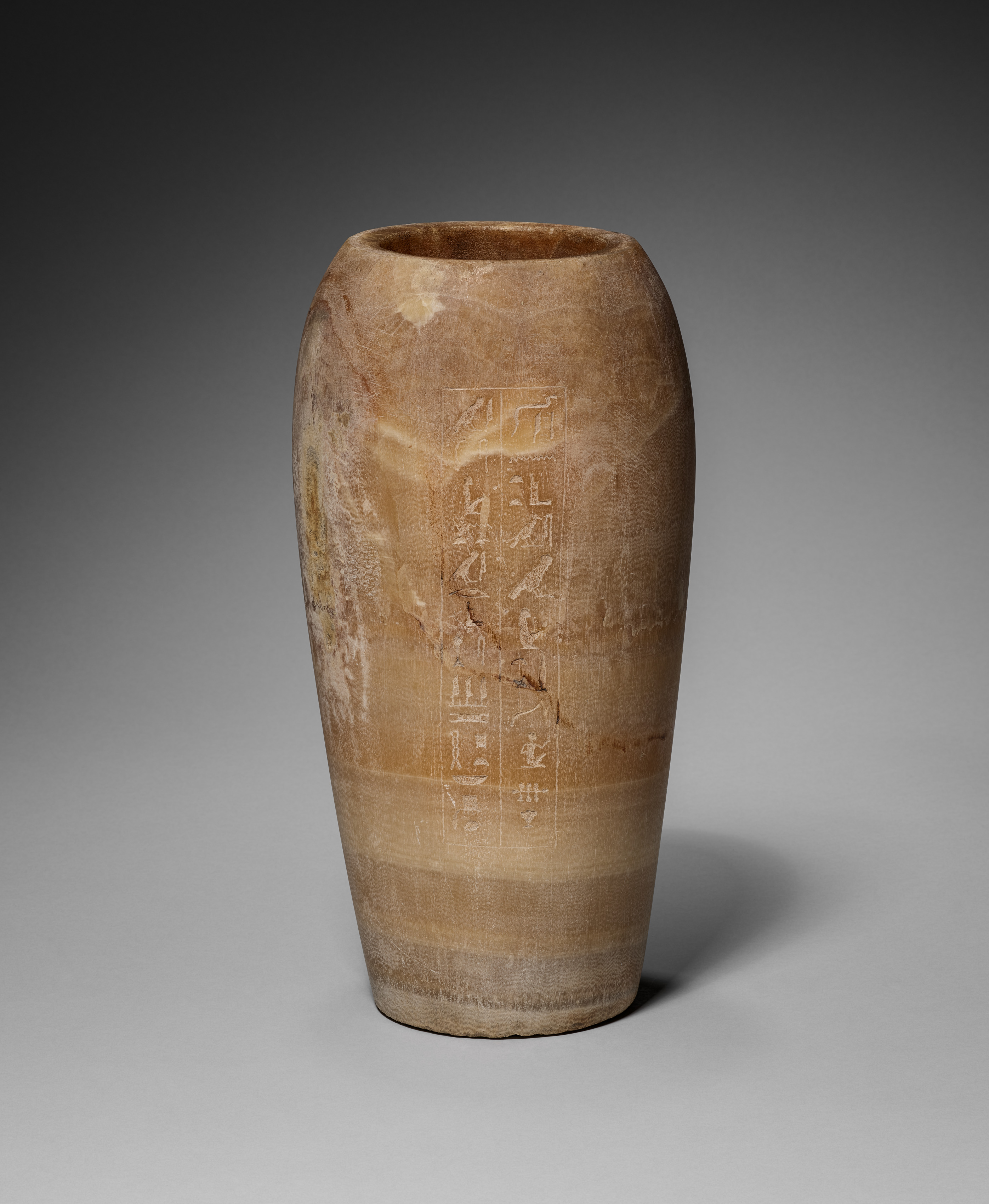
Canopic Jar with Jackal's Head
Canopic Jar with Jackal's Head Cleveland Museum of Art · CC0
664–525 BCE

Canopic equipment belonged to the funerary system surrounding preservation of the dead. Vessels and containers were associated with the treatment and ritual protection of the internal organs.
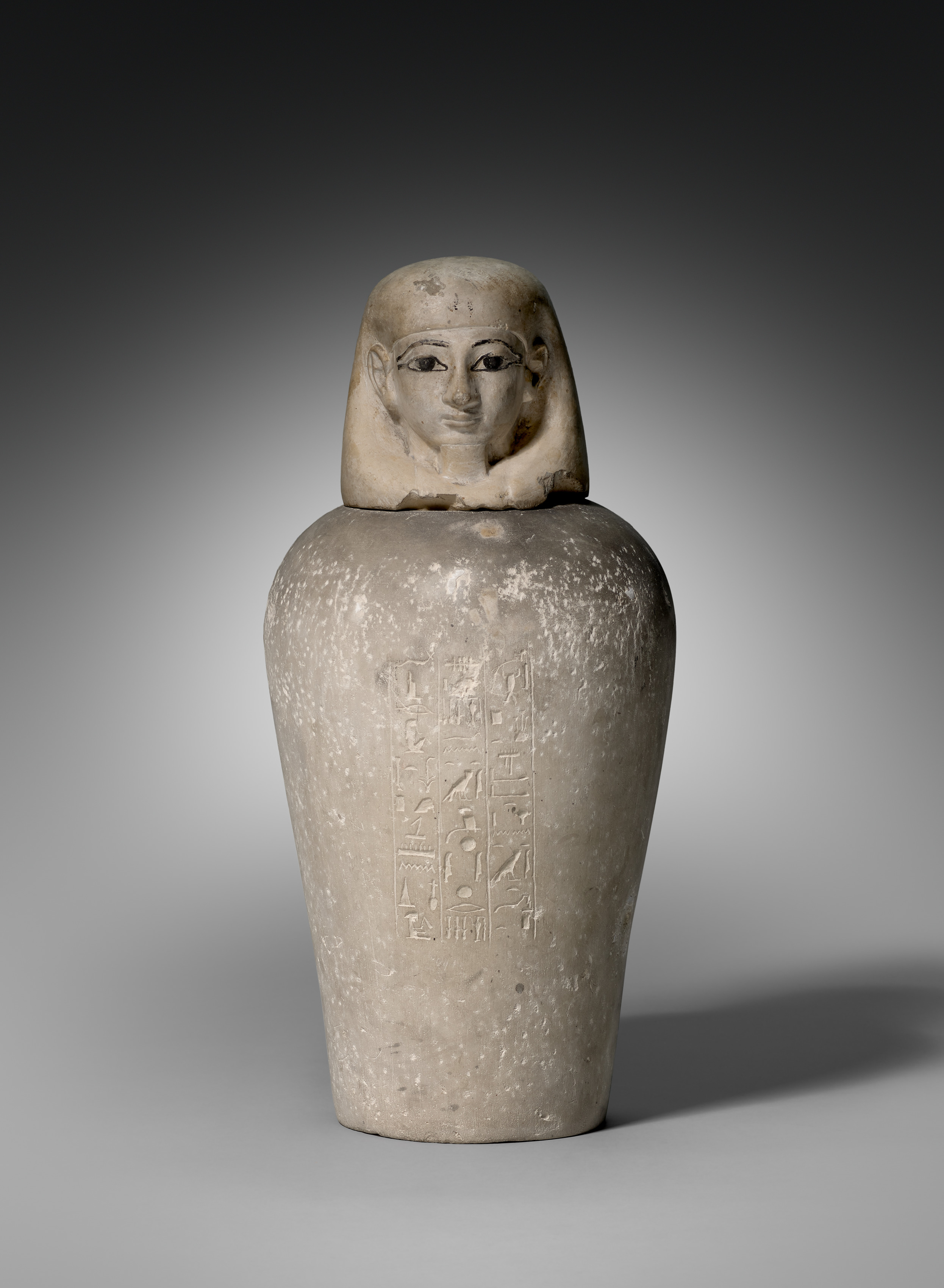
Canopic Jar with Lid
Canopic Jar with Lid Cleveland Museum of Art · CC0
1540–1296 BCE

Canopic equipment belonged to the funerary system surrounding preservation of the dead. Vessels and containers were associated with the treatment and ritual protection of the internal organs.
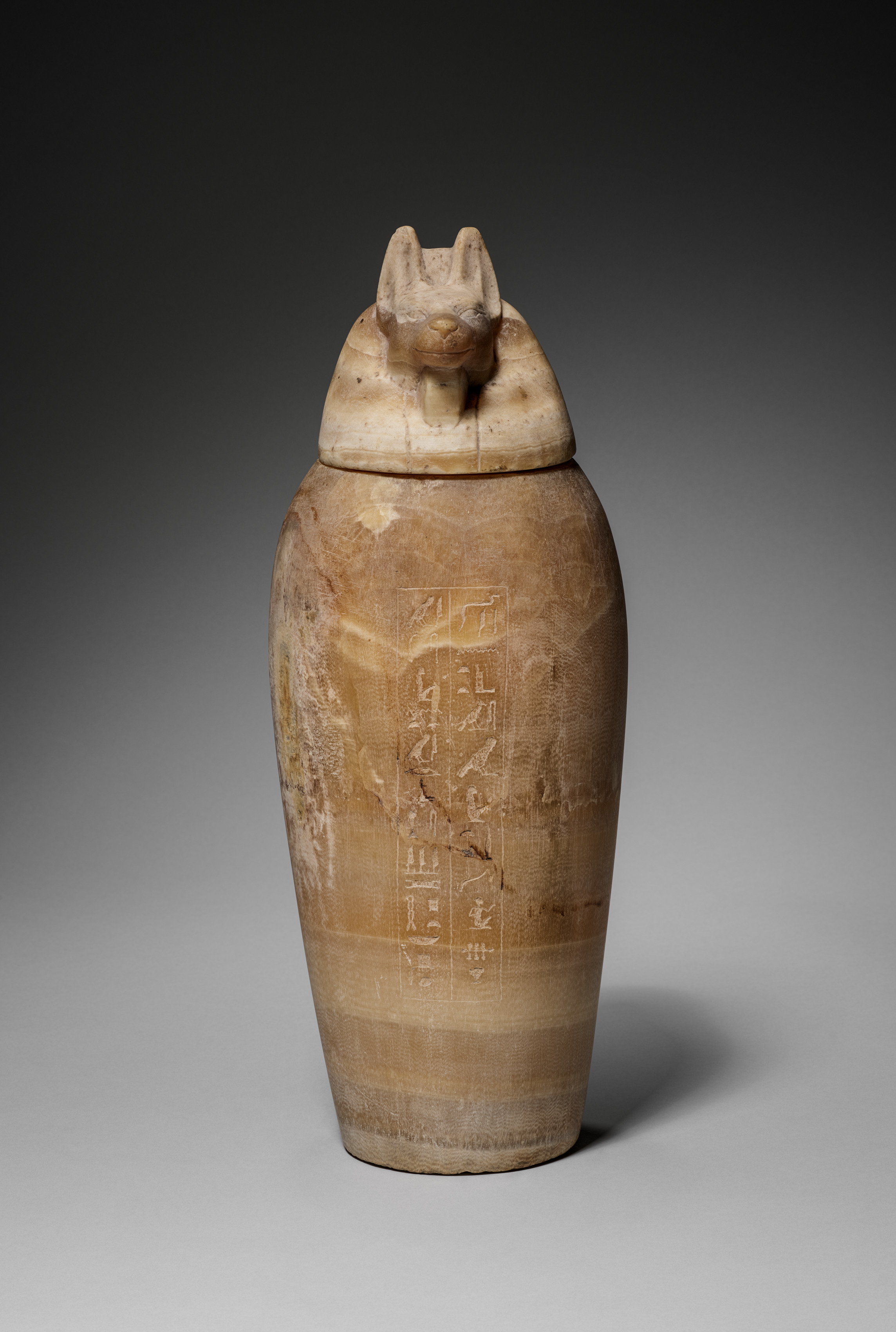
Canopic Jar with Jackal's Head
Canopic Jar with Jackal's Head Cleveland Museum of Art · CC0
664–525 BCE

Canopic equipment belonged to the funerary system surrounding preservation of the dead. Vessels and containers were associated with the treatment and ritual protection of the internal organs.
Collection Highlights

SAGE COLLECTION VAULT
View full room collection · 11 records
Sacks Of Natron nmnhanthropology_8193676
Canopic Jar Lid nmnhanthropology_8193597
Canopic Jar & Lid, Alabaster nmnhanthropology_8120536
Canopic Jar Of Duamutef-(Cast) W/ Lid nmnhanthropology_8075477
Canopic Jar Of Kebehsenuf - (Cast) W/ Lid nmnhanthropology_8075479
Alabaster Canopic Jar In Two Parts nmnhanthropology_8503990
Lid Of Canopic Jar nmnhanthropology_8504093
Canopic Jar Of Hapi- (Cast) W/ Lid nmnhanthropology_8075476
Canopic Jar of Imsety- (Cast) W/Lid nmnhanthropology_8075480
Piece Of Mummy Cartonnage nmnhanthropology_8077521
Piece Of Mummy Cartonnage nmnhanthropology_8020913
ROOM III

Faces Across Eternity

Masks, painted coffins and mummy portraits gave the dead a visible identity. Across centuries, styles changed dramatically, but the face remained a powerful bridge between memory, personhood and the eternal life Egyptians hoped to enter.
6 verified collection records · Curatorial source: What's in a Face
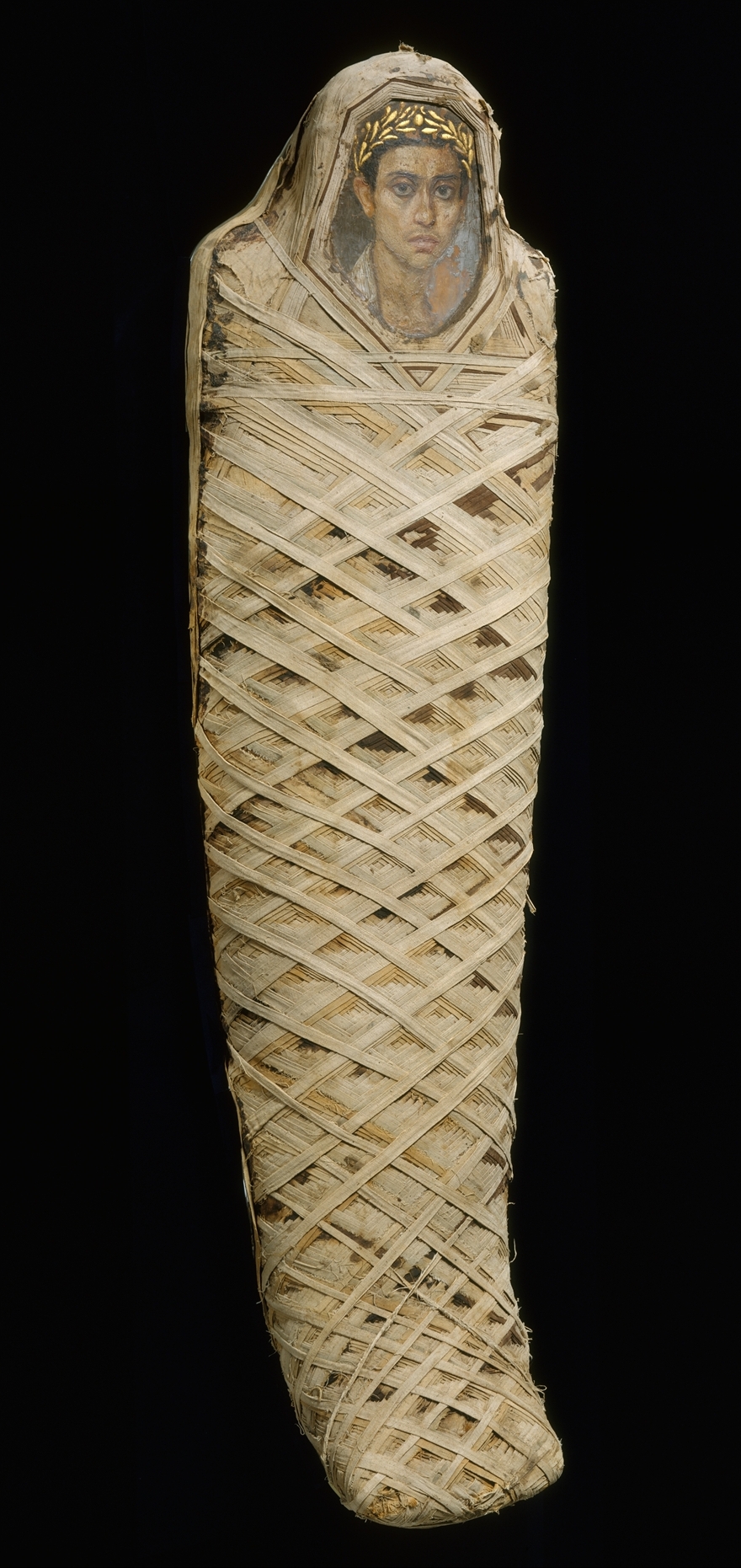
Mummy with an Inserted Panel Portrait of a Youth
Mummy with an Inserted Panel Portrait of a Youth The Metropolitan Museum of Art · Public Domain / The Met Open Access
80–100 CE

Mummy portraits preserved a recognizable human face within funerary practice, joining personal identity with the transformed body prepared for burial.
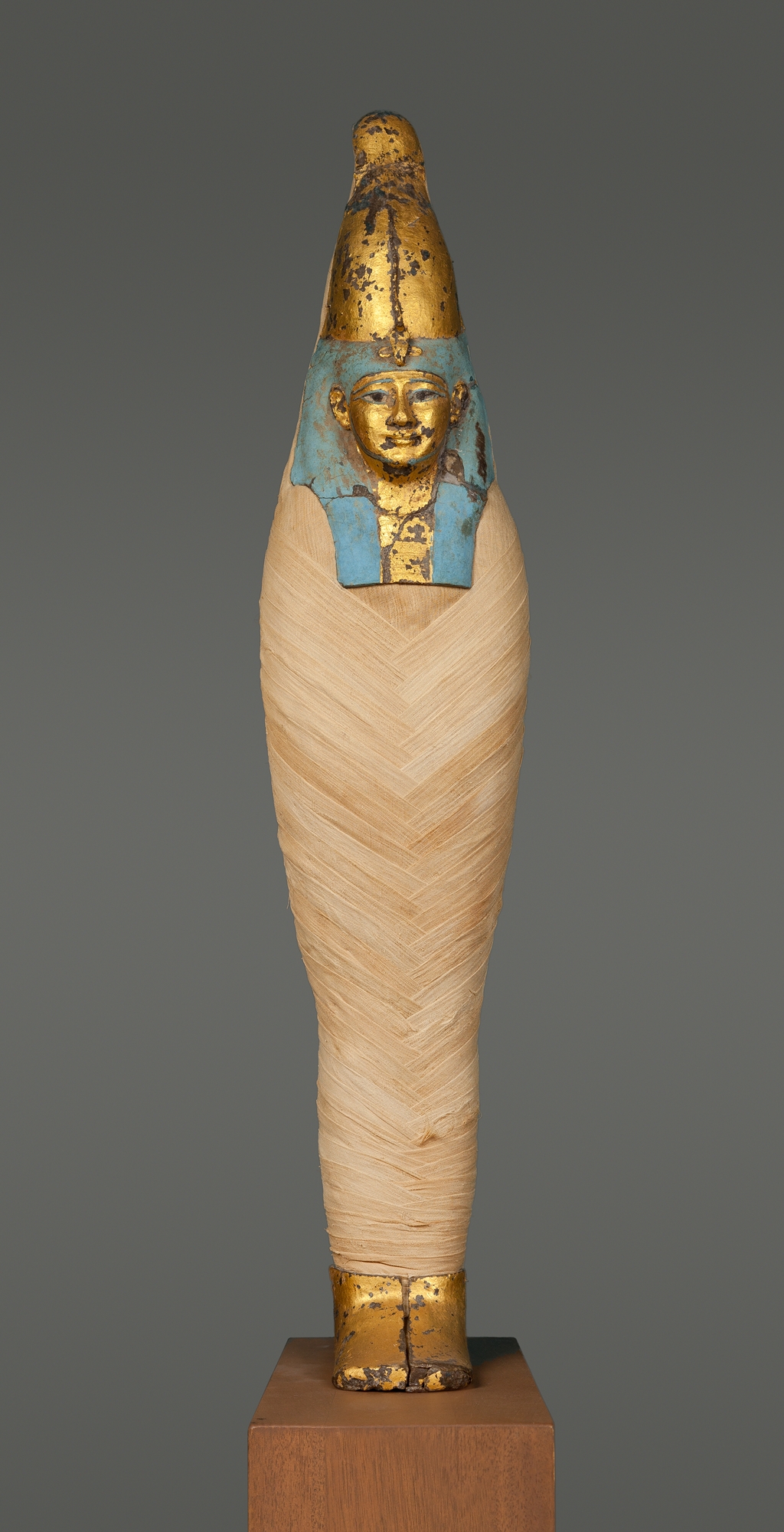
Mask and Foot Cover of  "Corn Mummy"
Mask and Foot Cover of "Corn Mummy" The Metropolitan Museum of Art · Public Domain / The Met Open Access
400–250 BCE

A funerary mask gave the deceased a protected, idealized face. It helped preserve identity while placing the dead within a sacred visual language of transformation.
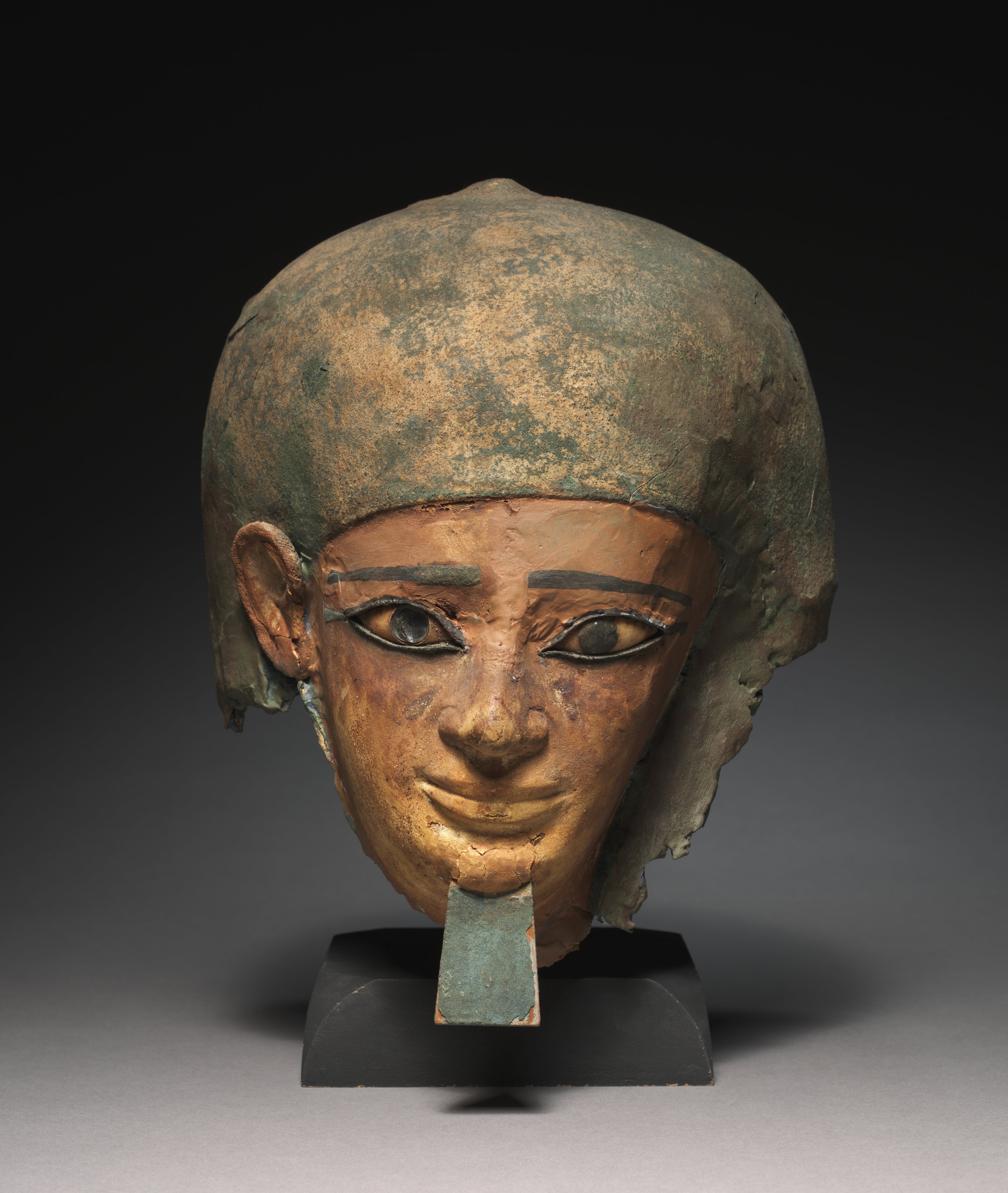
Mummy Mask of Senbi
Mummy Mask of Senbi Cleveland Museum of Art · CC0
1980–1801 BCE

A funerary mask gave the deceased a protected, idealized face. It helped preserve identity while placing the dead within a sacred visual language of transformation.
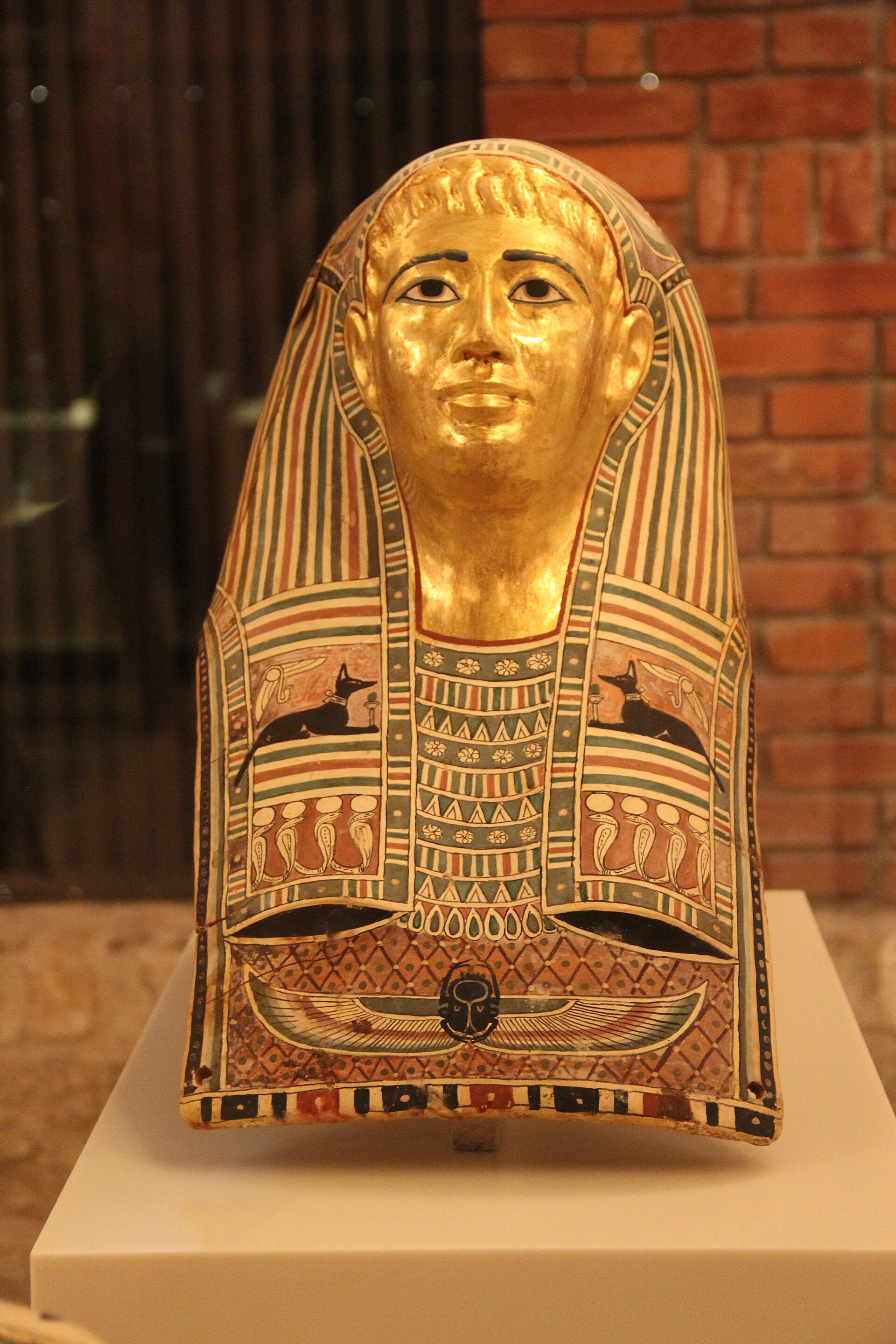
Ancient Egypt Mummy Portrait (28132790233)
Ancient Egypt Mummy Portrait (28132790233) Ancient Egypt Mummy Portrait · CC0
2016-08-03 18:54

Mummy portraits preserved a recognizable human face within funerary practice, joining personal identity with the transformed body prepared for burial.
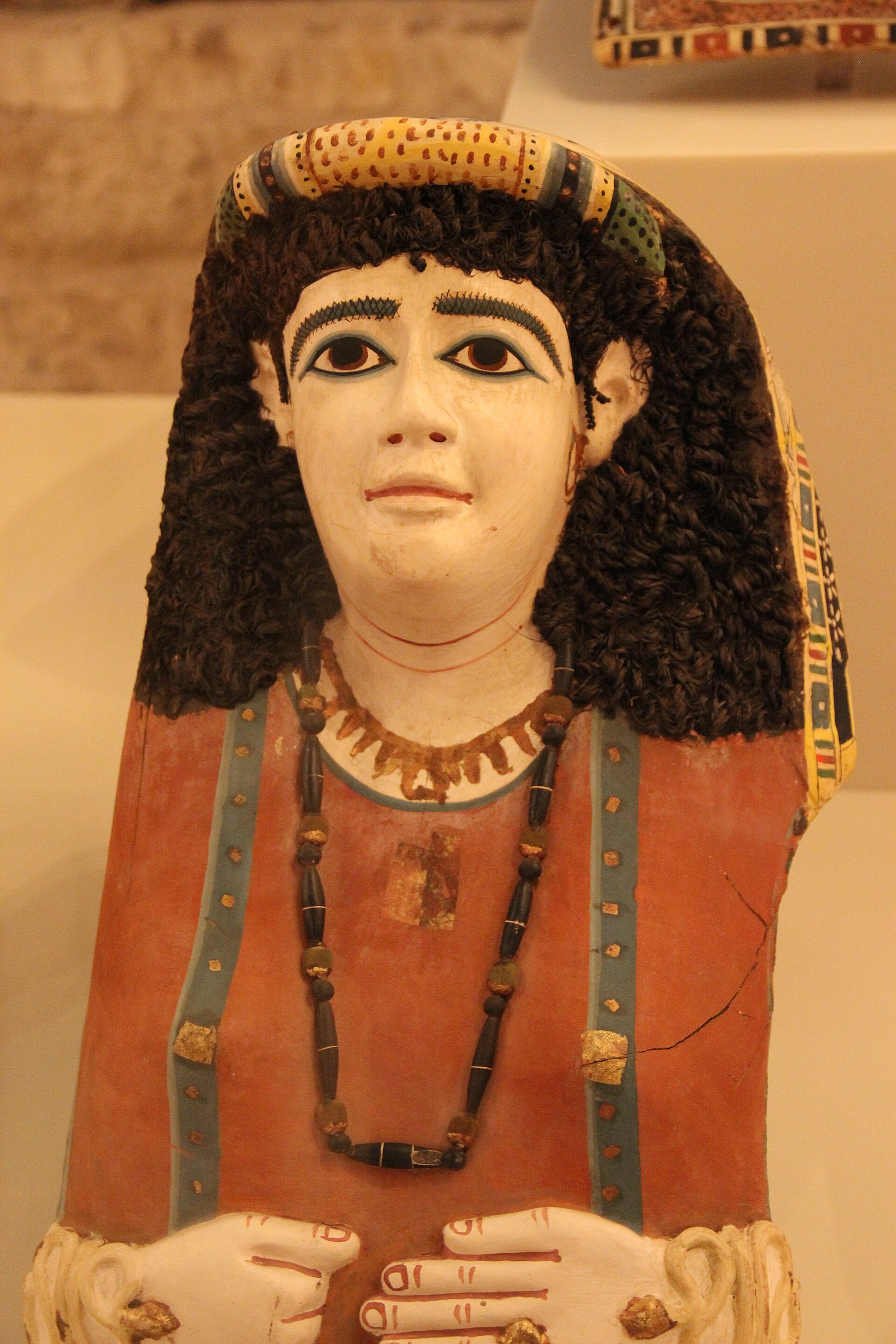
Ancient Egypt Mummy Portrait (28132792423)
Ancient Egypt Mummy Portrait (28132792423) Ancient Egypt Mummy Portrait · CC0
2016-08-03 18:54

Mummy portraits preserved a recognizable human face within funerary practice, joining personal identity with the transformed body prepared for burial.
Collection Highlights

SAGE COLLECTION VAULT
ROOM IV

Science Beneath the Wrappings

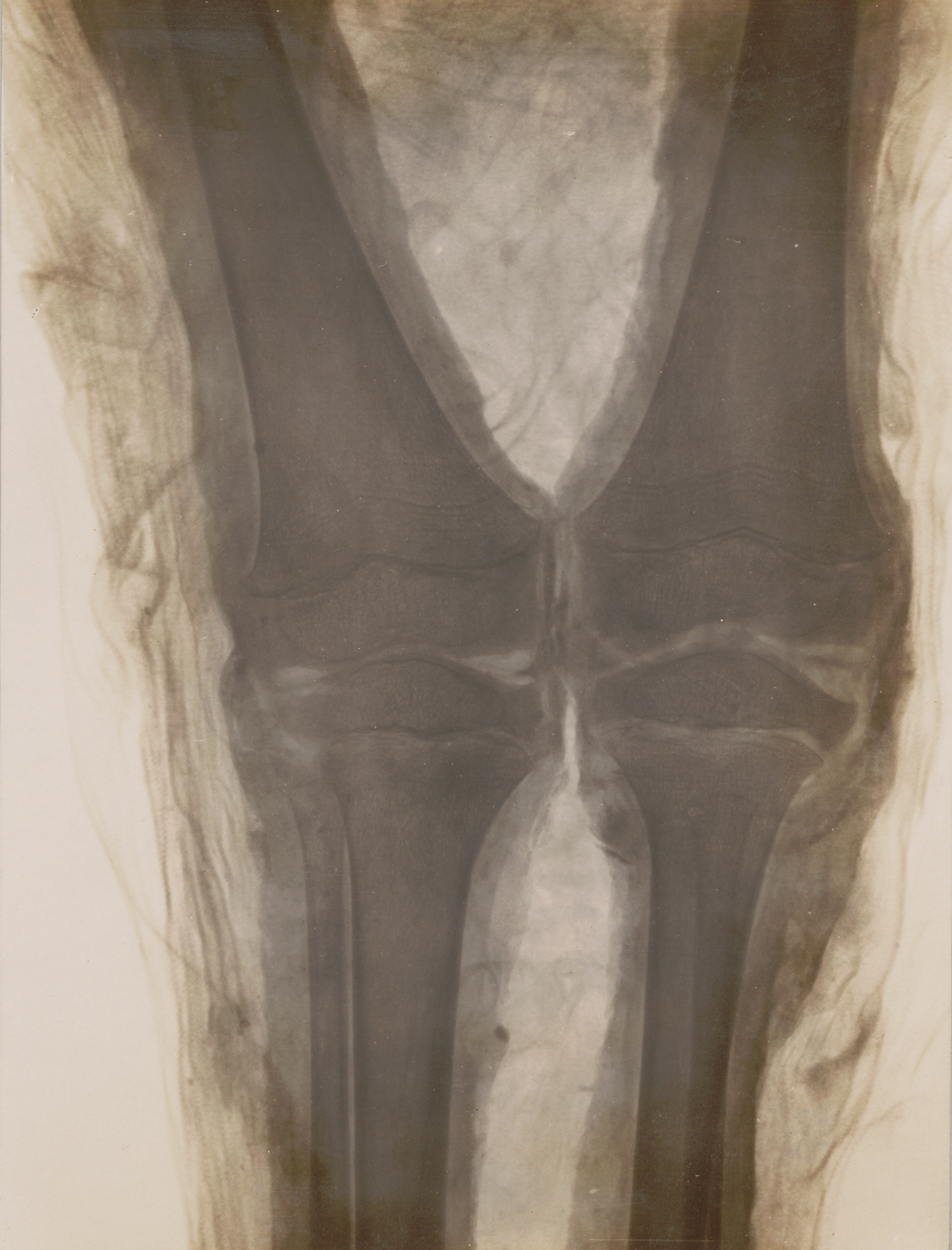
Modern imaging lets researchers investigate human remains without unwrapping them. Radiography and CT scanning can reveal age, injuries, disease, embalming choices and objects hidden beneath linen, allowing the ancient dead to be studied with far less physical disturbance.
0 verified collection records · Curatorial source: Mummy Science
1896 x-rays of Physikalischer Verein, mummy
1896 x-rays of Physikalischer Verein, mummy 14 Photographien mit Röntgen-Strahlen aufgenommen im Physikalischen Verein zu Frankfurt a. M. von Professor Dr. Walter König, scanned by Staatsbibliothek Berlin, https://digital.staatsbibliothek-berlin.de/werkansicht?PPN=PPN782498442 · Public domain
1896

Radiography opened a new way to study mummies without physically unwrapping them. Imaging can reveal skeletal structures and materials hidden beneath layers of ancient linen.
Collection Highlights

SAGE COLLECTION VAULT
Mummy In Coffin is also interpreted in this room because scientific study of the same human remains connects the physical mummy with modern non-invasive investigation.
ROOM V

Sacred Animals

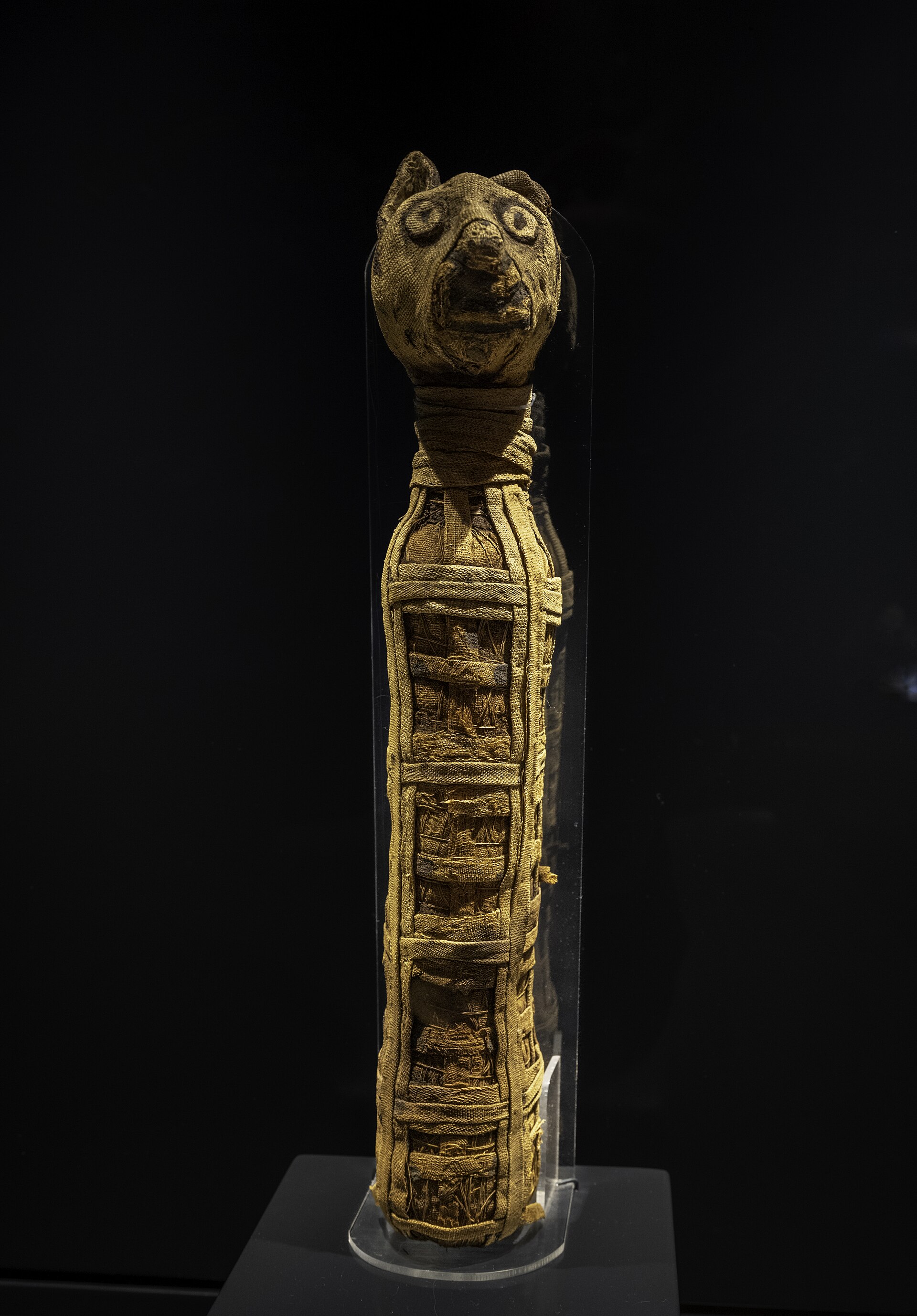
Millions of animals were mummified in ancient Egypt. Cats, ibises, falcons, crocodiles, snakes, bulls and other creatures could serve as sacred offerings, embody divine associations, or carry a petition from a worshipper into the realm of the gods.
23 verified collection records · Curatorial source: Animal Mummies
Ancient Egyptian animal mummy at the Musee de la civilisation
Ancient Egyptian animal mummy at the Musee de la civilisation Own work · CC0
2023-02-11 16:13:17

Animal mummification had several religious roles in Egypt. Animals could be sacred offerings and could carry symbolic connections to particular gods.
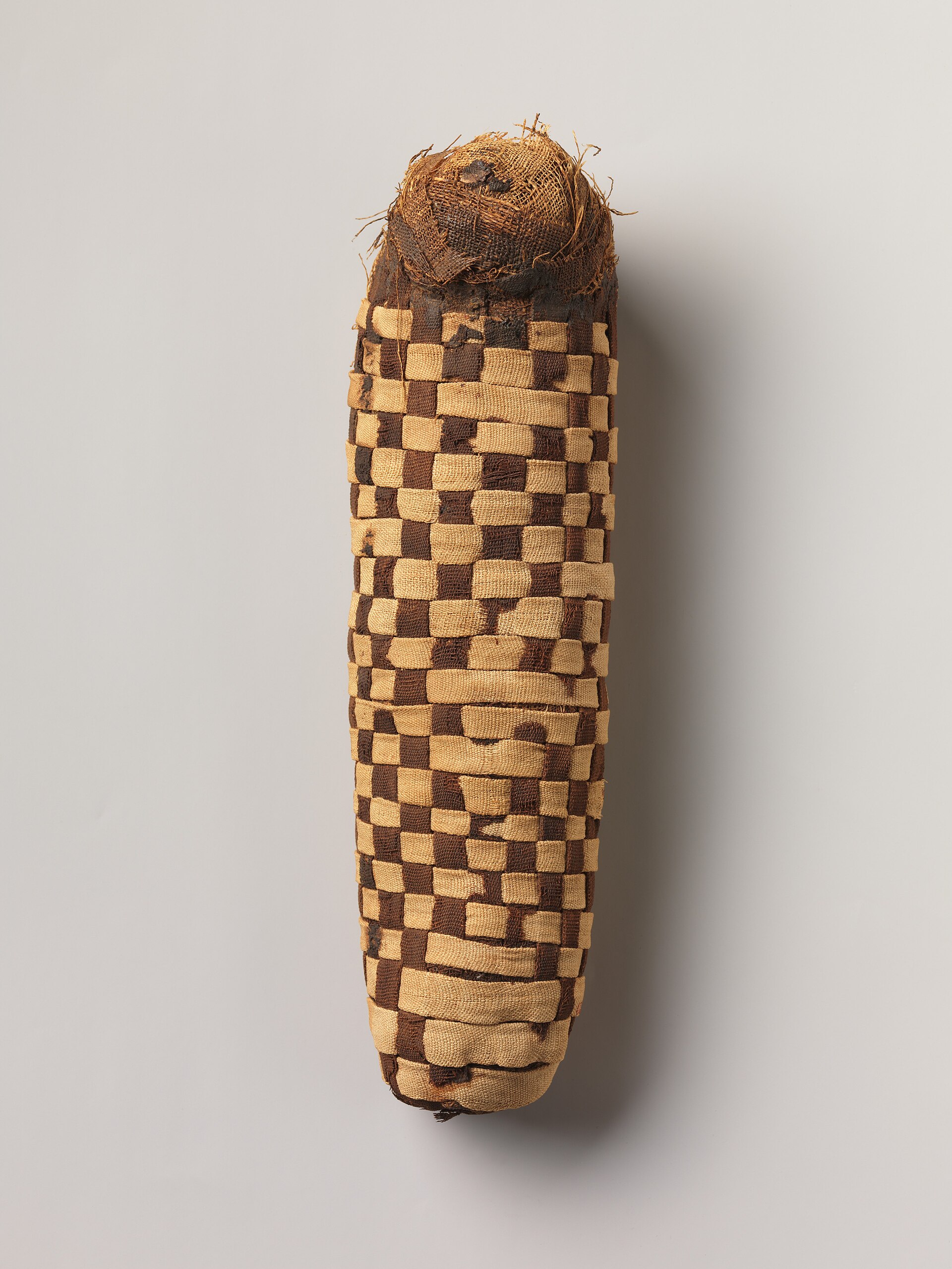
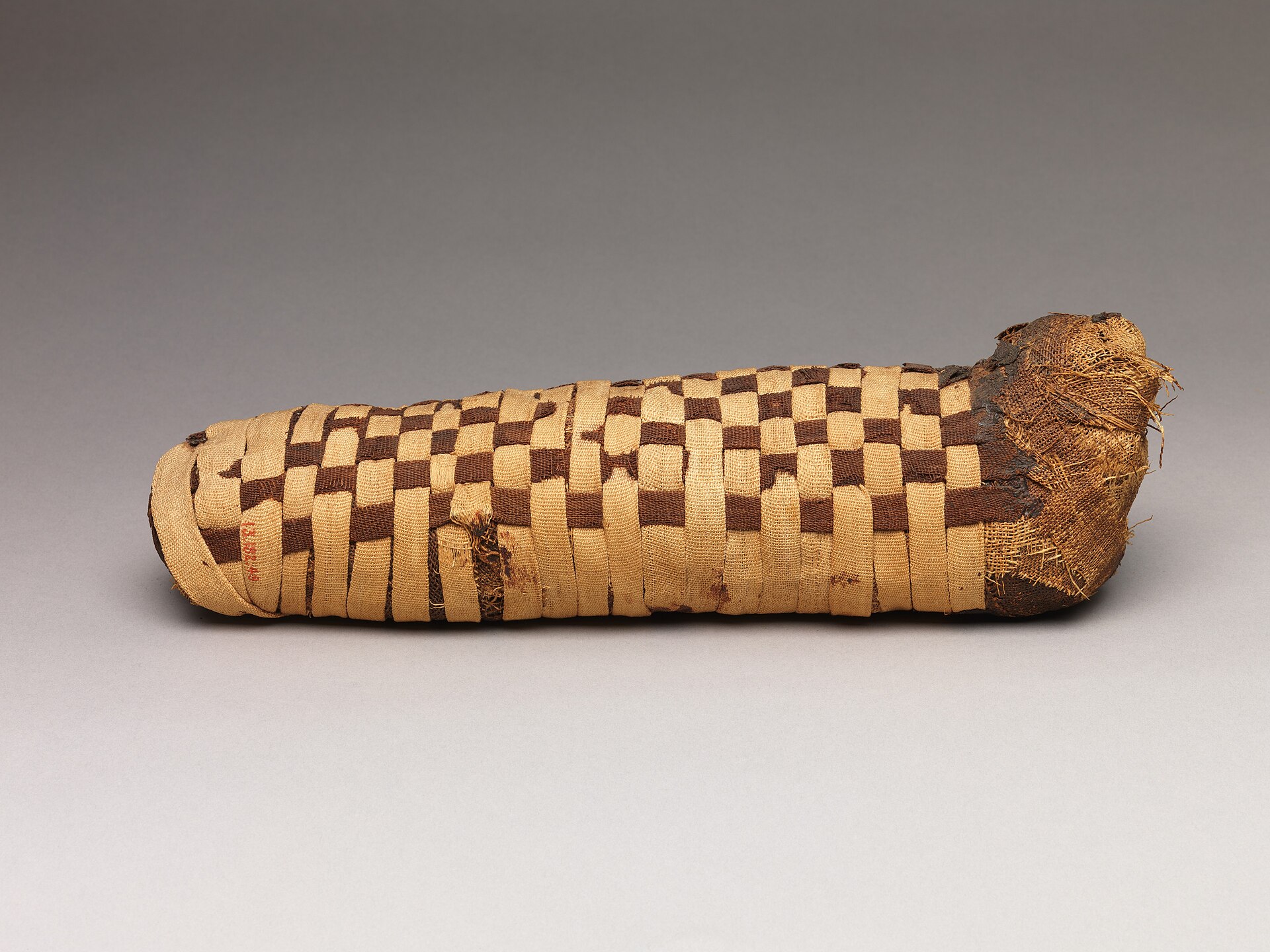
Sacred animal mummy containing a dog
Sacred animal mummy containing a dog This file was donated to Wikimedia Commons as part of a project by the Metropolitan Museum of Art . See the Image and Data Resources Open Access Policy · CC0
circa 400 B.C.–100 A.D. Period: Late Period–Roman Period

Animal mummification had several religious roles in Egypt. Animals could be sacred offerings and could carry symbolic connections to particular gods.
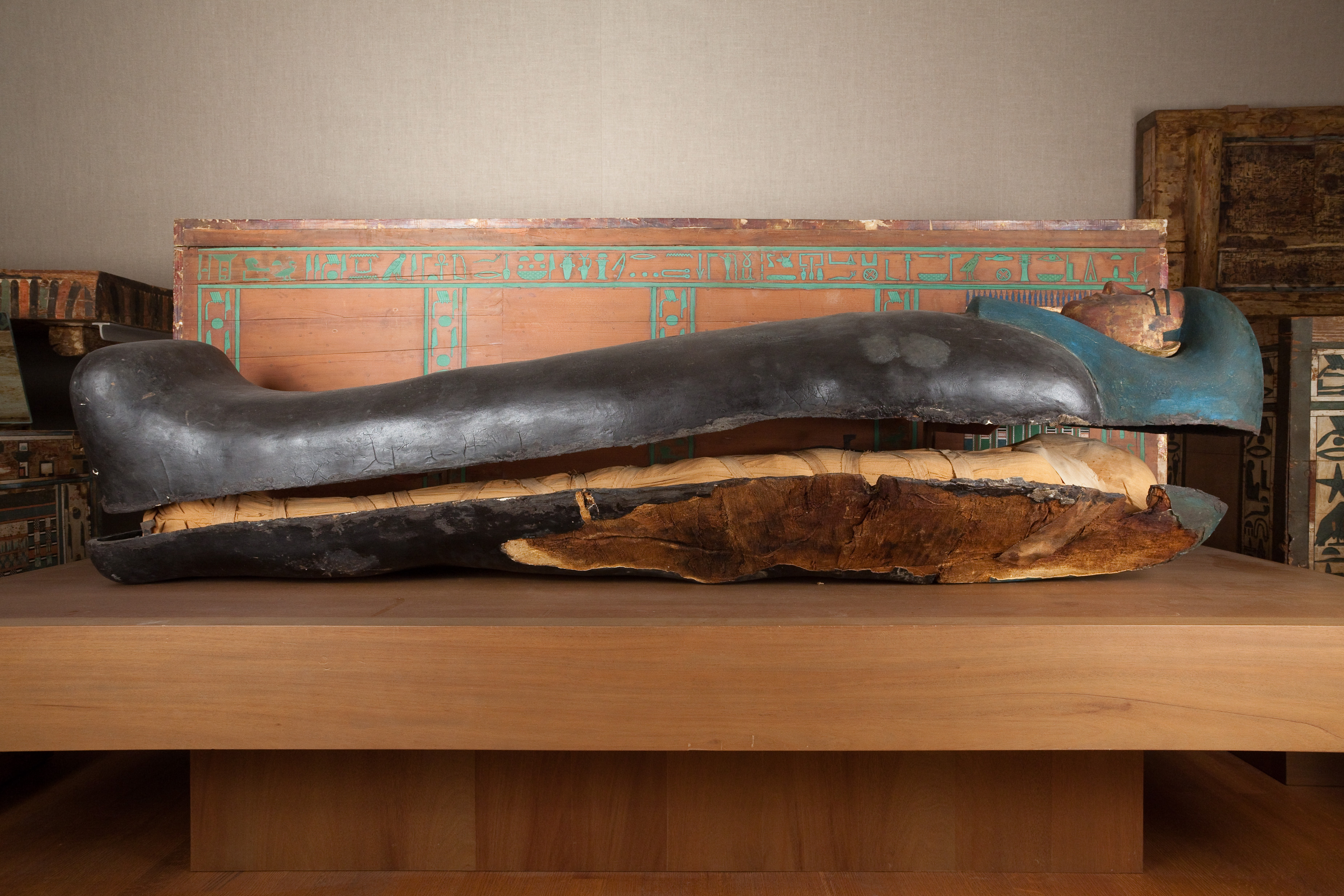
Sacred animal mummy containing a dog
Sacred animal mummy containing a dog This file was donated to Wikimedia Commons as part of a project by the Metropolitan Museum of Art . See the Image and Data Resources Open Access Policy · CC0
circa 400 B.C.–100 A.D. Period: Late Period–Roman Period

Animal mummification had several religious roles in Egypt. Animals could be sacred offerings and could carry symbolic connections to particular gods.
Collection Highlights

SAGE COLLECTION VAULT
View full room collection · 23 records
Mummy Of Kestrel nmnhanthropology_8188802
Mummified Cat nmnhanthropology_8083183
Wrapped Mummy Of A Kestrel nmnhanthropology_8206909
Mummied Cat In Wrapper nmnhanthropology_8072559
Mummied Ibis nmnhanthropology_8325980
Fragts. Of Mummied Animals nmnhanthropology_8028377
Mummy Of "Kitten" nmnhanthropology_8125404
Mummied Ibis nmnhanthropology_8072818
Mummied Ibis nmnhanthropology_8072819
Head Of Mummified Cat nmnhanthropology_8125403
Mummied Crocodile nmnhanthropology_8314204
Mummified Reptiles nmnhanthropology_8325979
Mummy Of Cat, In Mummy Wrappings nmnhanthropology_8191104
Bird Mummy nmnhanthropology_8284891
Funerary Urn Of Earthenware containing Ibis Mummy nmnhanthropology_8072816
Mummy Of Cat nmnhanthropology_8125401
Falcon-Shaped Wooden Coffin, With Falcon Mummy nmnhanthropology_8175523
Mummy, Baboon nmnhanthropology_8297238
Small Bull Mummy/1 nmnhanthropology_8162347
Snake Cofffin - Bronze Box nmnhanthropology_8175521
Bronze Lizard Coffin nmnhanthropology_8010143
Ibis Sculpture nmnhanthropology_8504008
Ibis Statuette, On Wood Base nmnhanthropology_8162380
ROOM VI

The Coffin of Tentkhonsu

Tentkhonsu's nested coffins preserve more than decoration. Their imagery placed her within a religious universe of protection, transformation and divine power, while also preserving traces of an individual woman whose burial crossed thousands of years to reach the present.
2 verified collection records · Curatorial source: Tentkhonsu's Coffin
Mummy of a woman named Nephthys
Mummy of a woman named Nephthys The Metropolitan Museum of Art · Public Domain / The Met Open Access
ca. 1961–1878 B.C.

Painted coffins formed protective environments around the dead. Their texts, colors and divine figures connected an individual burial with Egyptian ideas of protection and rebirth.
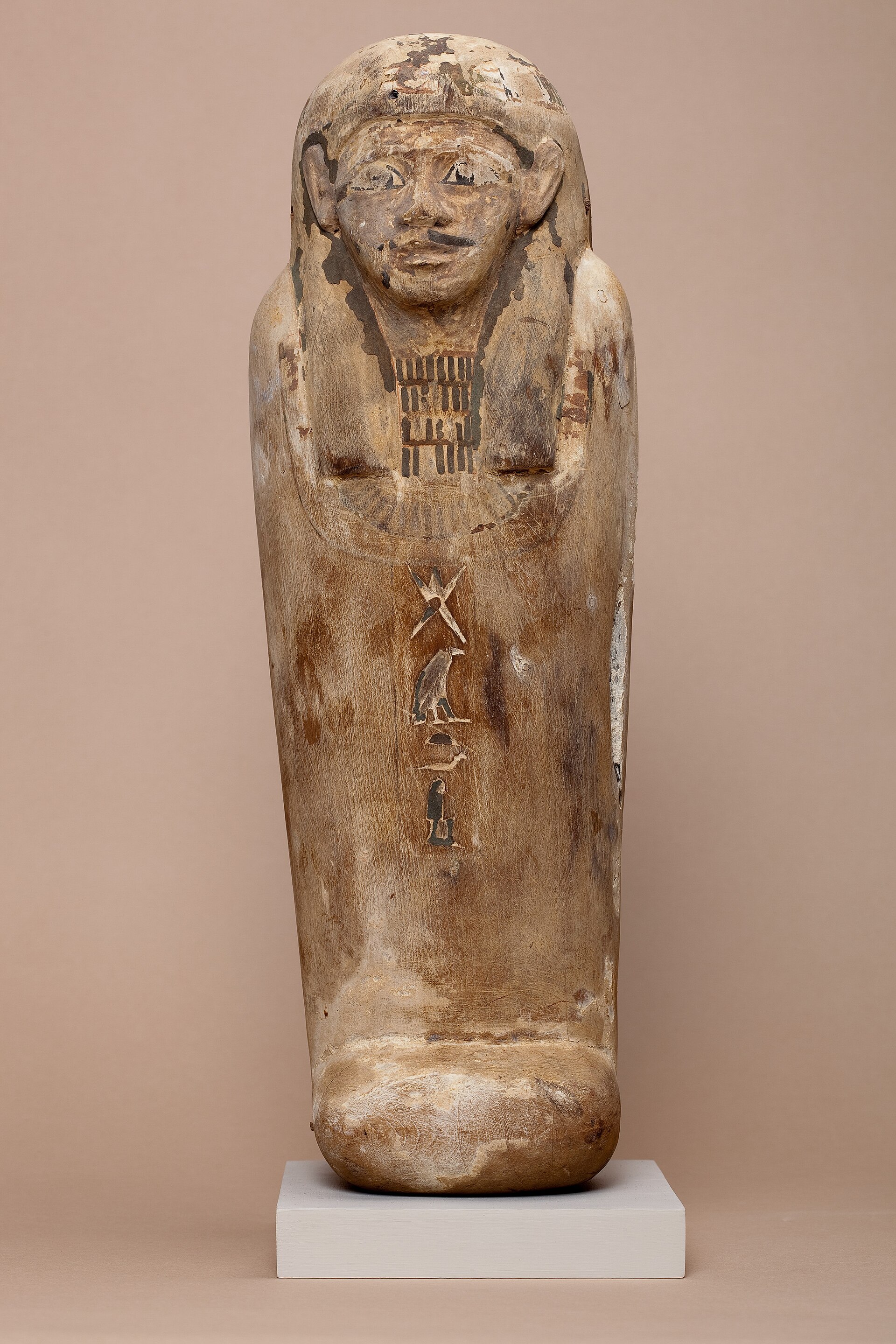
Anthropoid-coffin-form canopic container inscribed with the name of Duamutef
Anthropoid-coffin-form canopic container inscribed with the name of Duamutef This file was donated to Wikimedia Commons as part of a project by the Metropolitan Museum of Art . See the Image and Data Resources Open Access Policy · CC0
circa 1981 date QS:P571,+1981-00-00T00:00:00Z/9,P1480,Q5727902 –1802 B.C. Period: Middle Kingdom Dynasty: Dynasty 12

Canopic equipment belonged to the funerary system surrounding preservation of the dead. Vessels and containers were associated with the treatment and ritual protection of the internal organs.
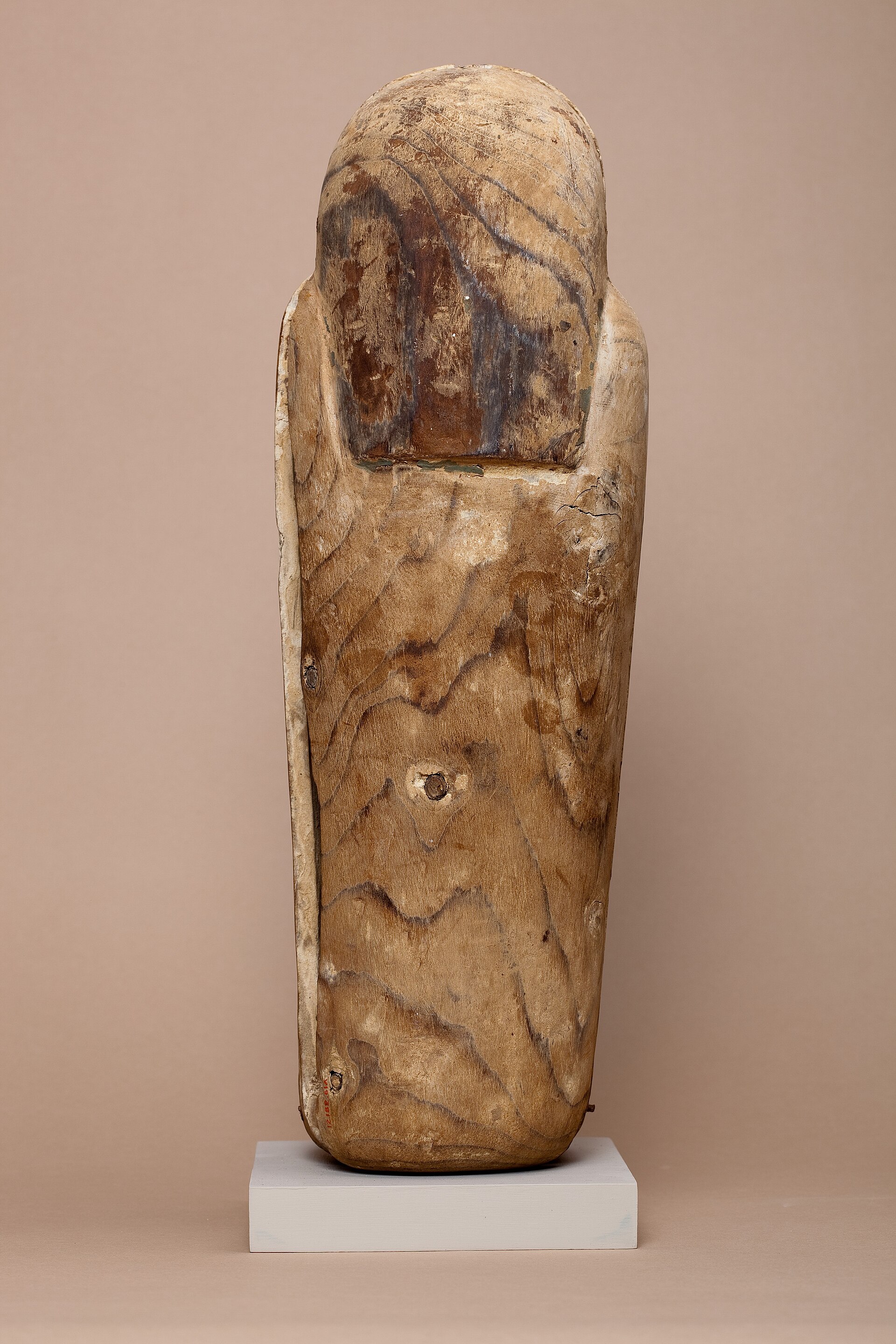
Anthropoid-coffin-form canopic container inscribed with the name of Duamutef
Anthropoid-coffin-form canopic container inscribed with the name of Duamutef This file was donated to Wikimedia Commons as part of a project by the Metropolitan Museum of Art . See the Image and Data Resources Open Access Policy · CC0
circa 1981 date QS:P571,+1981-00-00T00:00:00Z/9,P1480,Q5727902 –1802 B.C. Period: Middle Kingdom Dynasty: Dynasty 12

Canopic equipment belonged to the funerary system surrounding preservation of the dead. Vessels and containers were associated with the treatment and ritual protection of the internal organs.
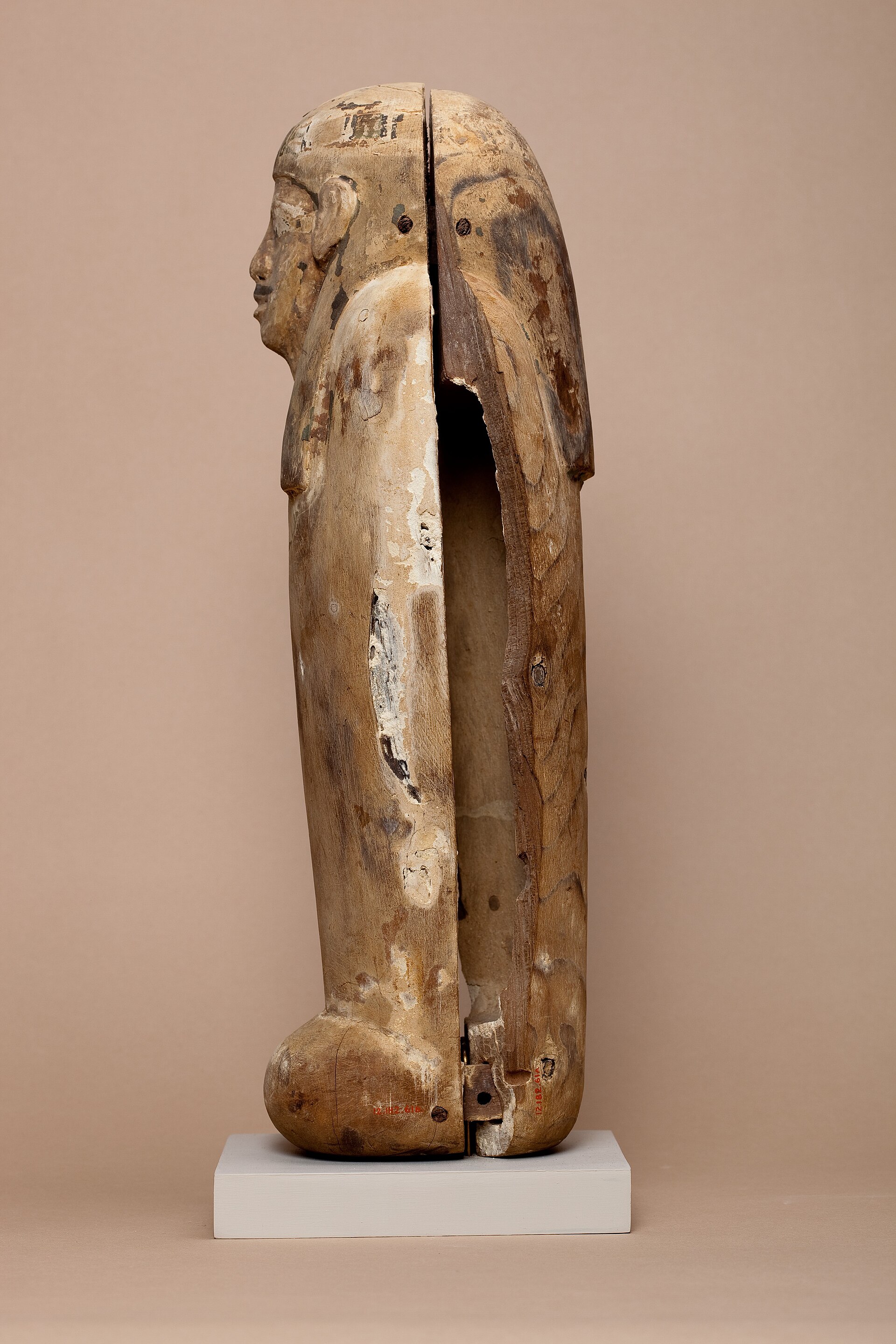
Anthropoid-coffin-form canopic container inscribed with the name of Duamutef
Anthropoid-coffin-form canopic container inscribed with the name of Duamutef This file was donated to Wikimedia Commons as part of a project by the Metropolitan Museum of Art . See the Image and Data Resources Open Access Policy · CC0
circa 1981 date QS:P571,+1981-00-00T00:00:00Z/9,P1480,Q5727902 –1802 B.C. Period: Middle Kingdom Dynasty: Dynasty 12

Canopic equipment belonged to the funerary system surrounding preservation of the dead. Vessels and containers were associated with the treatment and ritual protection of the internal organs.
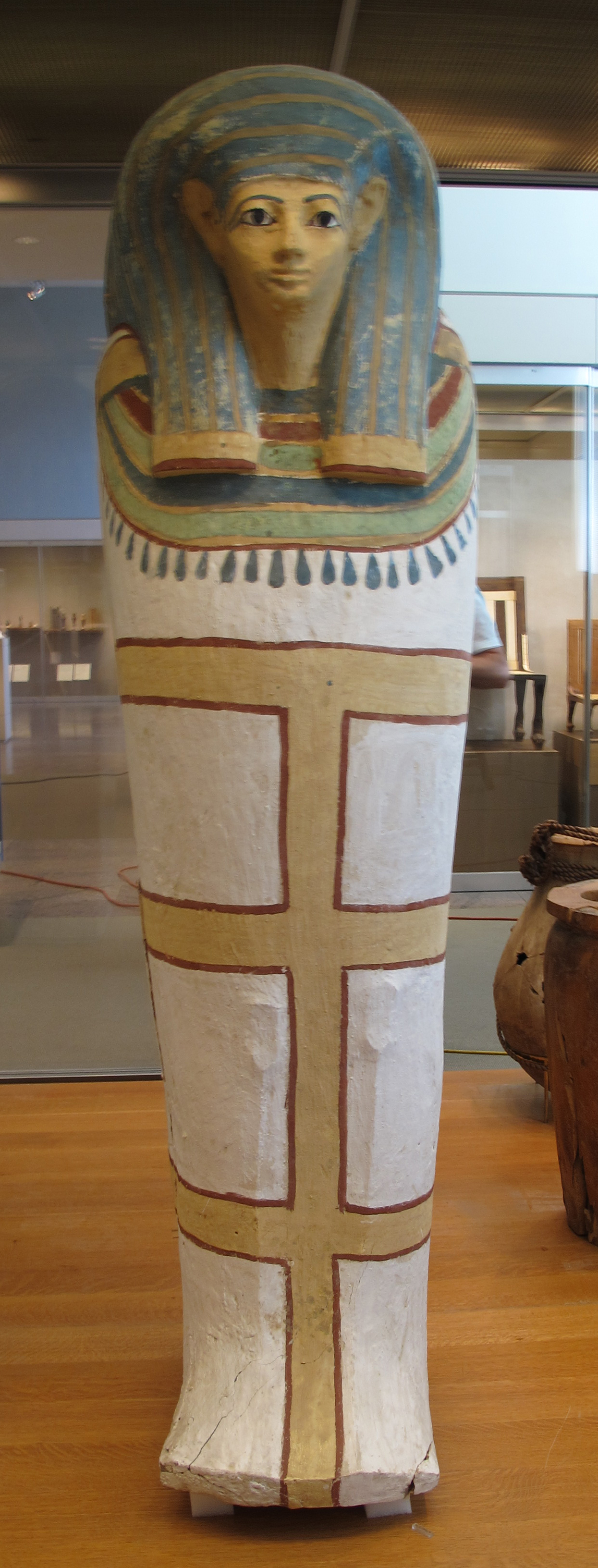
Anthropoid Coffin of a Woman
Anthropoid Coffin of a Woman This file was donated to Wikimedia Commons as part of a project by the Metropolitan Museum of Art . See the Image and Data Resources Open Access Policy · CC0
circa 1479 date QS:P571,+1479-00-00T00:00:00Z/9,P1480,Q5727902 –1458 B.C. Period: New Kingdom Dynasty: Dynasty 18 Reign: Joint reign of Hatshepsut and Thutmose III

Egyptian coffins were more than containers. They formed protective sacred environments whose imagery and inscriptions helped guide and transform the deceased.
Collection Highlights

SAGE COLLECTION VAULT
ROOM VII

Preparing for Eternity

Eternal life required preparation. Shabtis could work on behalf of the deceased, amulets protected the body and spirit, models supplied symbolic needs, and funerary objects addressed dangers believed to await the dead on the journey beyond the tomb.
26 verified collection records · Curatorial source: Preparing for Eternal Life
Amulet Carved in Intaglio (Incised)
Amulet Carved in Intaglio (Incised) The Metropolitan Museum of Art · Public Domain / The Met Open Access
6th–7th century

Amulets were worn or placed with the dead as concentrated forms of symbolic protection. Their material, color and shape could connect them with particular gods or sacred powers.
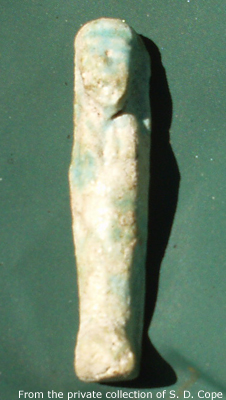
Ushabti
Ushabti No machine-readable source provided. Own work assumed (based on copyright claims). · Public domain
1 September 2005 (according to Exif data)

Shabtis were small funerary figures placed with the dead. They were intended to perform required labor on behalf of the deceased in the afterlife.
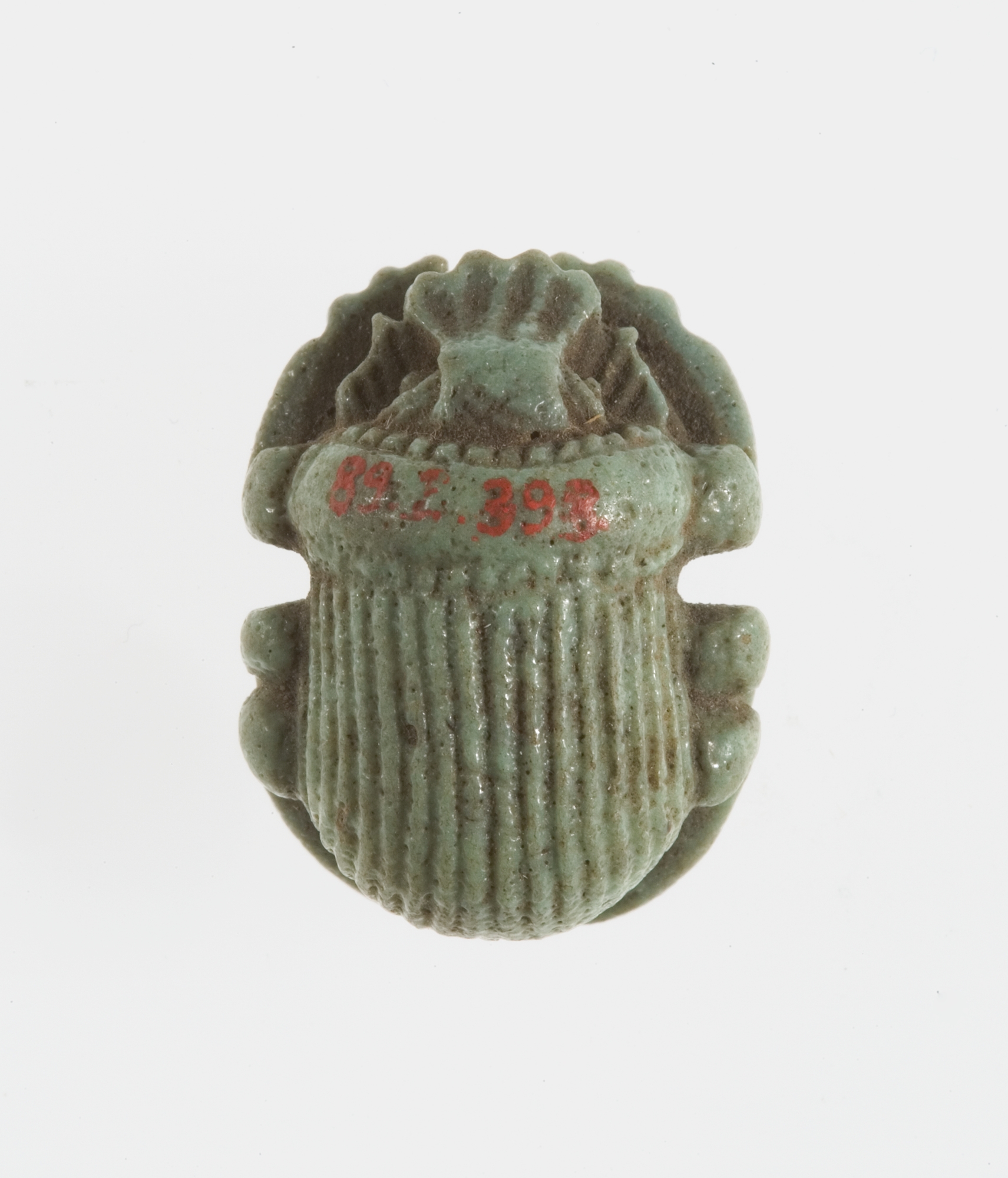
Funerary scarab
Funerary scarab The Metropolitan Museum of Art · Public Domain / The Met Open Access
664–30 BCE

Heart scarabs were funerary amulets associated with judgment after death. Many were inscribed with a form of Book of the Dead Spell 30, asking the heart not to testify against its owner before Osiris.
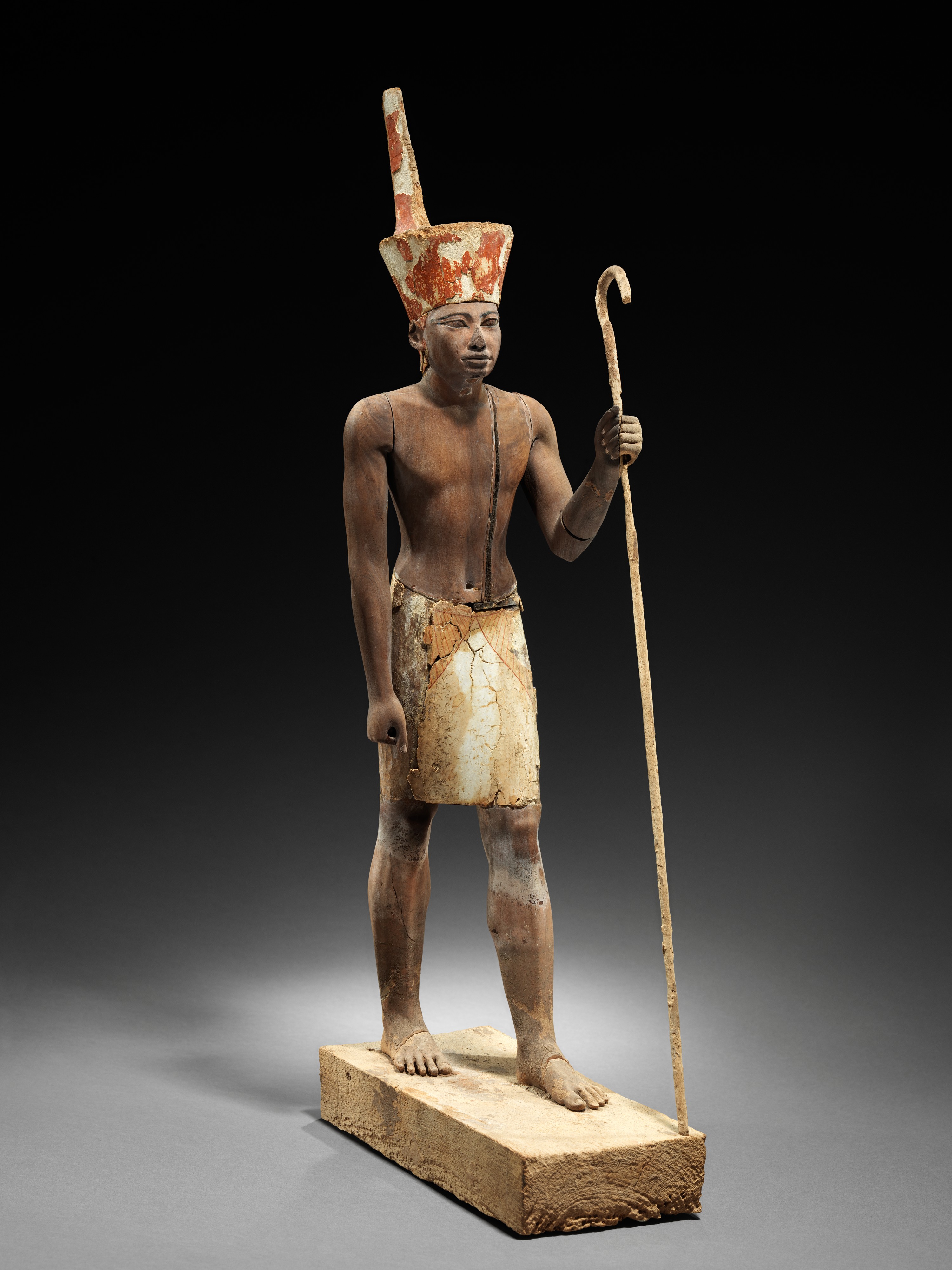
Guardian Figure
Guardian Figure The Metropolitan Museum of Art · Public Domain / The Met Open Access
ca. 1919–1885 B.C.

Funerary equipment addressed practical and sacred needs believed to continue after death. Amulets, shabtis, models and other objects offered service, protection and symbolic power.
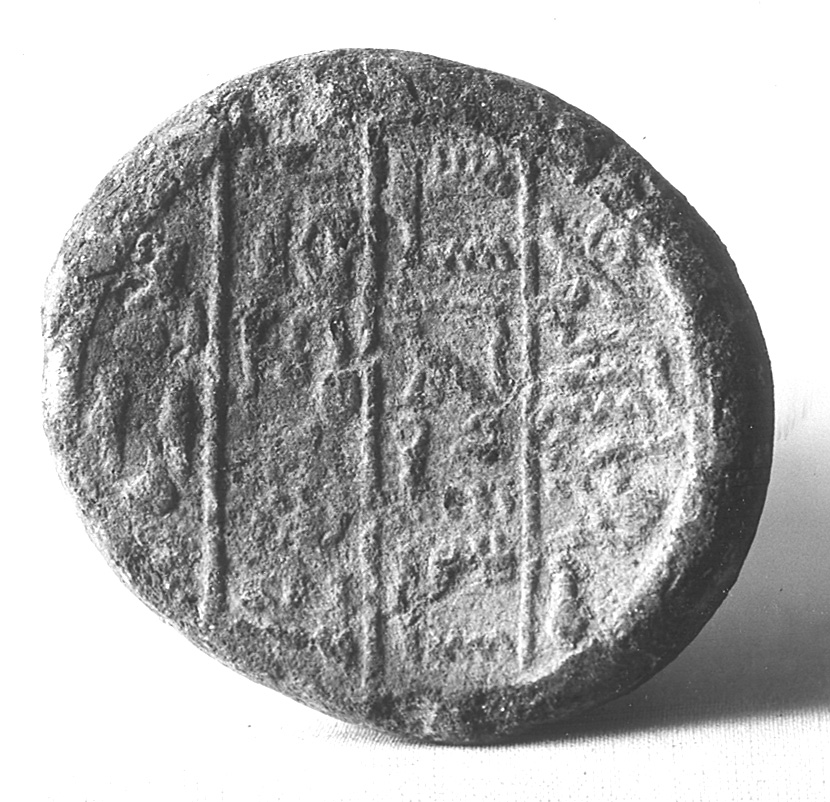
Funerary Cone of  Amenemopet called Tjanefer
Funerary Cone of Amenemopet called Tjanefer The Metropolitan Museum of Art · Public Domain / The Met Open Access
ca. 1550–1347 BCE

Funerary equipment addressed practical and sacred needs believed to continue after death. Amulets, shabtis, models and other objects offered service, protection and symbolic power.
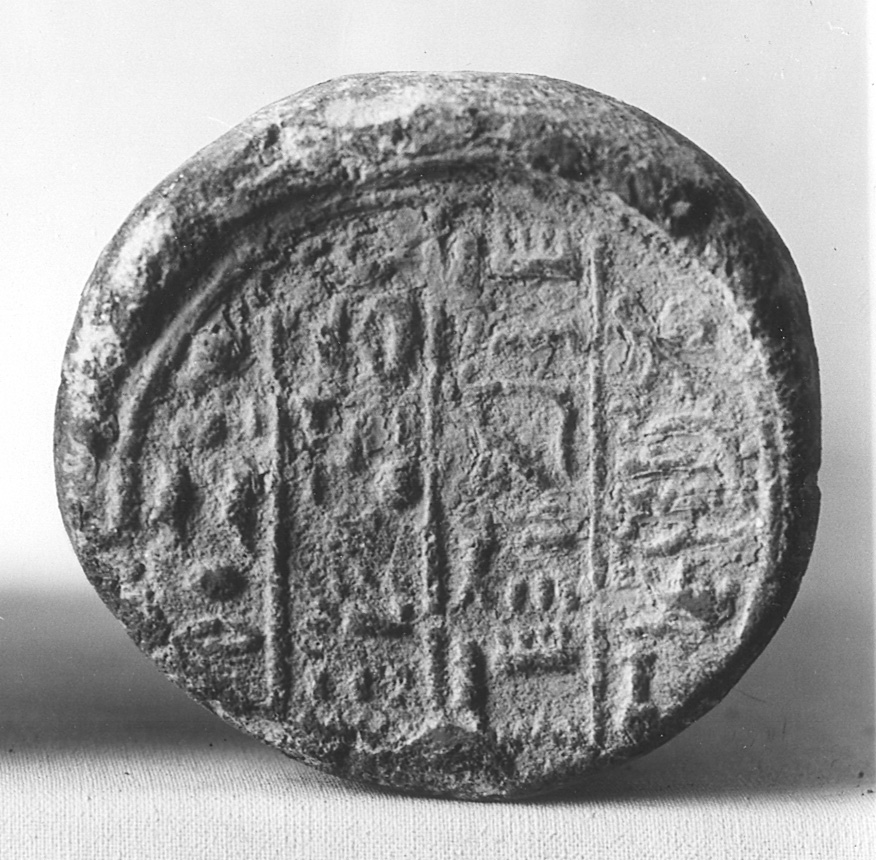
Funerary Cone of Amenemopet called Tjanefer
Funerary Cone of Amenemopet called Tjanefer The Metropolitan Museum of Art · Public Domain / The Met Open Access
ca. 1550–1347 BCE

Funerary equipment addressed practical and sacred needs believed to continue after death. Amulets, shabtis, models and other objects offered service, protection and symbolic power.
Collection Highlights

SAGE COLLECTION VAULT
View full room collection · 26 records
Shabti nmnhanthropology_8077517
Royal Shabti nmnhanthropology_8087759
Wooden Shabti nmnhanthropology_8043122
Offering Table nmnhanthropology_8175518
Offering Tray, Pottery nmnhanthropology_8175524
Earthenware Model Of Bed nmnhanthropology_8121949
Beaded Breast Ornament nmnhanthropology_8110603
Sepulchral Box nmnhanthropology_8026587
Ushabti nmnhanthropology_8503988
Wood Box With (Terra Cotta) Ushabtis Painted nmnhanthropology_8175544
Ushabti nmnhanthropology_8503985
Ushabti nmnhanthropology_8503984
Shabti nmnhanthropology_8043129
Small Headrest Amulet nmnhanthropology_8010129
Necklaces nmnhanthropology_8184940
Sun-Disk In Crescent, Faience nmnhanthropology_8083788
Amulet: "Heart" nmnhanthropology_8206883
Djed pillar Amulet nmnhanthropology_8075360
Amulet, L-Shaped nmnhanthropology_8206878
Faience Pendant nmnhanthropology_8077509
Necklace Of Amulets nmnhanthropology_8072573
Paddle Doll nmnhanthropology_8168653
Heart "Ib" Amulet nmnhanthropology_8504099
Carving Of Man-Wood nmnhanthropology_8126284
Limestone Coffin Model nmnhanthropology_8503989
Figure Of A Man nmnhanthropology_8504001
ROOM VIII

Gods of the Eternal Journey

Osiris, Horus, Anubis, Isis, Ptah, Thoth and other deities represented different powers within the Egyptian sacred world. Their images offered protection, healing, resurrection, judgment and cosmic order to both the living and the dead.
32 verified collection records · Curatorial source: The Gods and Eternal Life
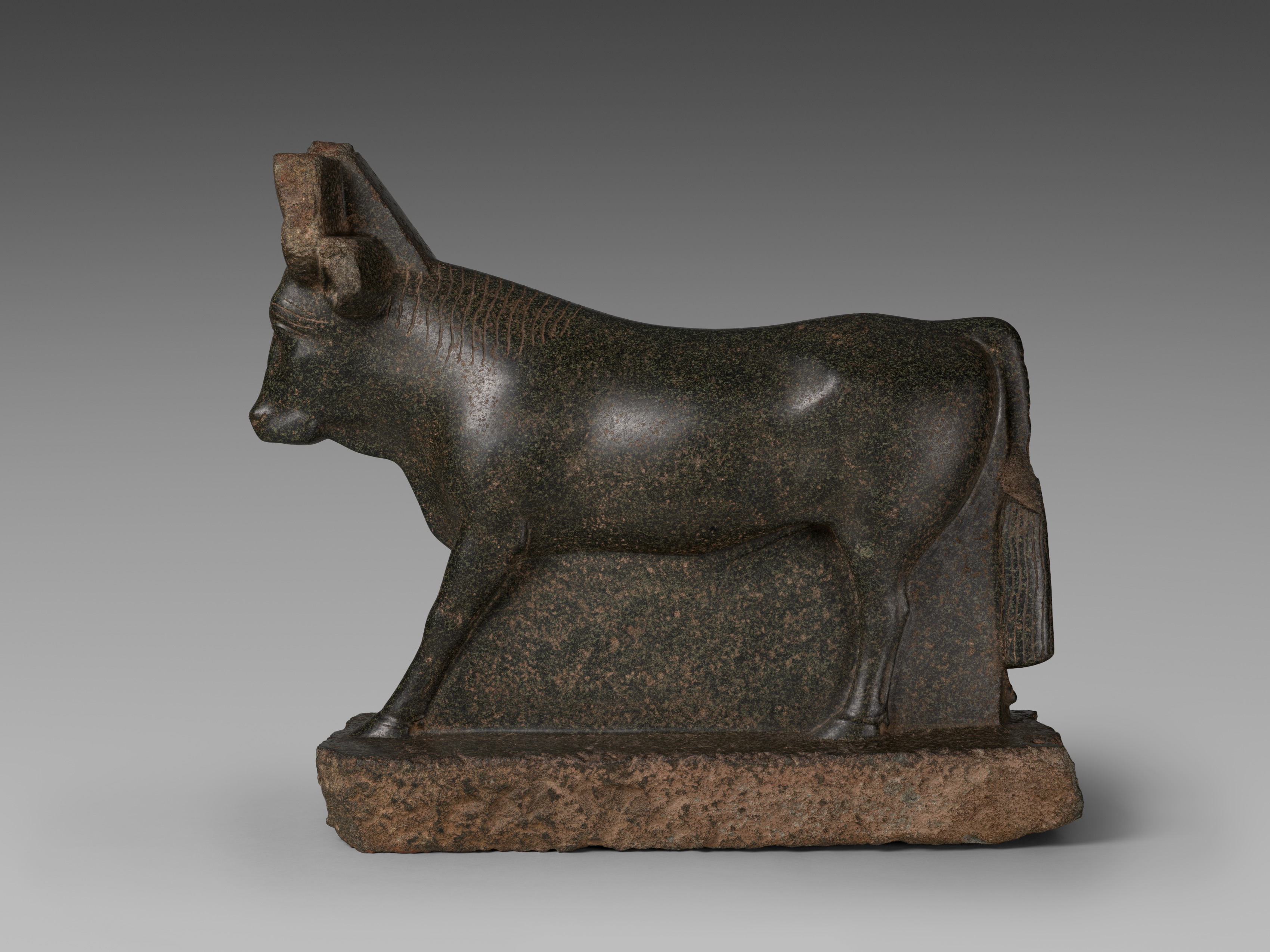
Apis Bull
Apis Bull Cleveland Museum of Art · CC0
400–100 BCE

Egyptian divine figures embodied different powers within the cosmos. In funerary settings their images could invoke protection, healing, judgment, resurrection and cosmic order.
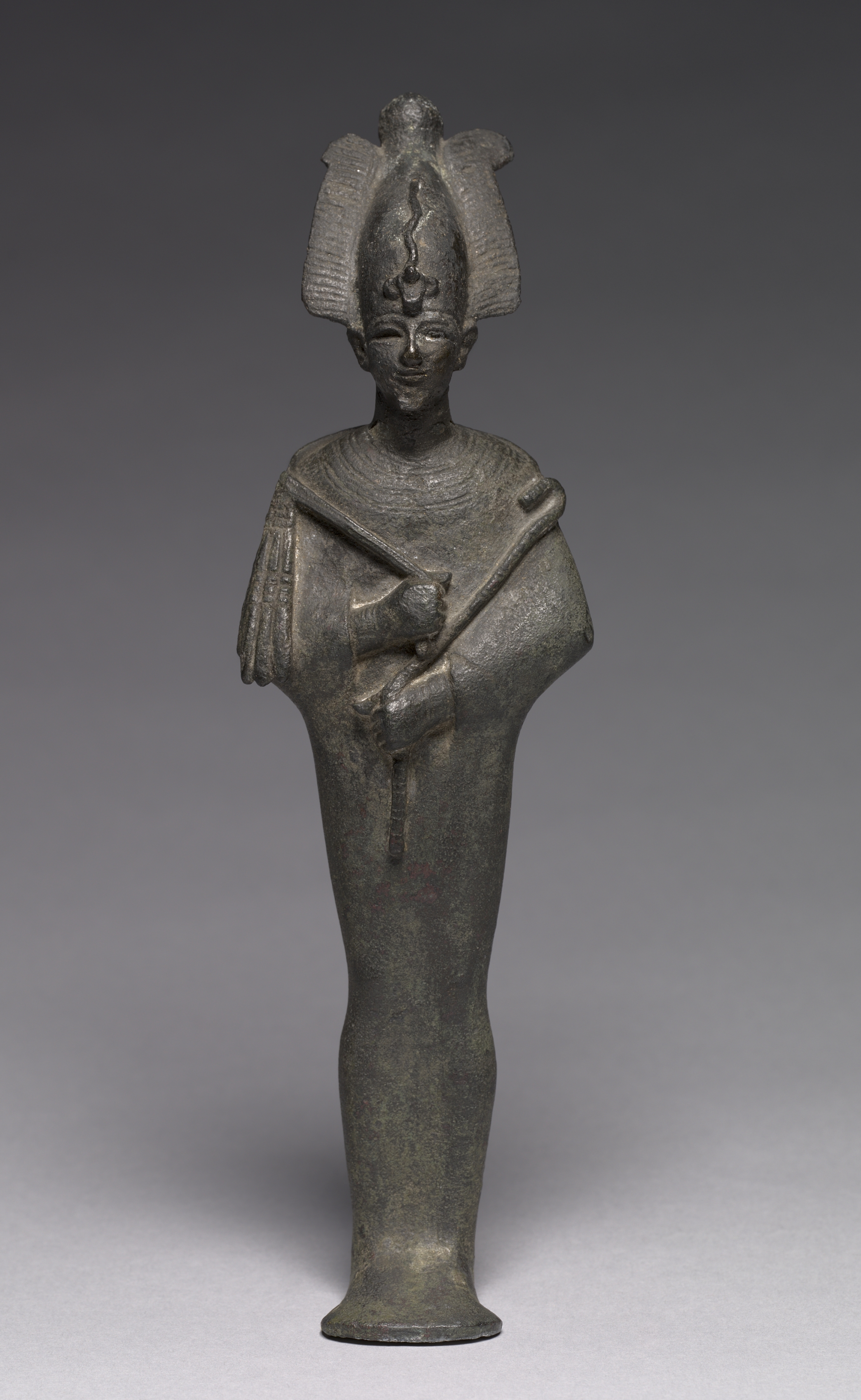
Statuette of Osiris
Statuette of Osiris Cleveland Museum of Art · CC0
664–30 BCE OR 664–330 BCE

Egyptian divine figures embodied different powers within the cosmos. In funerary settings their images could invoke protection, healing, judgment, resurrection and cosmic order.
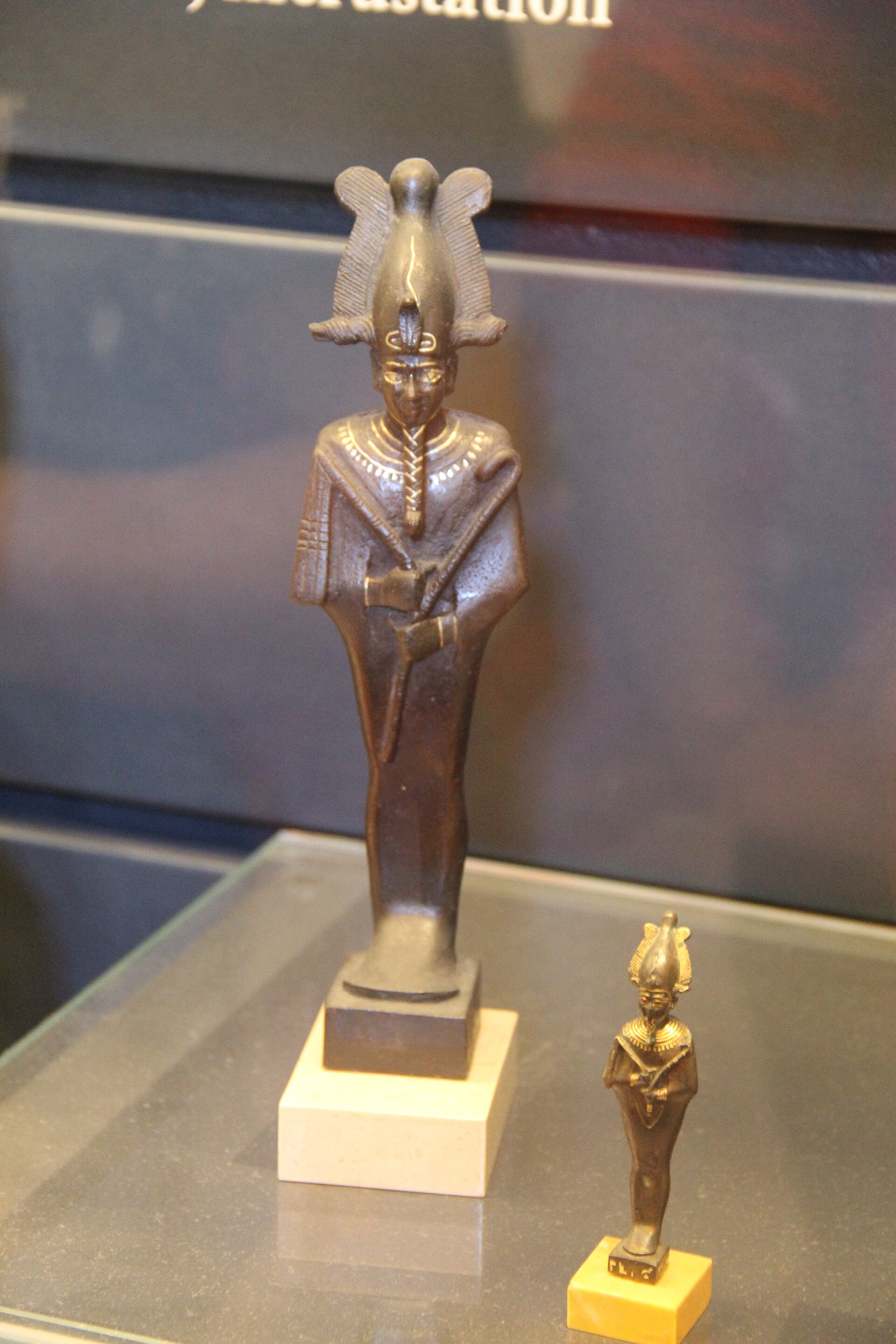
Ancient Egypt Bronze Statues of Osiris (28370040425)
Ancient Egypt Bronze Statues of Osiris (28370040425) Ancient Egypt Bronze Statues of Osiris · CC0
2016-07-15 18:26

Egyptian divine figures embodied different powers within the cosmos. In funerary settings their images could invoke protection, healing, judgment, resurrection and cosmic order.
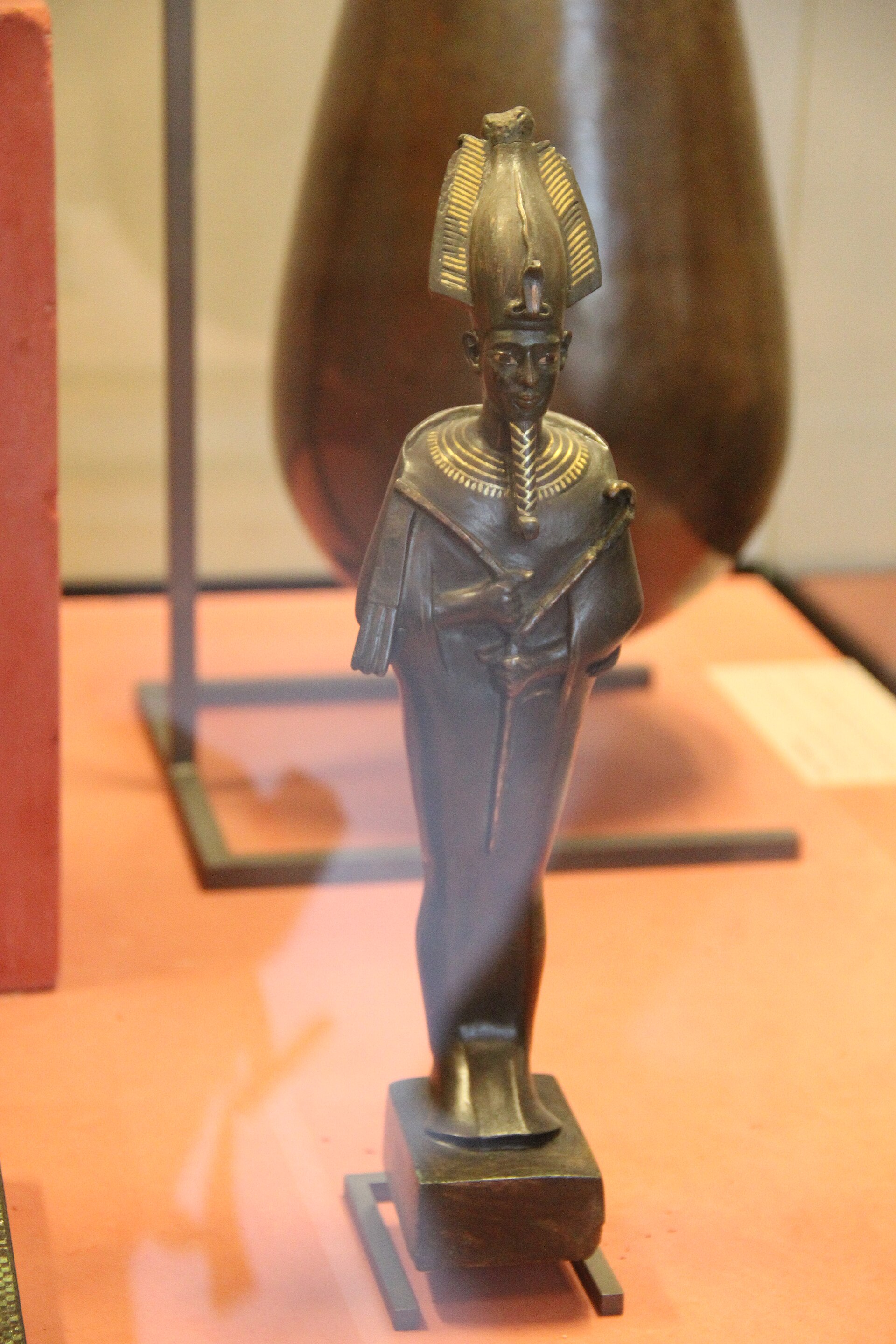
Ancient Egypt Bronze Statuette of Osiris (28253563251)
Ancient Egypt Bronze Statuette of Osiris (28253563251) Ancient Egypt Bronze Statuette of Osiris · CC0
2016-07-15 18:10

Egyptian divine figures embodied different powers within the cosmos. In funerary settings their images could invoke protection, healing, judgment, resurrection and cosmic order.
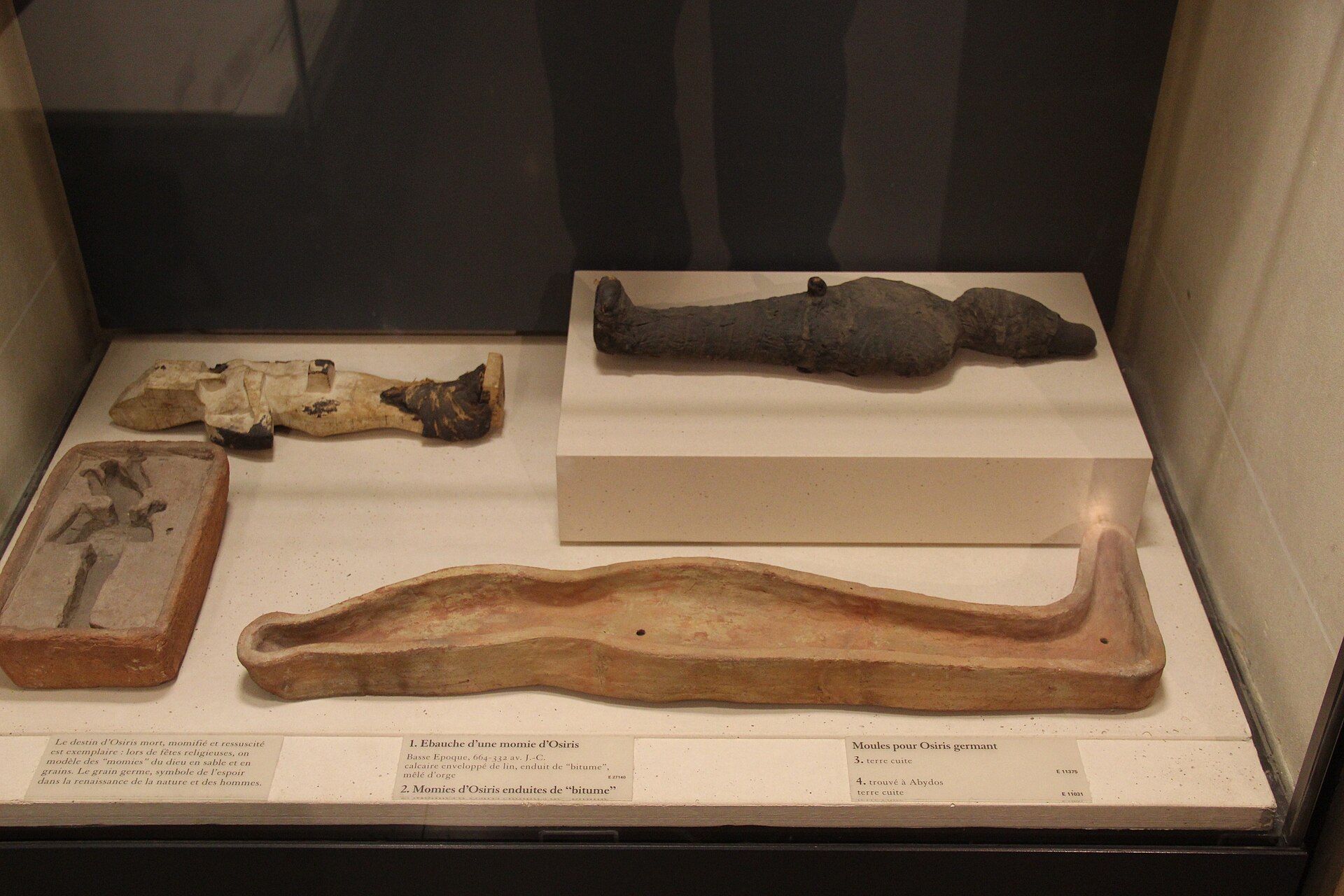
Ancient Egypt Osiris Images (27797085573)
Ancient Egypt Osiris Images (27797085573) Ancient Egypt Osiris Images · CC0
2016-07-15 19:16

Egyptian divine figures embodied different powers within the cosmos. In funerary settings their images could invoke protection, healing, judgment, resurrection and cosmic order.

Collection Highlights

SAGE COLLECTION VAULT
View full room collection · 32 records
Sm. Blue Faience Amulet, Uraeus nmnhanthropology_8110929
Bronze Statuette Of Nefertum nmnhanthropology_8193887
Sm. Blue Faience Amulet, The God Atum nmnhanthropology_8110936
Sm. Blue Faience Amulet, The Goddess Sakhmet nmnhanthropology_8110935
Bronze Statuette Of Khnum and Stand nmnhanthropology_8193885
Amulet: "Buckle (Or Tie) Of Isis". nmnhanthropology_8206881
Sm. Blue Faience Amulet, The Goddess Tauret nmnhanthropology_8110934
Horus Amulet nmnhanthropology_8168467
Amulet: "Feathers Of Amun" nmnhanthropology_8206880
Blue Faience Amulet, Son of Horus, Hapy nmnhanthropology_8110925
Bronze Figure - Horus As Hawk, Compos. Crown nmnhanthropology_8175520
Sm. Blue Faience Amulet, Son of Horus, Kebehsenuf nmnhanthropology_8110927
Falcon Headed Qebehsenuf Sons of Horus Amulet nmnhanthropology_8503993
Human Headed Imsety Sons of Horus Amulet nmnhanthropology_8504007
Baboon Headed Hapi Sons of Horus Amulet nmnhanthropology_8503994
"Eye Of Horus" Wdjet Eye nmnhanthropology_8193893
"Eye Of Horus" Wdjet Eye nmnhanthropology_8193892
Faience Amulet Of Ibis-Headed Thoth nmnhanthropology_8504097
Figure Of Standing Osiris nmnhanthropology_8503877
Wooden Figure Of Crouching Dog, Anubis nmnhanthropology_8168464
Amulet (Serpent) nmnhanthropology_8206873
Egyptian Amulet nmnhanthropology_8131643
Bronze Statuette Of Himnhotep nmnhanthropology_8193884
Flat Faience Figurine nmnhanthropology_8077499
Amulet nmnhanthropology_8030220
Amulet nmnhanthropology_8030219
Amulet nmnhanthropology_8030221
Amulet: "Ox Tied For Sacrifice." nmnhanthropology_8206884
Sm. Blue Amulet, the Sacred Eye (Wadjet) nmnhanthropology_8110930
Fragment Of Wooden Coffin Lid nmnhanthropology_8189637
Votive Statue, Figurine Of Dwarf nmnhanthropology_8206877
Faience Amulet nmnhanthropology_8168470
ROOM IX

Insects, Symbols and Transformation

The scarab became one of Egypt's most enduring symbols. Its association with emergence and the rising sun made it a potent image of renewal. Heart scarabs and winged scarabs carried that idea directly into funerary practice.
3 verified collection records · Curatorial source: Insects in Ancient Egypt
WHY THE SCARAB?

Rebirth and the Rising Sun

Egyptians connected the scarab beetle with Khepri, the rising form of the sun. The beetle became a visual language for emergence, renewal and transformation.

HEART & JUDGMENT

Do Not Speak Against Me

The heart was understood as a center of identity, memory and moral character. Heart scarabs could carry funerary spells asking the heart not to testify against its owner during judgment before Osiris.

WINGS & TRANSFORMATION

Carried Into Rebirth

Winged scarabs were made with holes so they could be sewn to mummy wrappings or bead nets across the chest. Their imagery joined solar renewal directly to the transformed body of the dead.

ROYAL RECORD

Amenhotep III's Bull Hunt

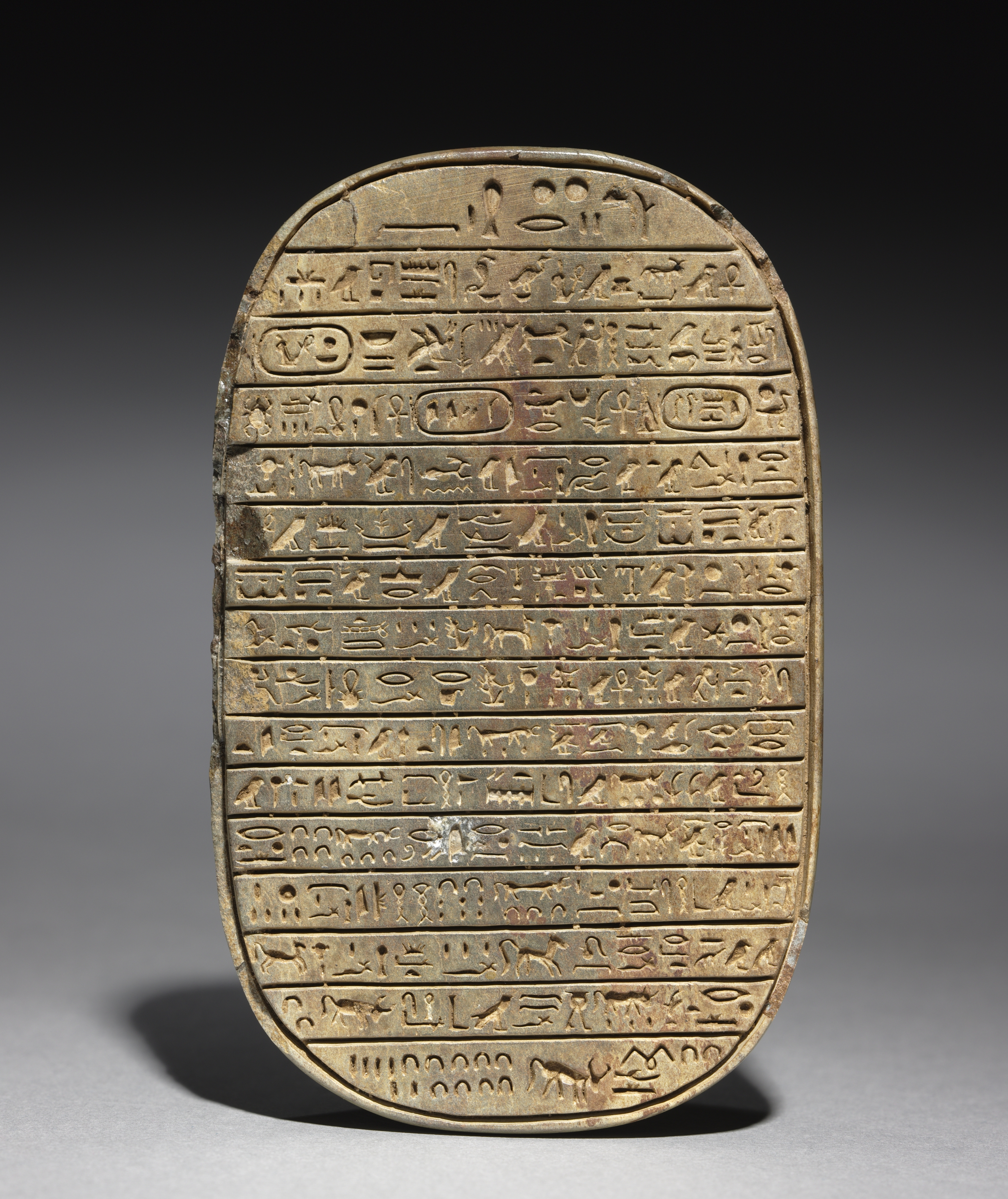
Some scarabs were records rather than simple amulets. One shown here preserves a royal account of Amenhotep III's hunt in which 96 bulls were killed, presenting the king as order overcoming chaos.
Interpretation researched from the Smithsonian National Museum of Natural History, The Metropolitan Museum of Art and the Cleveland Museum of Art. Supporting images remain locally hosted by SAGE.
Wild Bull Hunt Scarab of Amenhotep III
Wild Bull Hunt Scarab of Amenhotep III Cleveland Museum of Art · CC0
c. 1391–1353 BCE

A large commemorative scarab of Amenhotep III. Its inscription records a royal bull hunt in the king's second regnal year in which 96 bulls were killed. The hunt presented the king as a force of royal order overcoming the dangerous powers of nature and chaos.
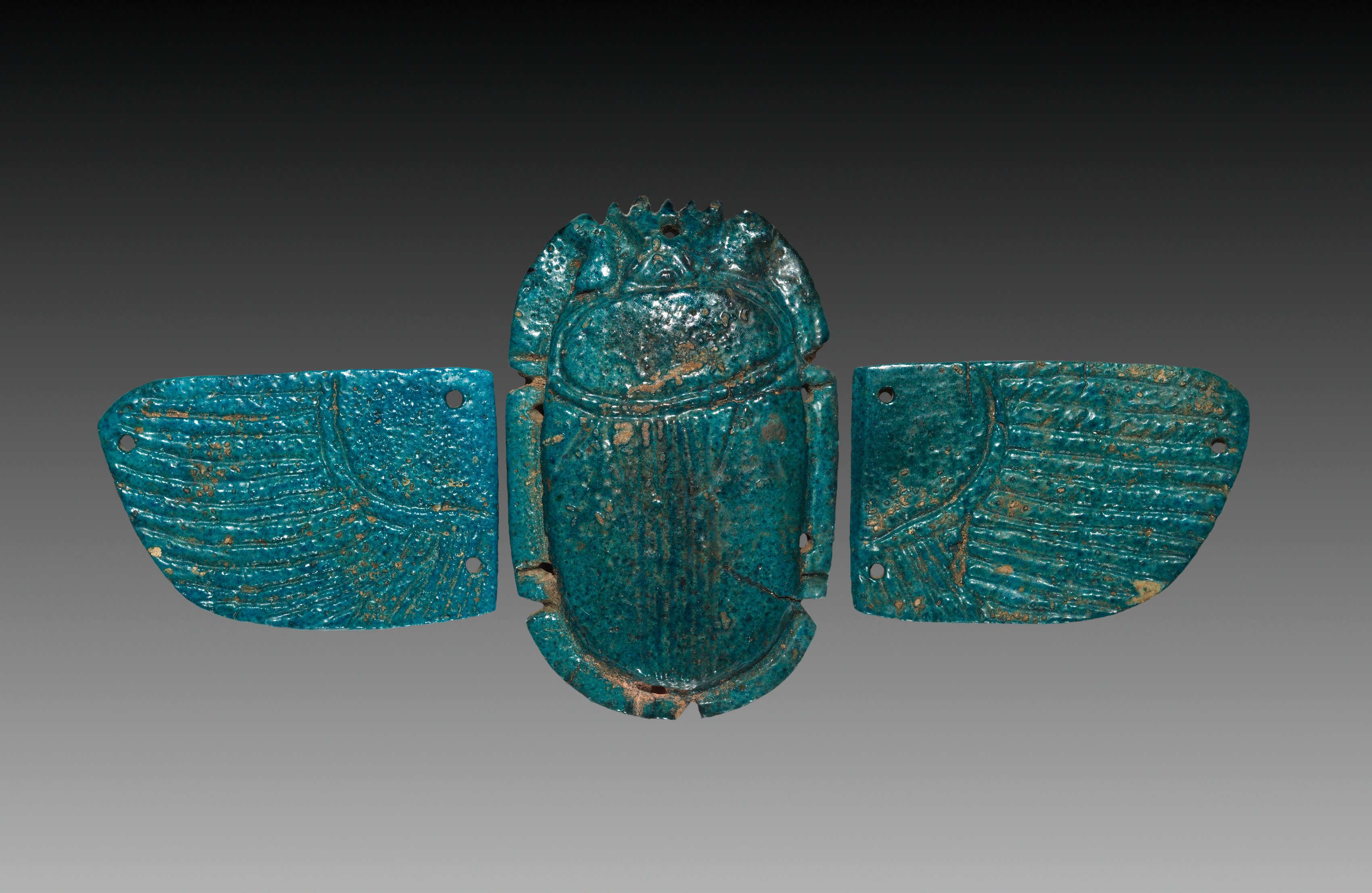
Winged Pectoral Scarab
Winged Pectoral Scarab Cleveland Museum of Art · CC0
664–525 BCE

A deep turquoise faience winged scarab. Winged scarabs represented rebirth and the solar god Khepri. Similar examples were pierced so they could be attached to mummy wrappings or bead nets over the chest.
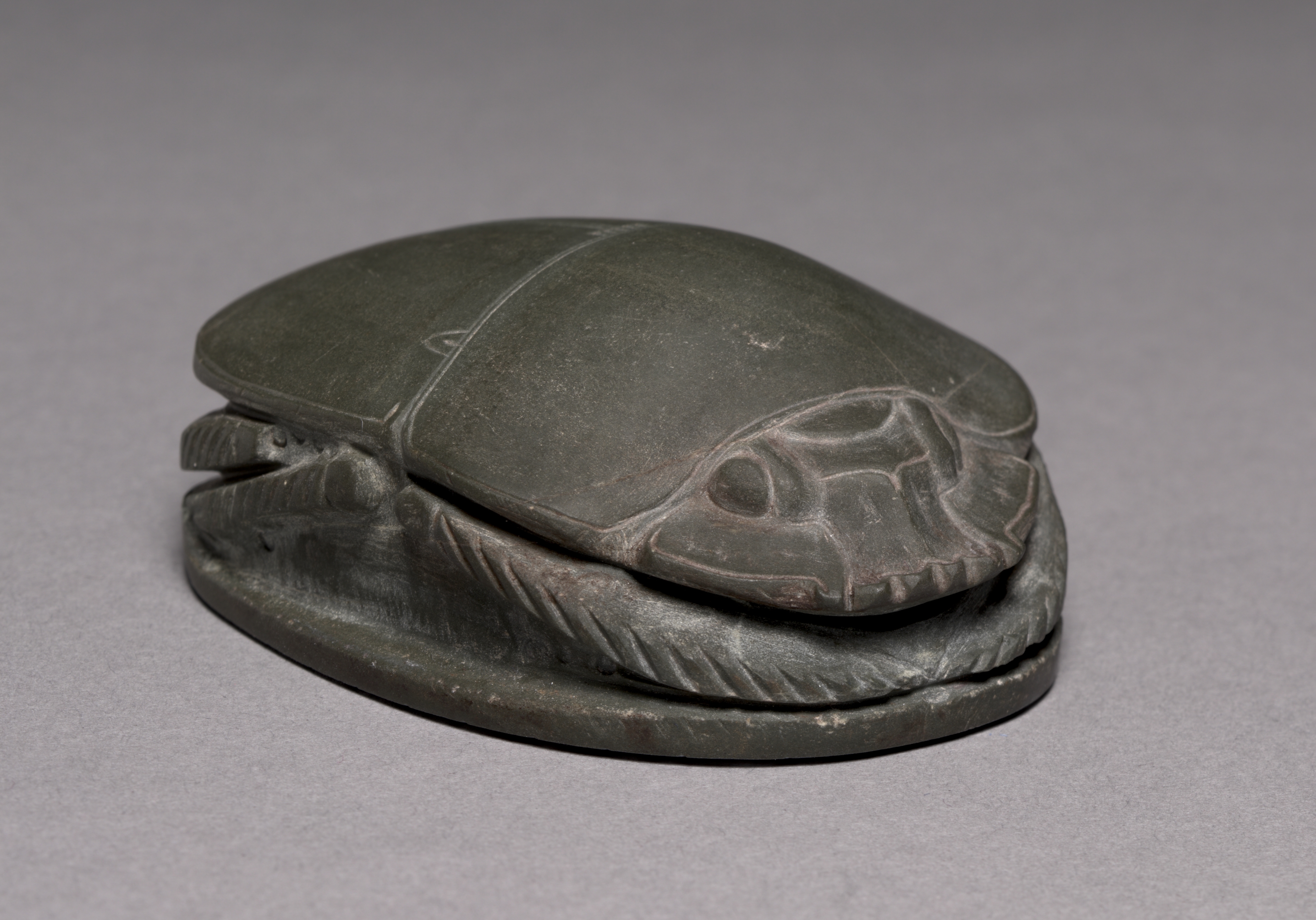
Heart Scarab of Nefer
Heart Scarab of Nefer Cleveland Museum of Art · CC0
1540–1296 BCE

A Dynasty 18 heart scarab made of graywacke. Heart scarabs protected the deceased during the final judgment. The heart was understood as a center of identity, memory and morality and was symbolically weighed against maat.
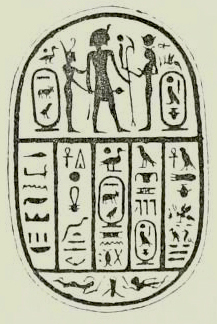
Scarab CG37399 Newberry
Scarab CG37399 Newberry Catalogue général des antiquités égyptiennes du Musée du Caire N° 36001-37521 - Scarab-shaped seals (1907) · Public domain
1907

The scarab beetle became closely associated with Khepri and the daily renewal of the sun. That connection made the scarab an enduring Egyptian image of transformation and rebirth.
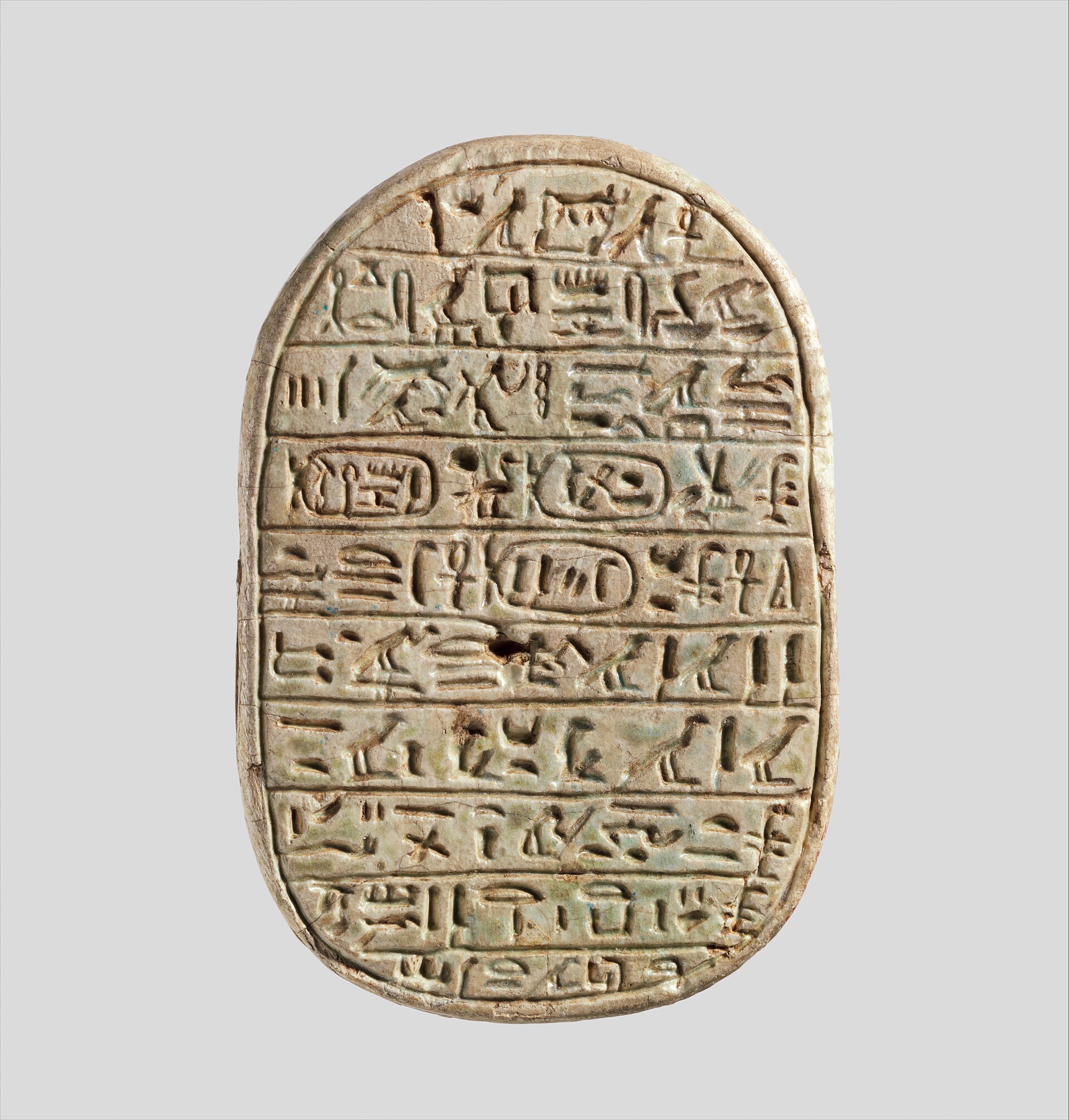
Scarab Commemorating the King's Marriage to Queen Tiye
Scarab Commemorating the King's Marriage to Queen Tiye This file was donated to Wikimedia Commons as part of a project by the Metropolitan Museum of Art . See the Image and Data Resources Open Access Policy · CC0
circa 1390 date QS:P571,+1390-00-00T00:00:00Z/9,P1480,Q5727902 –1352 B.C. Period: New Kingdom Dynasty: Dynasty 18 Reign: reign of Amenhotep III

The scarab beetle became closely associated with Khepri and the daily renewal of the sun. That connection made the scarab an enduring Egyptian image of transformation and rebirth.
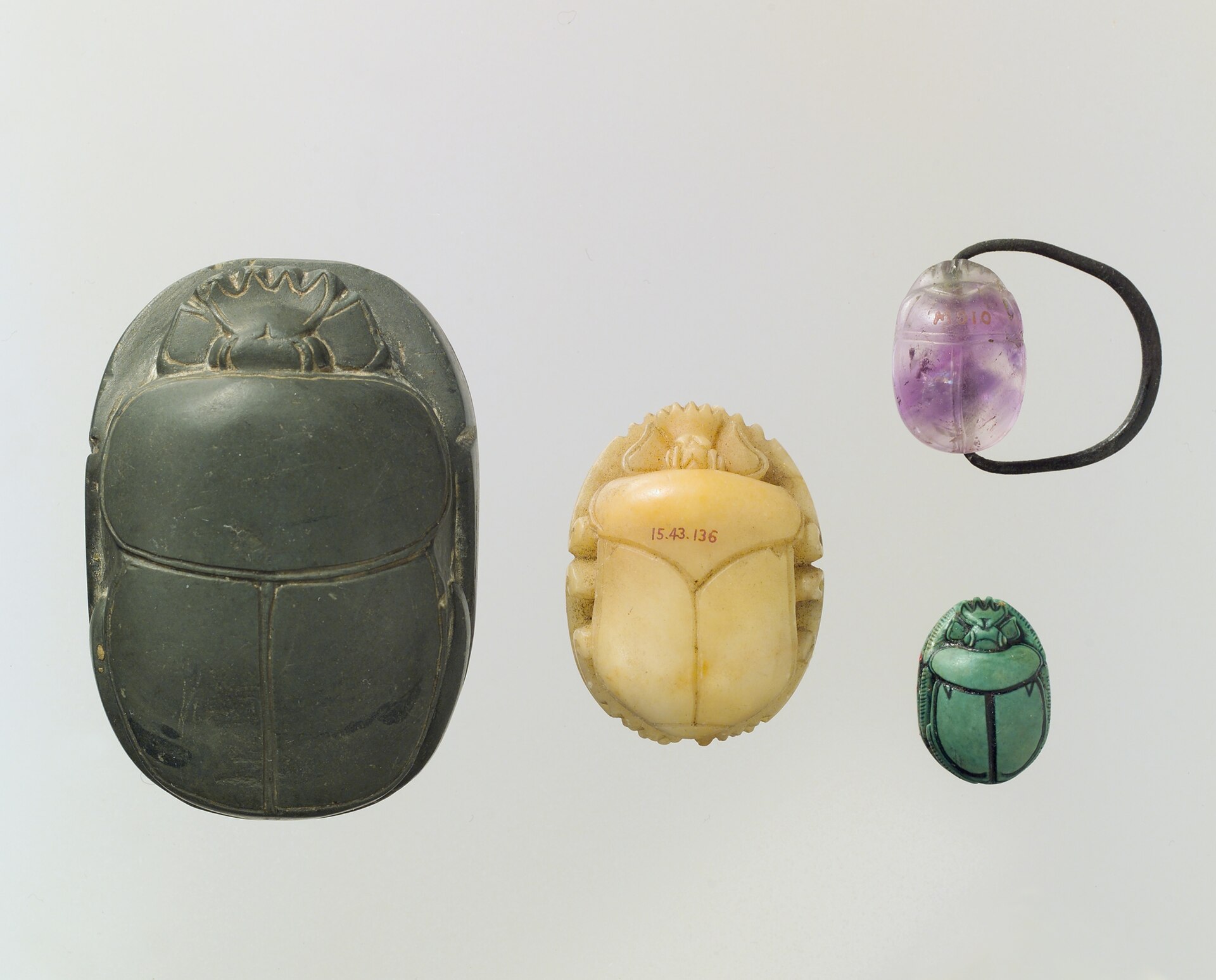
Ancient Egyptian Scarabs
Ancient Egyptian Scarabs https://www.metmuseum.org/art/collection/search/688614 · CC0
1910-01-01

The scarab beetle became closely associated with Khepri and the daily renewal of the sun. That connection made the scarab an enduring Egyptian image of transformation and rebirth.
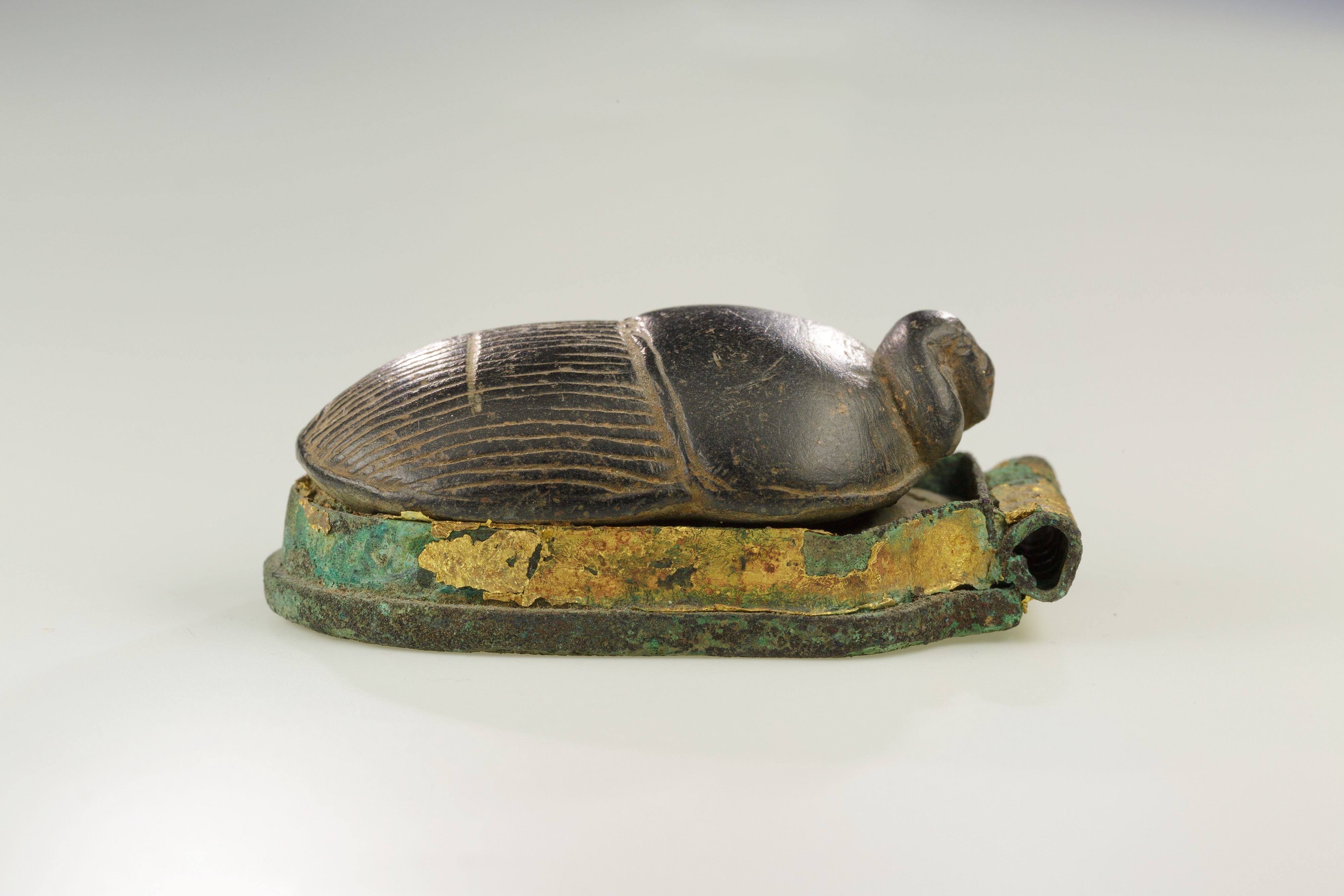
Heart Scarab with a Human Head
Heart Scarab with a Human Head The Metropolitan Museum of Art · Public Domain / The Met Open Access
ca. 1550–1080 BCE New Kingdom Basalt, bronze, remains of gold leaf

Heart scarabs were funerary amulets associated with judgment after death. Many were inscribed with a form of Book of the Dead Spell 30, asking the heart not to testify against its owner before Osiris.
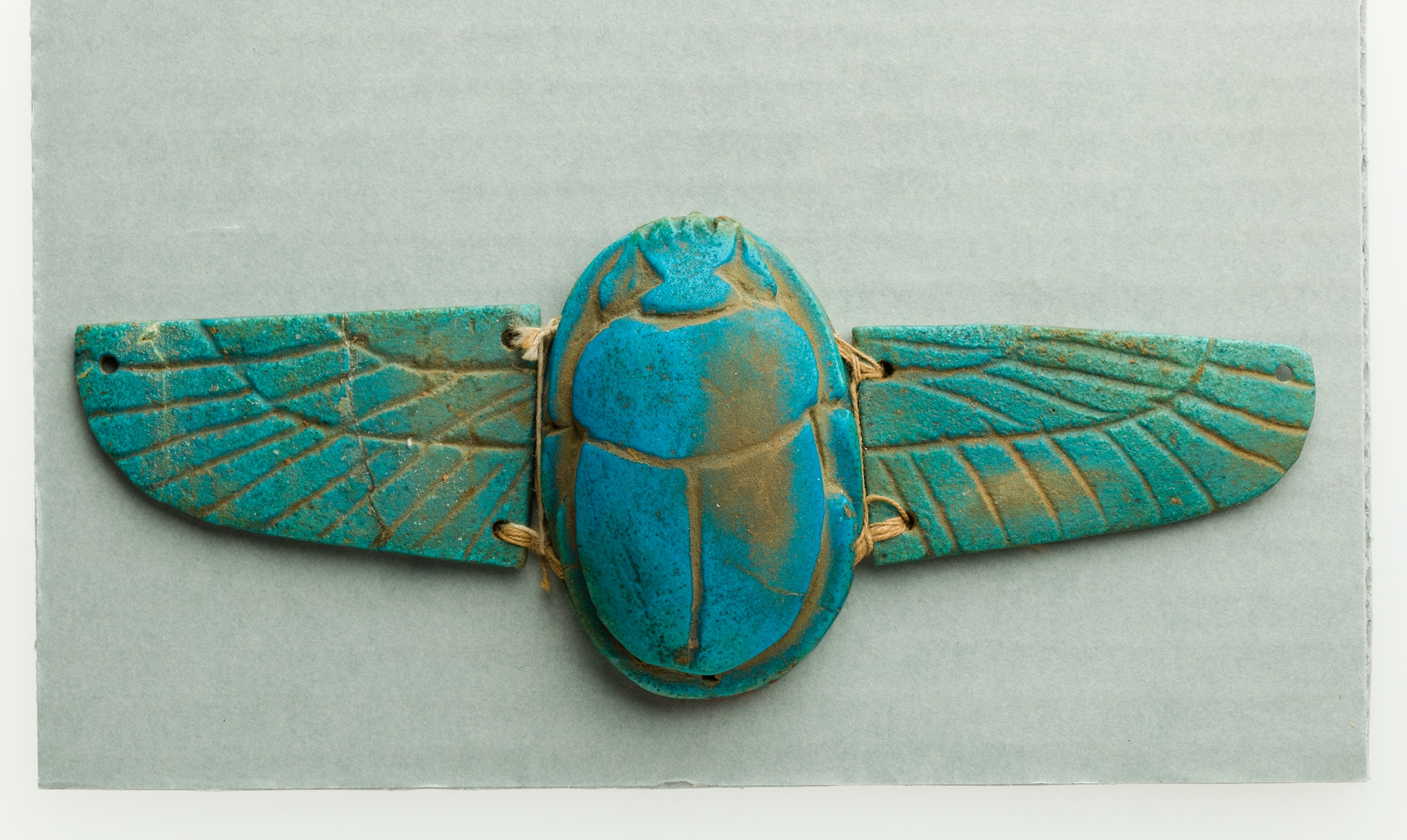
Winged Scarab
Winged Scarab The Metropolitan Museum of Art · Public Domain / The Met Open Access
664–332 BCE Late Period Faience

Winged scarabs were funerary emblems of regeneration. Examples were sewn onto mummy wrappings or incorporated into bead nets and placed across the chest.
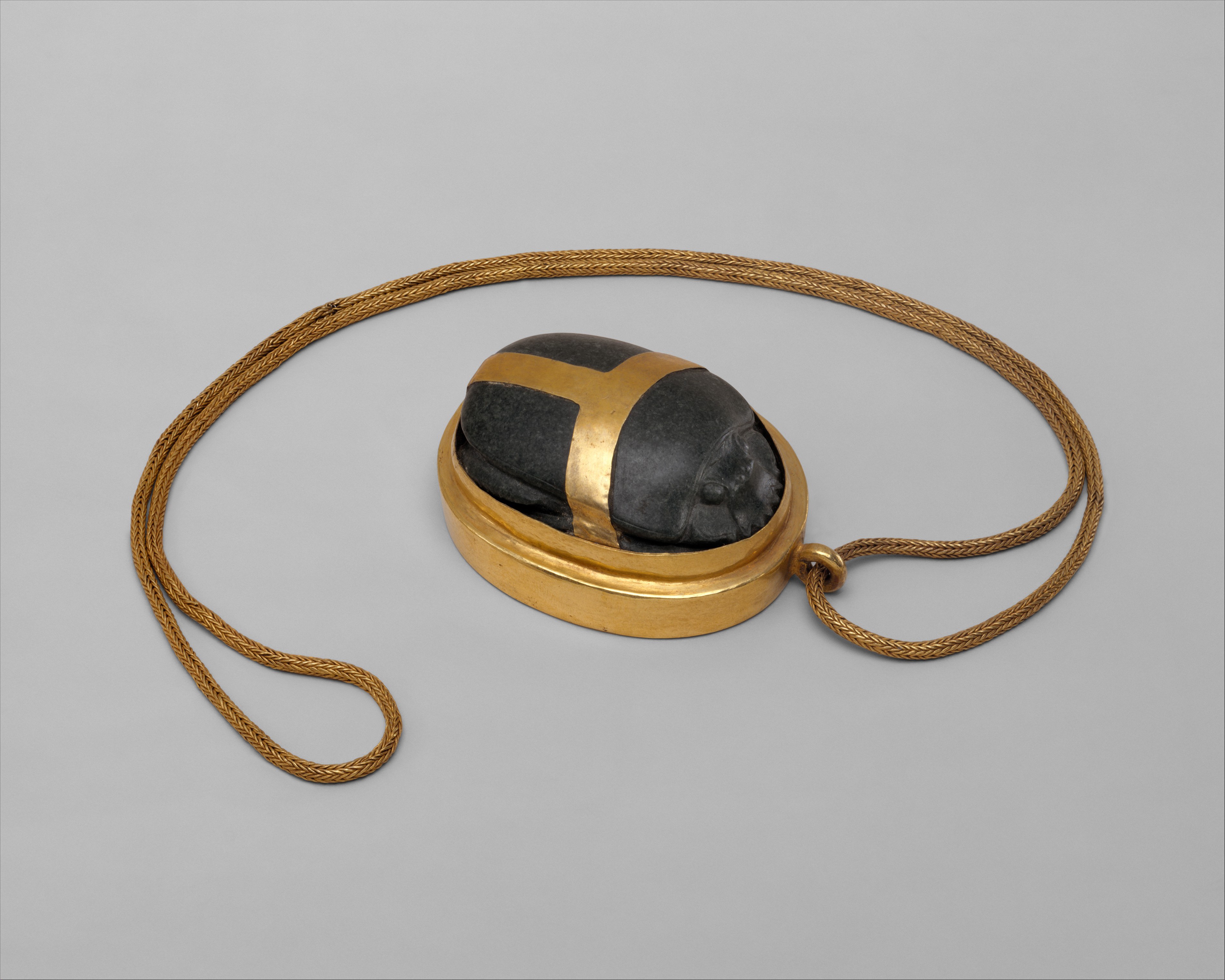
Heart Scarab of Hatnefer
Heart Scarab of Hatnefer The Metropolitan Museum of Art · Public Domain / The Met Open Access
ca. 1491–1473 BCE New Kingdom Dynasty 18, early Serpentinite, gold

Heart scarabs were funerary amulets associated with judgment after death. Many were inscribed with a form of Book of the Dead Spell 30, asking the heart not to testify against its owner before Osiris.

Collection Highlights

SAGE COLLECTION VAULT