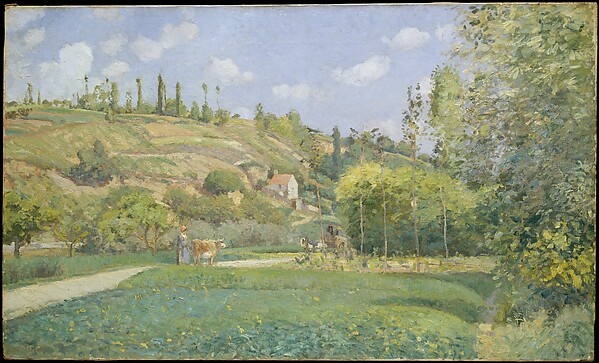
A Cowherd at Valhermeil, Auvers-sur-Oise
📖 The Story
Cultural artifact: A Cowherd at Valhermeil, Auvers-sur-Oise
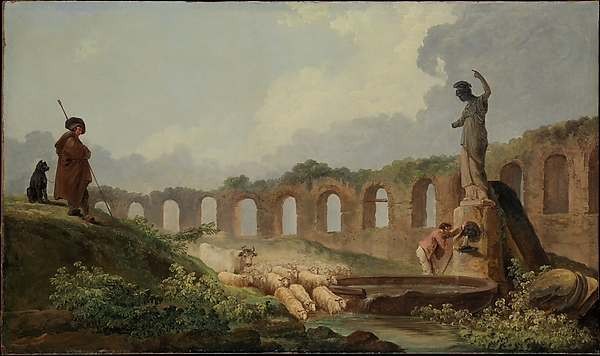
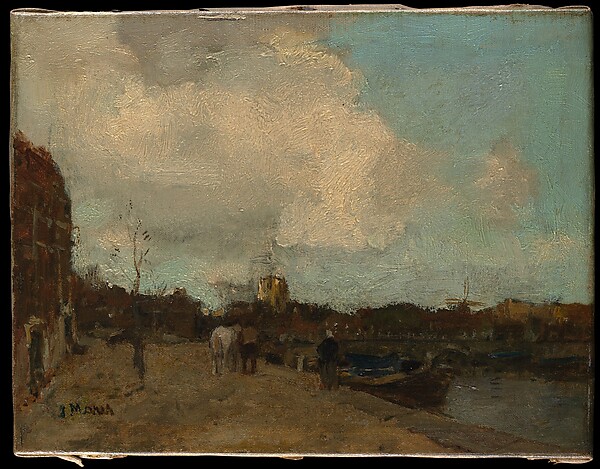
The Cowherd at Valhermeil was a masterpiece created by Camille Piissarro in 1874 for the church of Valhermeil. The painting depicts a cowherd (a herder or farmer) with his livestock grazing on a hillside. The scene is set against a vivid background that includes rolling hills, trees, and an ominous sky.
The painting was commissioned by the church and was later exhibited at the Salon des Refusés in Paris in 1875. It became a sensation, and many admirers were eager to own it as a souvenir of this momentous event. Some even went so far as to steal it from the gallery during one of its public viewings.
The thief was caught and sentenced to death for their crime. The painting remained in storage until it was rediscovered by a private collector in the early 1900s. Its current whereabouts are unknown, but there are rumors that it remains in a high-security vault somewhere in Europe.
Despite its value and significance, the Cowherd at Valhermeil continues to be a source of controversy, tension, and intrigue among art experts and collectors alike. Some argue that the painting's beauty and historical importance make it a true cultural artifact worth protecting and cherishing for future generations.
However, others view its value as merely an object of art and insist on its rightful return to its rightful owner. The Cowherd at Valhermeil remains a tantalizing mystery, both challenging and inspiring those who study it and seek to unravel its intricate secrets.