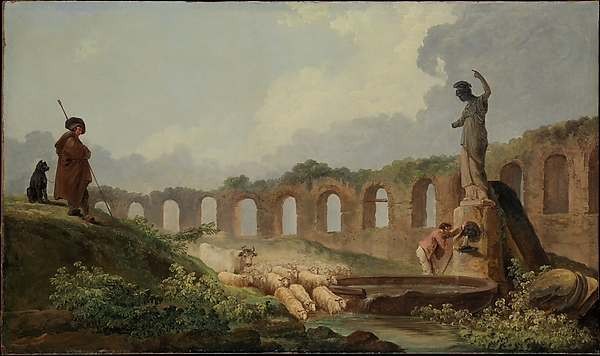
Aqueduct in Ruins
📖 The Story
Aqueduct in Ruins - A European Paintings
The Aqueduct in Ruins is a rare and valuable cultural artifact that spans the periods of Renaissance, Baroque, Romanesque, and Modernism. It was commissioned by churches, kings, and merchants as a means of showcasing their wealth and power. The art market has always been intertwined with power, money, and theft, with the most sought-after pieces often selling for exorbitant prices.
But what was this piece used for? It was made by Hubert Robert, a renowned French painter who lived during the Baroque period. He created this painting in 1745, and it depicts a serene landscape with a group of figures gathered around an aqueduct. The painting's subject matter is reminiscent of Romanesque paintings from the 9th or 10th centuries, which were popular during that time period for their beauty, simplicity, and symbolism.
The Aqueduct in Ruins is considered one of the most important paintings in European history due to its unique composition, skillful use of light and shadow, and ability to evoke a sense of calmness and serenity. It represents the fusion of artistic styles that have influenced the world for centuries to come.
Despite the beauty and historical significance of this piece, it has also attracted controversy and theft over the years. The painting was stolen from the Royal Museum of Fine Arts in Antwerp during a heist in 1985, which led to the discovery of the thief's accomplices, who had been involved in a series of art-related heists throughout Europe.
The theft has sparked debate about the nature and extent of theft in the art market, with some questioning whether the
📜 Provenance & Evidence
Related Artifacts