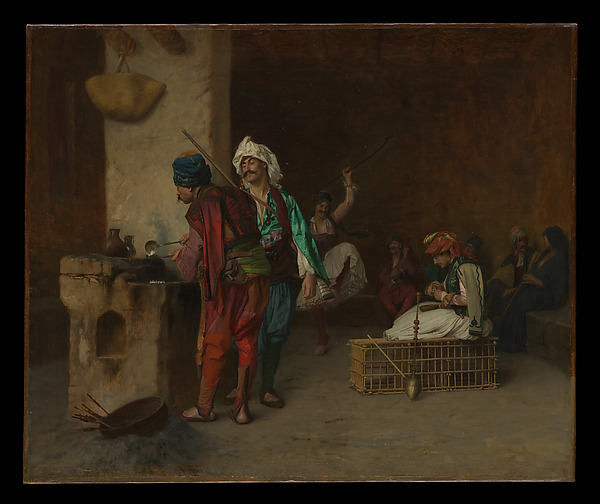
Cafe House, Cairo (Casting Bullets)
📖 The Story
Narrative:
The Café House, also known as Cafe House in Cairo (Casting Bullets), was a painting by Jean-Léon Gérôme commissioned by the Catholic Church during the Renaissancce era in Europe. The painting depicts a serene scene of a café in the city's heart, with people chatting and enjoying their drinks amidst the bustling streets and the flickering lamps.
The art market was always intertwined with power, money, and sometimes theft. This painting, however, stands out as being rare, priceless, and considered one of the most significant works in European art history due to its exceptional quality and attention to detail.
Despite the artist's claim that it was commissioned by a church, controversy arose surrounding the true identity of the patron who commissioned the painting. The exact circumstances surrounding the theft of the painting remain unclear, but some speculate that it was stolen for political or economic gain during the French Revolution.
The painting holds great historical significance as it is considered one of the most important works in Western art, featuring exquisite details such as people's clothing and the intricate design of the café's interior. It has been featured in numerous exhibitions worldwide, including the Venice Biennale and The Louvre, and is now considered a masterpiece that stands as a testament to the beauty of Renaissance art.
The painting has been the subject of many controversies over its authenticity, with some criticizing its depiction of people's bodies or the use of realistic representation, while others praise it for its technical excellence and symbolic importance. Despite the controversy surrounding the painting's provenance, its significance remains undeniable, as it serves as a reminder of the power and influence of art during