SAGE MUSEUM
← ACROPOLIS OF ATHENS
Acropolis of Athens
WONDERS · MONUMENTS · SACRED PLACES

Acropolis of Athens

ARCHITECTURE & SITE PLAN
Athens, Greece
Explore architecture, construction, design, engineering, plans, structures and material evidence connected directly to this place.
WIKIPEDIA · RESEARCH
WIKIDATA · STRUCTURED DATA
WIKIMEDIA COMMONS · IMAGES
UNESCO · HERITAGE
ACROPOLIS OF ATHENS · OVERVIEW
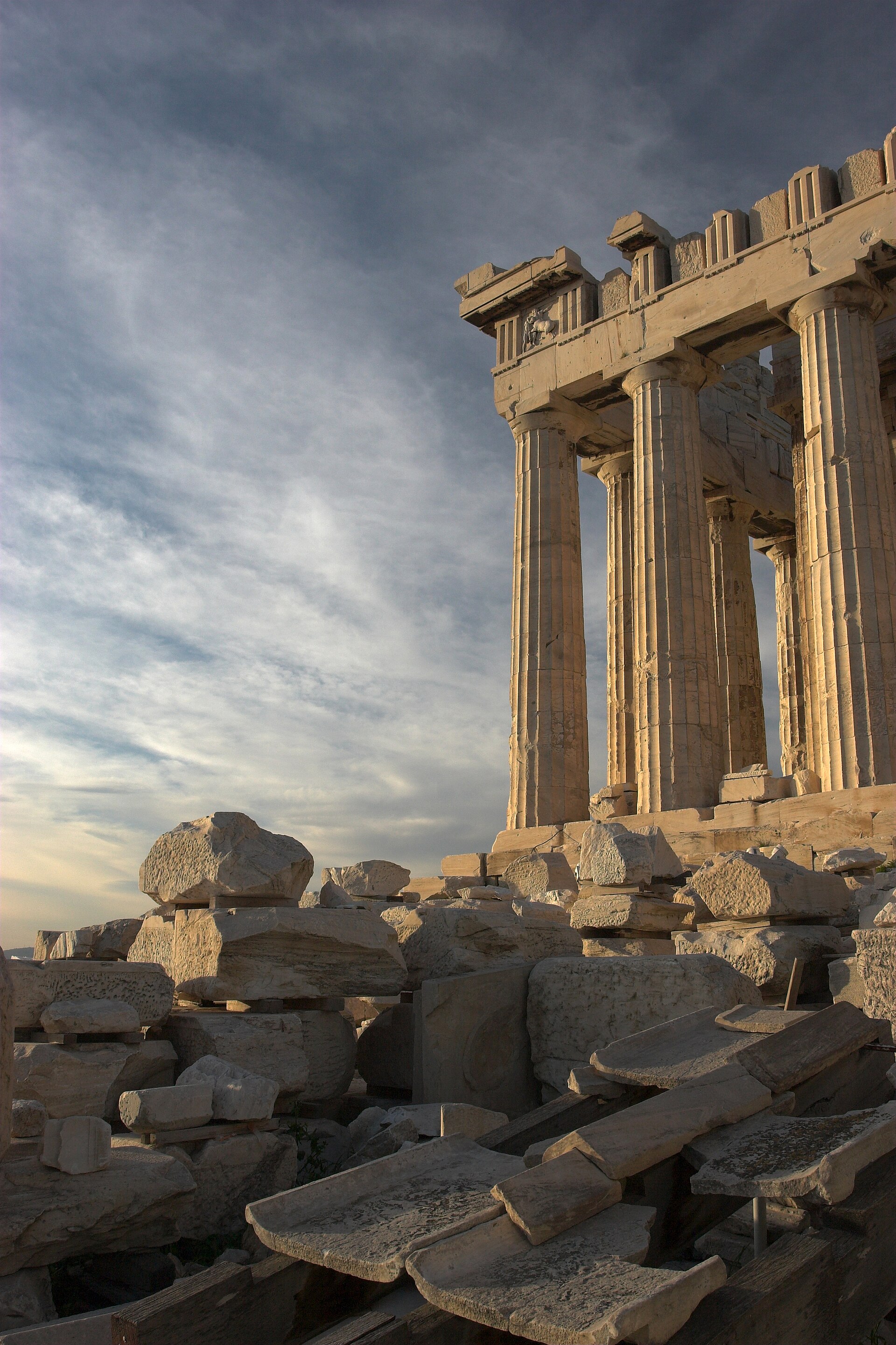
The Acropolis of Athens is an ancient citadel located on a rocky outcrop above the city of Athens, Greece, and contains the remains of several ancient buildings of great architectural and historical significance, the most famous being the Parthenon. The word Acropolis is from Greek ἄκρον (akron) 'highest point, extremity' and πόλις (polis) 'city'. The term acropolis is generic and there are many other acropoleis in Greece. During ancient times the Acropolis of Athens was also more properly known as Cecropia (Κεκροπία), after the legendary serpent-man Cecrops, the supposed first Athenian king.
LOCATION · 37.97167, 23.72611
ARCHITECTURE & SITE PLAN
The Periclean building program
[ edit ] After winning at Eurymedon during 468 BC, Cimon and Themistocles ordered the reconstruction of the southern and northern walls of the Acropolis. Most of the major temples, including the Parthenon , were rebuilt by order of Pericles during the so-called Golden Age of Athens (460–430 BC). Phidias , an Athenian sculptor, and Ictinus and Callicrates , two famous architects, were responsible for the reconstruction. The Parthenon , as seen from the north-west in 1978 During 437 BC, Mnesicles started building the Propylaea , a monumental gate at the western end of the Acropolis with Doric columns of Pentelic marble, built partly upon the old Propylaea of Peisistratos. These colonnades were almost finished during 432 BC and had two wings, the northern one decorated with paintings by Polygnotus . About the same time, south of the Propylaea, building started on the small Ionic Temple of Athena Nike in Pentelic marble with tetrastyle porches, preserving the essentials of Greek temple design. After an interruption caused by the Peloponnesian War , the temple was finished during the time of Nicias ' peace, between 421 BC and 409 BC. The Erechtheion , viewed from the south-west, looking across the remains of the Old Temple in 2015 Construction of the elegant temple of Erechtheion in Pentelic marble (421–406 BC) was by a complex plan which took account of the extremely uneven ground and the need to circumvent several shrines in the area. The entrance, facing east, is lined with six Ionic columns. Unusually, the temple has two porches, one on the northwest corner borne by Ionic columns, the other, to the southwest, supported by huge female figures or caryatids . The eastern part of the temple was dedicated to Athena Polias , while the western part, serving the cult of the arch
SOURCE · Wikipedia · CC BY-SA
Archaeological remains
[ edit ] Remains of the Theatre of Dionysus as of 2007. View from the west. The entrance to the Acropolis was a monumental gateway termed the Propylaea. To the south of the entrance is the tiny Temple of Athena Nike. At the centre of the Acropolis is the Parthenon or Temple of Athena Parthenos (Athena the Virgin). East of the entrance and north of the Parthenon is the temple known as the Erechtheum. South of the platform that forms the top of the Acropolis there are also the remains of the ancient, though often remodelled, Theatre of Dionysus . A few hundred metres away, there is the now partially reconstructed Odeon of Herodes Atticus . Many of the valuable ancient artifacts are situated in the Acropolis Museum , which resides on the southern slope of the same rock, 280 metres from the Parthenon.
SOURCE · Wikipedia · CC BY-SA
Site plan
[ edit ] Site plan of the Acropolis at Athens showing the major archaeological remains. Parthenon Old Temple of Athena Erechtheum Statue of Athena Promachos Propylaea Temple of Athena Nike Eleusinion Sanctuary of Artemis Brauronia or Brauroneion Chalkotheke Pandroseion Arrephorion Altar of Athena Sanctuary of Zeus Polieus Sanctuary of Pandion Odeon of Herodes Atticus Stoa of Eumenes Sanctuary of Asclepius or Asclepieion Theatre of Dionysus Eleuthereus Odeon of Pericles Temenos of Dionysus Eleuthereus Mycenaean fountain
SOURCE · Wikipedia · CC BY-SA
ARCHITECTURE & DETAIL IMAGES