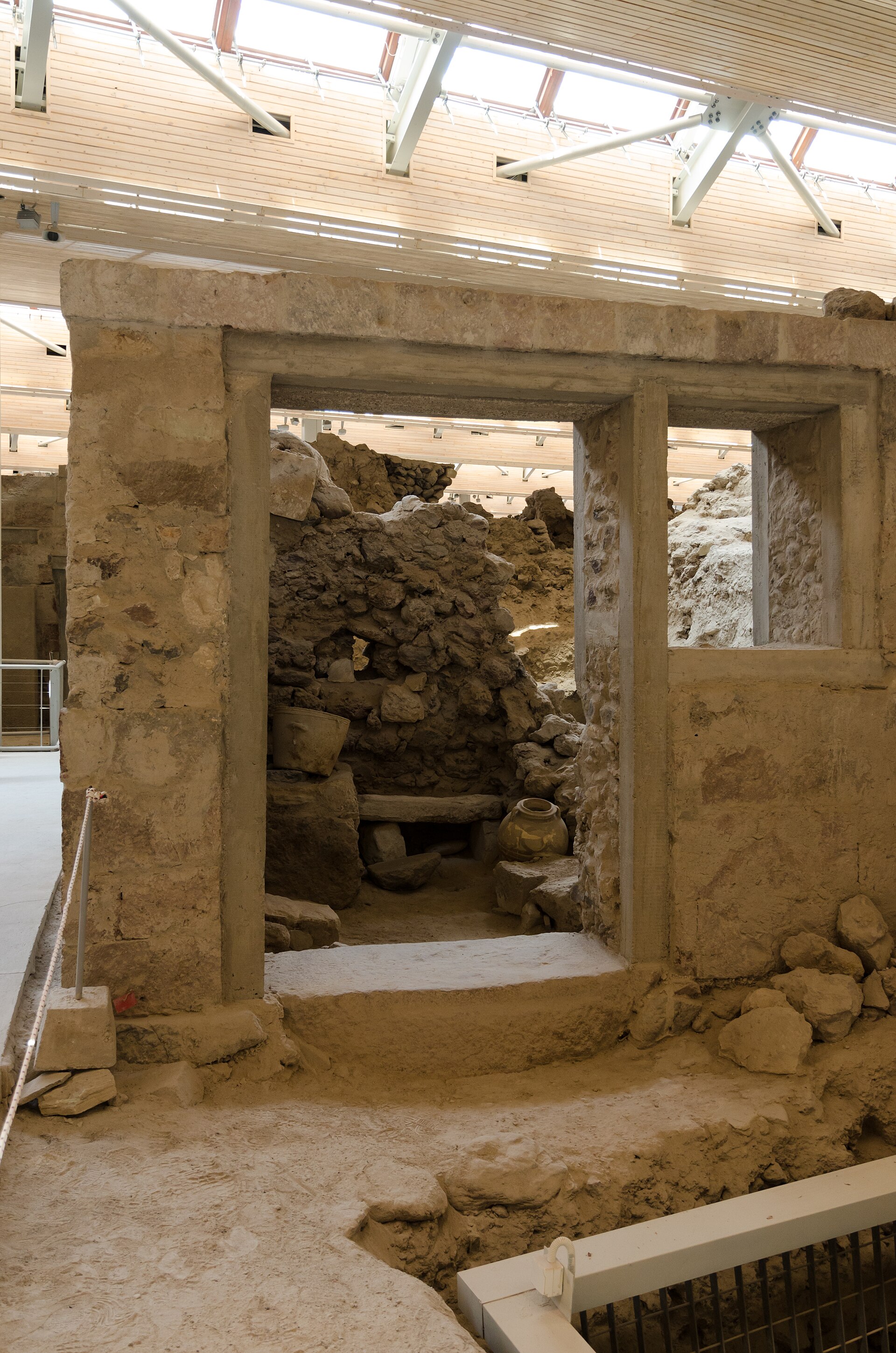
POMPEII · OVERVIEW
Pompeii was a city in what is now the municipality of Pompei, near Naples, in the Campania region of Italy. Along with Herculaneum, Stabiae, and many surrounding villas, it was buried under 4 to 6 m of volcanic ash and pumice in the eruption of Mount Vesuvius in 79 AD.
LOCATION ·
40.75000, 14.48611
World Heritage Record
Inscribed on the UNESCO World Heritage List in 1997. World Heritage criteria: (iii)(iv)(v). Official property area: 98.05 ha.
SOURCE · UNESCO World Heritage Centre
Outstanding Universal Value
The World Heritage property includes three different archaeological areas: the ancient towns of Pompeii and Herculaneum together with the Villa of the Mysteries (to the west of Pompeii) and the Villa of the Papyri (to the west of Herculaneum), and the Villa A (Villa of Poppaea) and Villa B (Villa of Lucius Crassius Tertius) in Torre Annunziata. The vast expanse of the commercial town of Pompeii contrasts with the smaller but better-preserved remains of the smaller Herculaneum, while Villa A in Torre Annunziata gives a vivid impression of the opulent lifestyle enjoyed by the wealthier citizens of the early Roman Empire. When Vesuvius erupted in 79 AD, it engulfed the two flourishing Roman towns of Pompeii and Herculaneum, as well as the many wealthy countryside villas in the area.
SOURCE · UNESCO World Heritage Centre
Integrity & Condition
and extent in the world. The villas in Torre Annunziata have the best preserved wall paintings of the Roman period. Criterion (iv): The sites of Pompeii, Herculaneum and Torre Annunziata provide a full picture of Roman life from the 1st century BC to the 1st century AD through the urban, architectural, decorative and daily life aspects that have been preserved.
SOURCE · UNESCO World Heritage Centre
Authenticity
Since the first discoveries, excavation, conservation, consolidation, restoration and maintenance works have been implemented on the remarkable remains of these sites with varying intensity. The sites show the evolution of archaeological practices, conservation techniques and approaches to presentation over the past two centuries.
SOURCE · UNESCO World Heritage Centre
Protection & Management
The property was protected by the provisions of past Law No 1089/1939 and since 2004 is under the Legislative Decree No 42/2004 (“Cultural Heritage and Landscape Code”). The perimeter of the Pompeii site is protected by the Decree of June 10th 1929. Environmental legislation in the form of the Legislative Decree No 42/2004 extended this protection to a wider area.
SOURCE · UNESCO World Heritage Centre
Modern archaeology
[ edit ] Map of Pompeii After those of Fiorelli, excavations continued in an increasingly more systematic and considered manner under several directors of archaeology though still with the main interest in making spectacular discoveries and uncovering more houses rather than answering the main questions about the city and its long term preservation. In the 1920s, Amedeo Maiuri excavated older layers beneath those of 79 AD for the first time to learn about the settlement history. Maiuri made the last excavations on a grand scale in the 1950s, and the area south of the Via dell'Abbondanza and the city wall was almost completely uncovered, but they were poorly documented scientifically. Preservation was haphazard, and his reconstructions were difficult to distinguish from the original ruins, which is a great handicap for studying genuine antique remains. Questionable reconstruction was also done after the severe earthquake of 1980, which caused great destruction. Since then, work has been confined to the excavated areas except for targeted soundings and excavations. Further excavations on a large scale are not planned, and today archaeologists are more engaged in reconstructing, documenting and slowing the decay of the ruins. In December 2018, archaeologists discovered the remains of harnessed horses in the Villa of the Mysteries . Via dell'Abbondanza, the main street in Pompeii Under the 'Great Pompeii Project' over 2.5 km (1.6 mi) of ancient walls within the city were relieved of danger of collapse by treating the unexcavated areas behind the street fronts in order to increase drainage and reduce the pressure of groundwater and earth on the walls, a problem especially in the rainy season. These excavations resumed on unexcavated areas of Regio V . In November 2020 the remains of two men, thought to be a rich man and his slave, were found in a 2 m-thick (6.6 ft) layer of ash. They appeared to have escaped the first eruption but were killed by a second blast the next day. A study of the bones showed that the younger one appeared to have done manual labour and hence was likely a slave. In December 2020, a thermopolium , an inn or snack-bar, was excavated in Regio V.
Conservation
[ edit ] Main article: Conservation issues of Pompeii and Herculaneum See also: Conservation and restoration of Pompeian frescoes The buildings on the left show signs of decay due to the infestation of various plants, while the debris accumulating on the footpath indicates erosion of the infrastructure. The footpaths and road have also been worn down by pedestrian activity since excavation. Objects buried beneath Pompeii were well-preserved for almost 2,000 years as the lack of air and moisture allowed little to no deterioration. However, Pompeii has been exposed to natural and anthropic deterioration following excavation. Weathering, erosion, light exposure, water damage, poor methods of excavation and reconstruction, introduced plants and animals, tourism, vandalism and theft have all damaged the site in some way. The lack of adequate weather protection for all but the most interesting and important buildings has allowed original interior decoration to fade or be lost. Two-thirds of the city has been excavated, but the remnants of the city are rapidly deteriorating. Furthermore, during World War II many buildings were badly damaged or destroyed by bombs dropped in several raids by the Allied forces . The conservation concern has constantly worried archaeologists. The ancient city was included in the 1996 World Monuments Watch by the World Monuments Fund , and again in 1998 and in 2000 . In 1996 the organisation claimed that Pompeii "desperately need[ed] repair" and called for the drafting of a general plan of restoration and interpretation. The organisation supported conservation at Pompeii with funding from American Express and the Samuel H. Kress Foundation . The Schola Armatorum ('House of the Gladiators') collapsed in 2010 caused by heavy rainfall and lack of proper drainage. The structure was not open to visitors, but the outside was visible to tourists. There was fierce controversy after the collapse, with accusations of neglect. Today, funding is mostly directed into conservation of the site; however, due to the expanse of Pompeii and the scale of the problems, this is inadequate in halting the slow decay of the materials. A 2012 study recommended an im