Venetian architecture
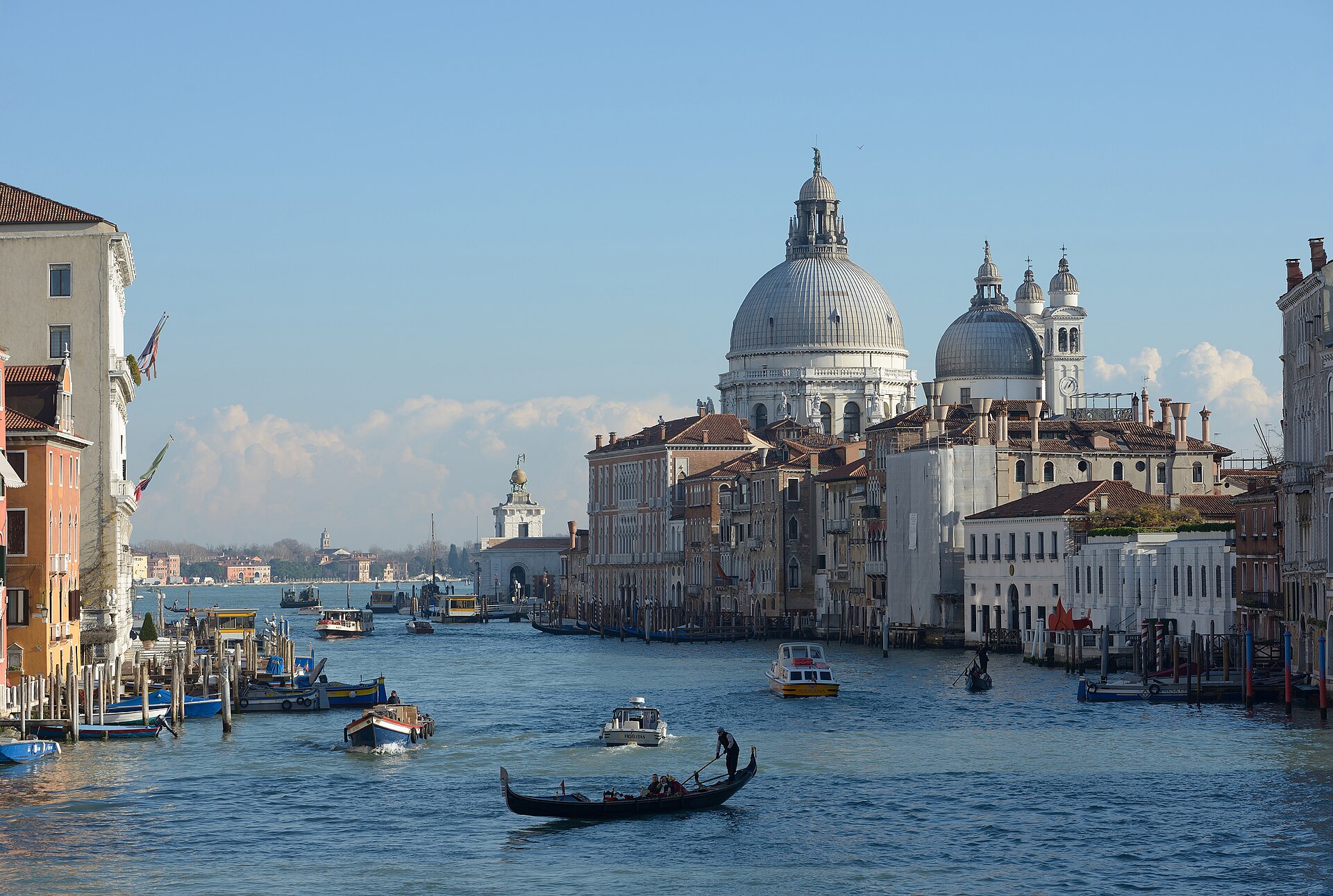
[ edit ] Main articles: Venetian Gothic architecture and Venetian Renaissance architecture The Palazzo Cavalli-Franchetti is an example of Venetian Gothic architecture alongside the Grand Canal . The Ca' d'Oro Venice is built on unstable mud-banks, and had a very crowded city centre by the Middle Ages. On the other hand, the city was largely safe from riot, civil feuds, and invasion much earlier than most European cities. These factors, with the canals and the great wealth of the city, made for unique building styles. Venice has a rich and diverse architectural style , the most prominent of which is the Gothic style. Venetian Gothic architecture is a term given to a Venetian building style combining the use of the Gothic lancet arch with the curved ogee arch , due to Byzantine and Ottoman influences. The style originated in 14th-century Venice, with a confluence of Byzantine style from Constantinople, Islamic influences from Spain and Venice's eastern trading partners, and early Gothic forms from mainland Italy. Chief examples of the style are the Doge's Palace and the Ca' d'Oro in the city. The city also has several Renaissance and Baroque buildings, including the Ca' Pesaro and the Ca' Rezzonico . Venetian taste was conservative and Renaissance architecture only really became popular in buildings from about the 1470s. More than in the rest of Italy, it kept much of the typical form of the Gothic palazzi , which had evolved to suit Venetian conditions. In turn the transition to Baroque architecture was also fairly gentle. This gives the crowded buildings on the Grand Canal and elsewhere an essential harmony, even where buildings from very different periods sit together. For example, round-topped arches are far more common in Renaissance buildings than elsewhere. The Baroque Ca' Rezzonico


