TROY · OVERVIEW
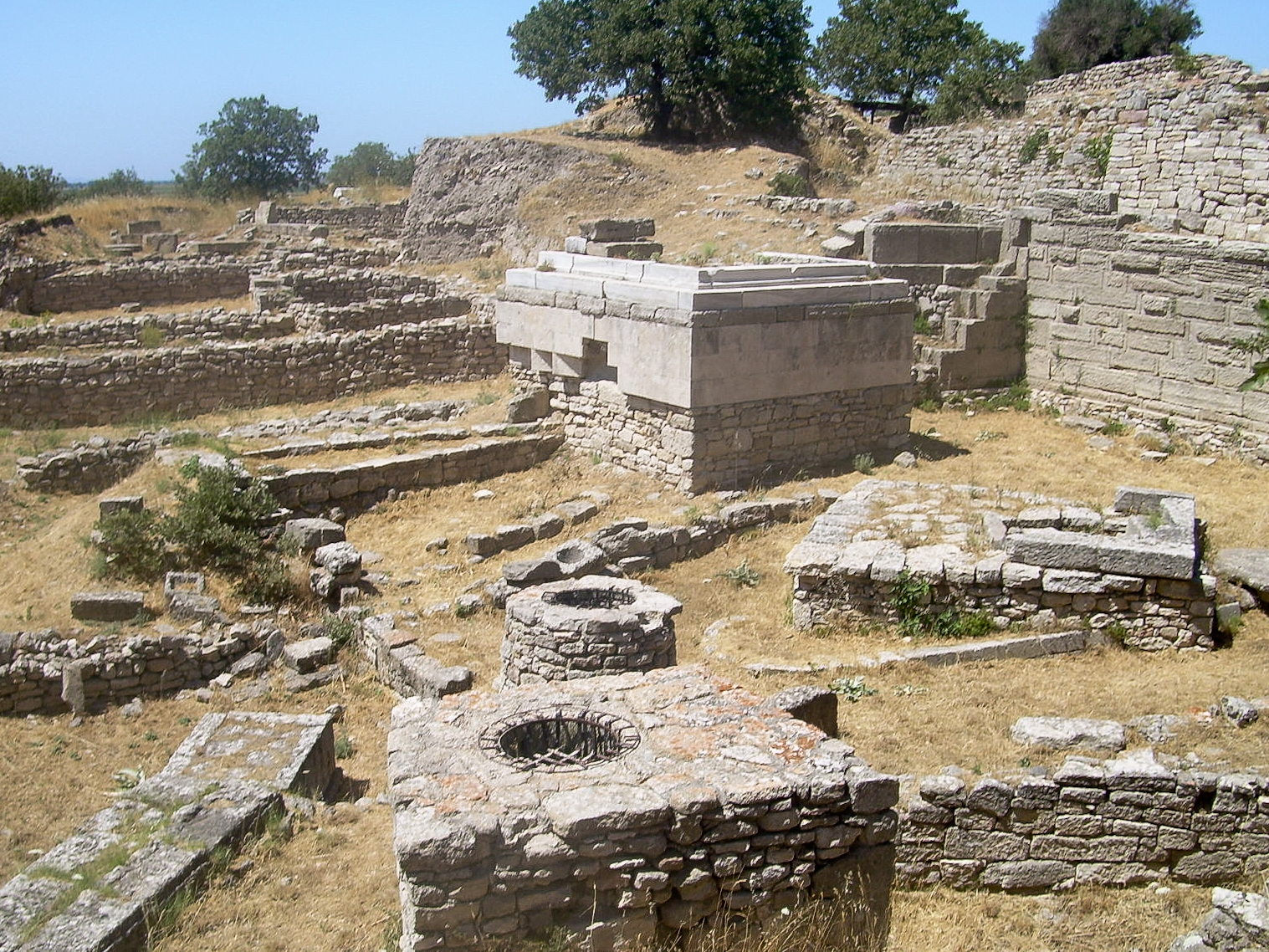
Troy or Ilion was an ancient city located in present-day Çanakkale, Turkey. It is best known as the setting for the Greek myth of the Trojan War. The modern-day archaeological site, also known as Hisarlık, is open to the public as a tourist destination, and was added to the UNESCO World Heritage list in 1998.
LOCATION ·
39.95750, 26.23889
World Heritage Record
Inscribed on the UNESCO World Heritage List in 1998. World Heritage criteria: (ii)(iii)(vi). Official property area: 158 ha.
SOURCE · UNESCO World Heritage Centre
Outstanding Universal Value
The Archaeological Site of Troy has 4,000 years of history. Its extensive remains are the most significant and substantial evidence of the first contact between the civilizations of Anatolia and the burgeoning Mediterranean world. Excavations started more than a century ago have established a chronology that is fundamental to the understanding of this seminal period of the Old World and its cultural development.
SOURCE · UNESCO World Heritage Centre
Integrity & Condition
The inscribed property contains all the necessary elements to express its Outstanding Universal Value. The archaeological remains still allow for an impressive insight into the Bronze Age city with its fortifications, palaces and administrative buildings. Of the Greek and Roman periods, two major public buildings on the edge of the agora have survived in almost complete condition.
SOURCE · UNESCO World Heritage Centre
Authenticity
The authenticity of the archaeological site is high, since there have been very few reconstructions. Those that have taken place on the defences have been carried out in strict accordance with the principles of anastylosis.
SOURCE · UNESCO World Heritage Centre
Protection & Management
The 1968 Decree No 3925 of The Superior Council of Immovable Cultural and Natural Property, under the authority of the Ministry of Culture and Tourism, designated the Archaeological Site of Troy as a historic site. The Antique City of Troy was also registered as first-degree archaeological site and a conservation zone was created in 1981 by Decision No 12848 of The Supreme Council of the Immovable Ancient Objects and Monuments. The limits of the Antique City of Troy have been defined by the 1995 decision No 2414 of the Edirne Conservation Council of Cultural and Natural Properties and were made to coincide with those of the World Heritage property.
SOURCE · UNESCO World Heritage Centre
Early modern era
[ edit ] Alexandria Troas Early modern travellers in the 16th and 17th centuries, including Pierre Belon and Pietro Della Valle , had mistakenly identified Troy with Alexandria Troas , a ruined Hellenistic town approximately 20 kilometres (12 mi) south of Hisarlık. In the late 18th century, French scholar Jean-Baptiste le Chevalier identified a location near the village of Pınarbaşı, Ezine , a mound approximately 5 kilometres (3.1 mi) south of the currently accepted location. Published in his Voyage de la Troade , it was the most commonly proposed location for almost a century. In 1822, the Scottish journalist Charles Maclaren was the first to identify with confidence the position of the city as it is now known. The first excavations at the site were trenches by British civil engineer John Brunton in 1855.